
Synaptic Pruning and Why Your Brain Shrinks as You Sleep
5 Min Read |
Last Modified 30 July 2026 First Added 15 January 2020
 Reviewed for Accuracy by Dr Jason Ellis
It sounds like something out of science fiction, but it’s true. Your brain is a touch smaller when you wake up than when you went to bed. Don’t worry, it’s completely normal and rather clever. It comes down to a tidy-up process called synaptic pruning, plus a related piece of overnight housekeeping that keeps your thinking quick and clear. Let’s take a look at what’s happening while you sleep.
The lowdown: Synaptic pruning is how your brain clears out the connections it uses least, keeping it efficient as you grow. Most of it happens from childhood into your mid-20s. Sleep plays its own part, because each night, especially in deep sleep, your brain weakens its flimsiest connections, so it really is a little smaller by morning.
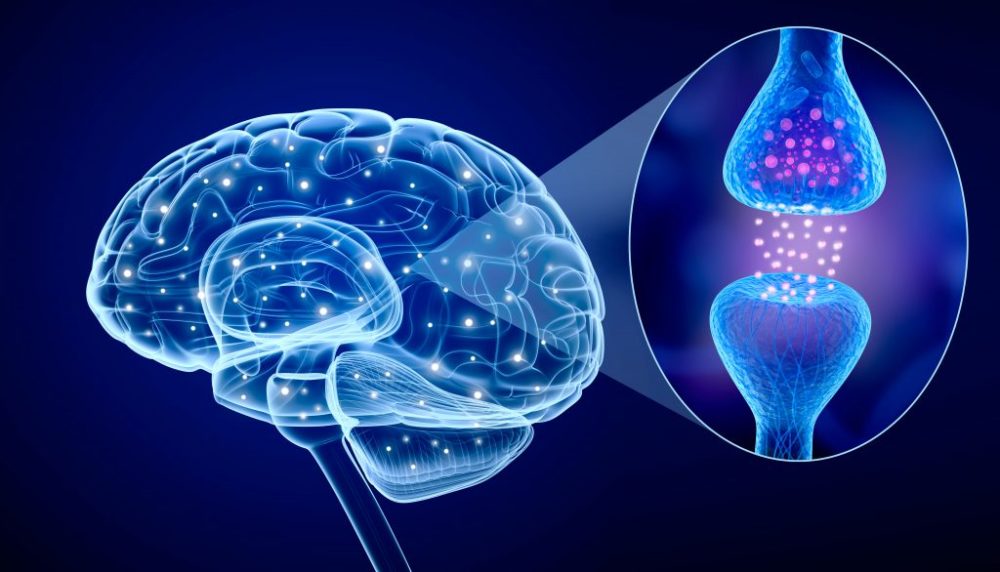
To understand pruning, it helps to know what is being pruned. Synapses are the tiny junctions where one brain cell, called a neuron, passes a signal to the next. They’re how every thought, memory and skill gets wired in. In the first couple of years of life, your brain builds them at a remarkable rate, a burst known as synaptogenesis. A toddler’s brain actually holds far more synapses than an adult’s. That might sound like a good thing, but a brain crammed with connections is noisy and inefficient. That’s where pruning comes in.
Synaptic pruning is your brain’s way of tidying up. Once the early building spree is over, you’re left with many more synapses than you need, so your brain starts removing the ones you use least. Picture a gardener trimming back an overgrown hedge so the healthy branches have room to thrive. Special immune cells in the brain, called microglia, seek out weak or inactive connections and clear them. What’s left is a leaner, faster, better-organised network. Far from damaging your brain, pruning helps it mature and get better at what it does.
Every time you practise a skill or recall a memory, the synapses behind it get a little stronger. Connections you rarely use grow weaker, and eventually they’re removed. Early on, genes guide most of the pruning. As you get older, your experiences take over, shaping your brain around the things you actually do.
The timing is worth knowing. Synapse numbers peak in early childhood, then pruning takes over, with roughly half of that early surplus cleared away by adulthood. It doesn’t finish quickly either. The prefrontal cortex, the part behind planning, decision-making and personality, is the last to be fully pruned, carrying on into your mid-20s. That’s one reason teenage and young-adult brains work so differently from those of older people.
So where does sleep come in? While the big developmental pruning plays out over years, your brain also does a nightly version of the same tidy-up, and this is the part that makes your brain a little smaller by morning.
During the day, learning and new experiences strengthen your synapses and build new connections. Left unchecked, they would keep growing until your brain was overloaded and running out of space and energy. Sleep steps in to reset the balance. The idea, known as the synaptic homeostasis hypothesis, is supported by striking evidence. In one study, researchers measured thousands of synapses in mice and found they shrank by almost a fifth after sleep compared with after being awake. Your brain weakens and trims back the least useful connections overnight, mostly during deep sleep, so it wakes up refreshed and ready to learn again.
The clever bit is that it’s selective. The largest, strongest synapses, the ones holding your most important memories, are mostly left alone, while the weak and flimsy ones are scaled back. It’s a bit like clearing your desk at the end of the day and filing away only what matters. This nightly housekeeping isn’t identical to the years-long pruning of childhood, but it works towards the same goal of an efficient brain. It’s also one more reason a proper night’s sleep does so much for your memory and focus. You can read more about what goes on in our guide to what happens to your body as you sleep.

Pruning has to be finely balanced. Too much or too little, and things can go awry. Because so much of it happens in adolescence and early adulthood, faulty pruning is thought to play a role in several conditions that tend to emerge around that age. The research is still developing, so these links are best seen as promising rather than settled.
With schizophrenia, the current thinking points towards over-pruning, where the brain strips away too many connections and leaves certain regions unusually thin. Autism appears to sit at the other end, with signs of under-pruning that leaves a surplus of synapses, which may help explain why some autistic people feel flooded by sights, sounds and other stimuli. Altered synaptic wiring has also been studied in ADHD. In each case, sleep and mental health are closely tied, something we cover in our piece on mental health and the importance of sleep.
On the whole, it’s essential. Pruning is how a young brain turns a chaotic tangle of connections into an efficient adult one, and how your brain keeps learning throughout life. The overnight version keeps your mind clear and makes room for tomorrow. Problems only tend to arise when the process runs too hard or not hard enough. For the vast majority of us, it’s simply the brain doing exactly what it should.
Give your brain the deep sleep it relies on: Work out the best time to turn in with our Sleep Cycle Calculator, and set the scene with a calming bedroom and a supportive mattress.