How to Reset Your Body Clock
8 Min Read |
Last Modified 30 July 2026 First Added 8 June 2022
Your body clock, also known as your circadian rhythm, can be knocked off course by all sorts of things, whether that’s the clocks changing, too much caffeine or skipping regular exercise. Whether you’re an early riser or a night owl, it helps to reset your body clock when sleep starts to slip. So, join us as we explore how to do exactly that.
Trending topic!
Late-night World Cup matches can of course be exciting, but they can also disrupt sleep very quickly. For fans following late kick-off times and enjoying midnight celebrations this year, these tips can help you reset your body clock between matches to keep your sleep on track this summer. Even if you’re not able to get your 8 hours, following these steps can help you still feel rested between 2am kick-offs. Check out more advice on sleeping well during the World Cup.

For most of human history, our circadian rhythms were aligned with sunrise and sunset. The blue light from phones, tablets and TVs at night tricks your body into thinking it’s still daytime, because it suppresses melatonin, the hormone that helps you wind down for sleep.
Try switching off screens and dimming the lights at least an hour before bed. It nudges your body towards the natural slide into darkness, and helps your sleep cycle settle.

Plenty of studies show that napping can improve alertness, vigilance and clear thinking, which is exactly why we reach for one when drowsiness hits.
The catch is that waking from a long nap can leave you with sleep inertia, that groggy, fuzzy-headed feeling right after you wake. A 2014 study also found that frequent, long or late napping is linked to poorer nighttime sleep. For most healthy adults, a nap of 10 to 20 minutes hits the sweet spot, a quick top-up without throwing off your body clock. If you often wake up groggy, our guide to morning grogginess and sleep inertia digs into why.

Being ‘tired but wired’, too tired to function yet unable to drop off, is a frustrating place to be. If it happens often, you can start to associate your bed with being awake, which makes the problem worse.
Richard Bootzin, who developed stimulus control as part of cognitive behavioural therapy for insomnia, suggests only going to bed when you feel sleepy. If you’re still awake after about 20 minutes, get up, go to another room and do something calm and unstimulating, like reading a few pages of a dull book, then head back when you feel sleepy.
A regular schedule strengthens your circadian rhythm and helps you get good quality sleep. Because your body clock works in rhythms, it helps to have an anchor time to start the day.
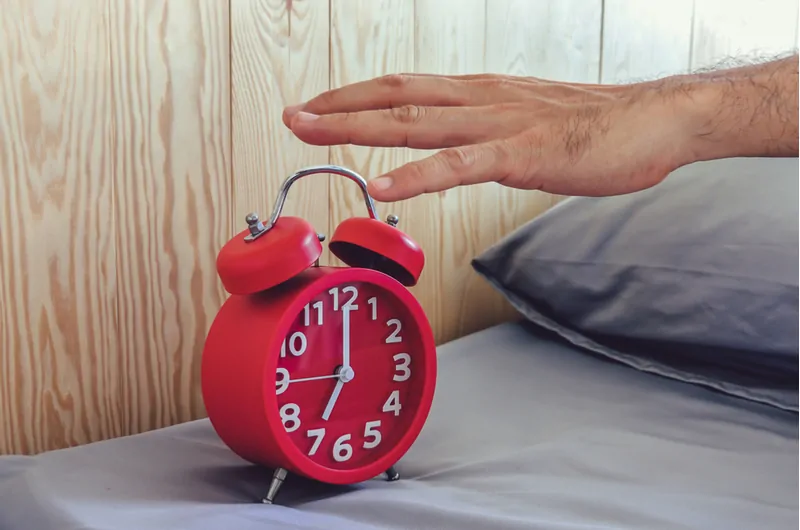
Set an alarm and stick to it, weekends included. After two or three weeks, waking at your chosen time should start to feel natural. Our 2026 Sleep Survey found that 45% of us never reach for the snooze button, so a steady routine is well within reach. While most of the attention goes on how much sleep you get, research shows that irregular sleep patterns are linked to poorer health, so when you sleep matters too. If you’re not sure what time to aim for, here’s how to find the best time to go to bed.

A few easy wins here. Block out noise by closing the door, switching off the TV and putting your phone on silent. Keep the room cool, since somewhere between 16 and 18 degrees works well for most people. Keep it dark too, because light pushes you towards alertness while darkness helps your body produce melatonin.
And don’t underestimate your bed. Research shows that a comfortable, supportive mattress can improve sleep quality and ease aches, which makes both falling asleep and staying asleep that bit easier. For more ideas, here are plenty of ways to sleep better at night.

Caffeine is a stimulant that boosts alertness and attention. It works by blocking the action of adenosine, a chemical that builds up throughout the day and makes you feel sleepy. With adenosine held back, you stay wired.
Research shows caffeine can also delay your body clock and disrupt sleep for several hours after that last cup. That’s why we suggest cutting back and avoiding coffee for at least 4 to 6 hours before bed. There’s more in our guide to caffeine and sleep.

One study found that people with chronic insomnia could fall asleep 13 minutes faster after taking up regular exercise. Movement is a strong signal for the circadian clock.
Research from Arizona State University found that exercising in the morning, around 7 am, or in the early afternoon between 1 pm and 4 pm, nudged the body clock earlier and helped people feel ready to start the day sooner. Those who worked out late in the evening found it harder to drop off and felt drowsier the next day. That said, exercise brings lots of benefits whenever you do it, so the best time is whenever you can fit it in.

A wind-down routine gives your body the cues it needs to settle. Here’s one of our favourites for resetting your body clock:
Stick with a routine like this, and your body clock has the steady signals it needs to find its rhythm. For more on this, see why evening routines matter so much.
This is one of the most effective ways to reset your body clock, because light is the strongest signal it has. Morning sunlight tells your brain it’s time to be awake, suppressing melatonin and lifting serotonin, which helps your mood and energy. Try to spend 20 to 30 minutes outside in the morning, even when it’s grey and cloudy. If getting out isn’t an option, sitting by a bright window still helps.
Our body clocks do shift as we age, though it happens very gradually. So ageing on its own is unlikely to be the reason yours feels out of sync from one day to the next.
Circadian rhythms do move across the lifespan, and they sit latest in adolescence. That’s why teenagers often want late nights and even later lie-ins. It’s a natural result of their shifted body clock rather than simple stubbornness. From middle age onwards, rhythms drift about 30 minutes earlier each decade, and there’s good evidence that we tend to sleep and wake earlier as we get older, even if the exact reasons aren’t fully understood.
One idea is that ageing genes make our internal rhythms less reliable. Another point to the body’s central clock, the suprachiasmatic nucleus, produces a weaker signal with age, which can mean less melatonin at night. If you’re noticing age-related changes, the steps above still apply.
The signs that your body clock is out of kilter are fairly clear:
If you’ve ever been jet-lagged, that’s exactly what an out-of-sync body clock feels like. Jet lag is simply a mismatch between the local time and your body clock, and it’s one of the main causes of a knocked-out sleep-wake rhythm.
If your sleep stays out of sync for weeks despite trying these steps, it’s worth speaking to your GP, as ongoing problems can sometimes point to a circadian rhythm sleep disorder.
Resetting your body clock isn’t an overnight job; it can take some patience. Pick one or two of these changes to start with, give them a week or two and let the rest follow naturally. Morning daylight and a steady wake time make the biggest difference, so they’re a great place to begin. Some days will go better than others, and that’s all part of it. Your body is always working to find its rhythm, and a few small nudges really do add up.
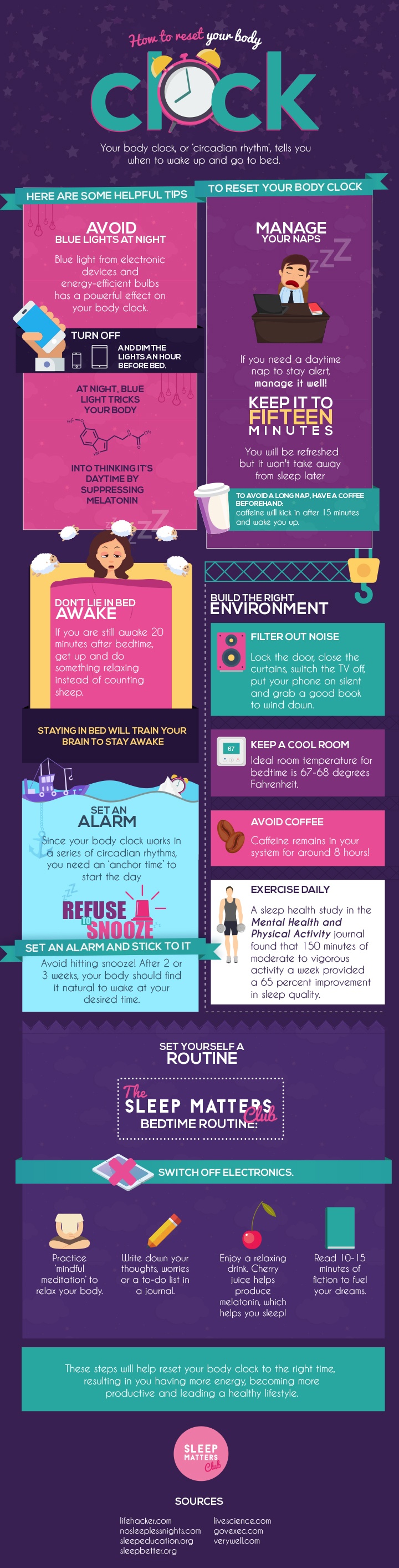
For a quick recap you can come back to any time, take a look at our infographic below. It brings the main steps together at a glance, handy for pinning up or sharing with anyone whose sleep could use a little reset.