Born from NASA technology and perfected for sleep.
Relationships
5 min read
Health & Wellbeing
7 min read
We Surveyed 2000 People
We know that beds aren’t just for sleeping – they’re for the toast crumbs, the page-turners, the late-night chats, and the pets. We refuse to pretend that bedtime is always a perfect sanctuary of meditation; the reality is often as chaotic and unpredictable as life itself. This year, we checked back in with the nation, surveying 2,000 adults to see how our relationship with rest has evolved since 2024. We’re finally making our sleep a priority, but our minds have never been busier.

Jump to the data
Sleep Survey
We polled 2,000 UK adults in January 2026 to get a snapshot of the nation’s sleep habits. Our respondents came from every corner of the country, with a good spread across ages, genders and regions.
Gender split: 52% women, 48% men
Age breakdown: Our biggest group was the 65+ age bracket at 24%, followed by 25–34-year-olds at 17%, 55-64 at 16%, 35-44 at 16%, 45-54 at 15%, and 18-24 at 11%.
Regional breakdown:
Results
Here’s something to feel cheerful about: we’re sleeping more than we were in 2024.
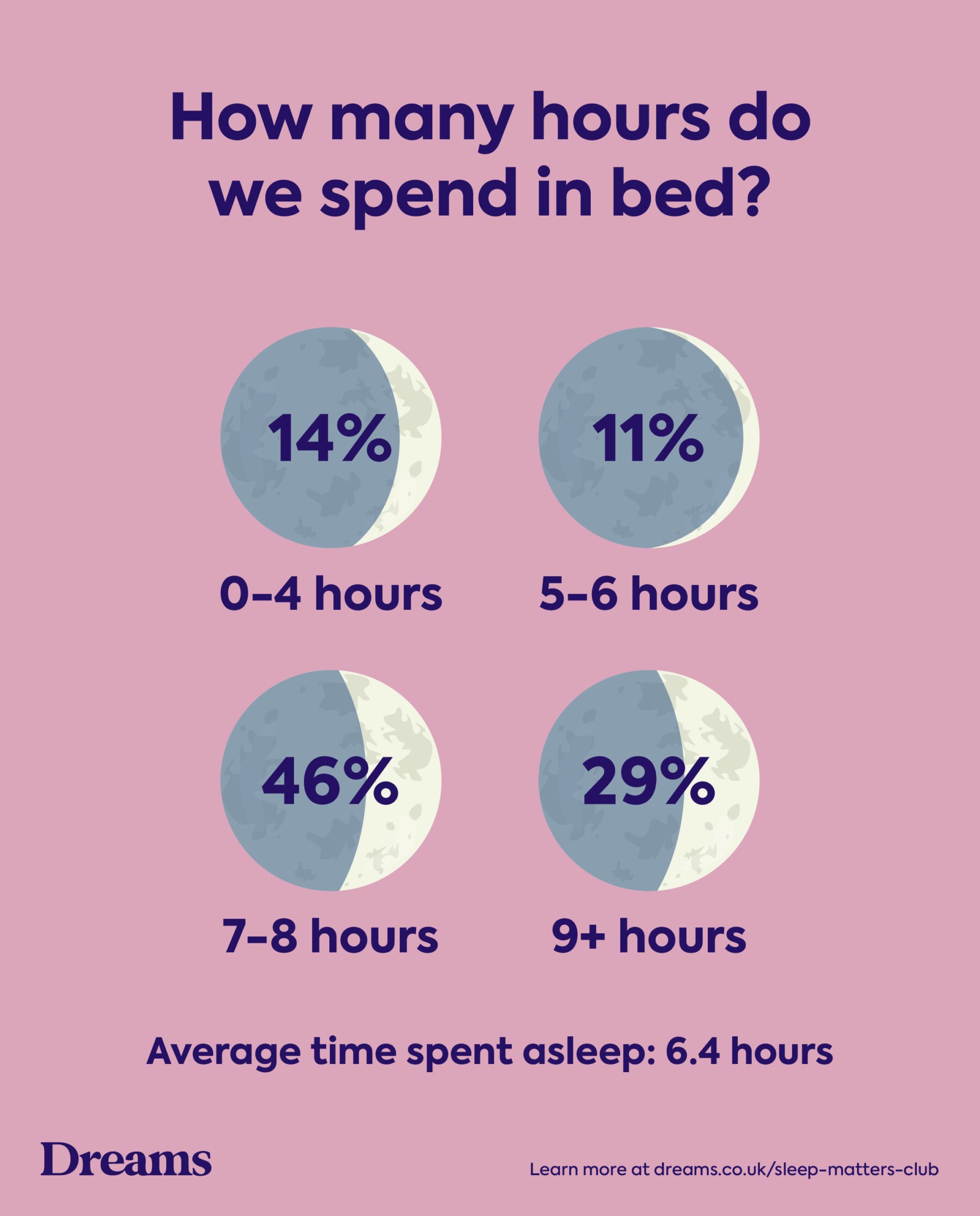
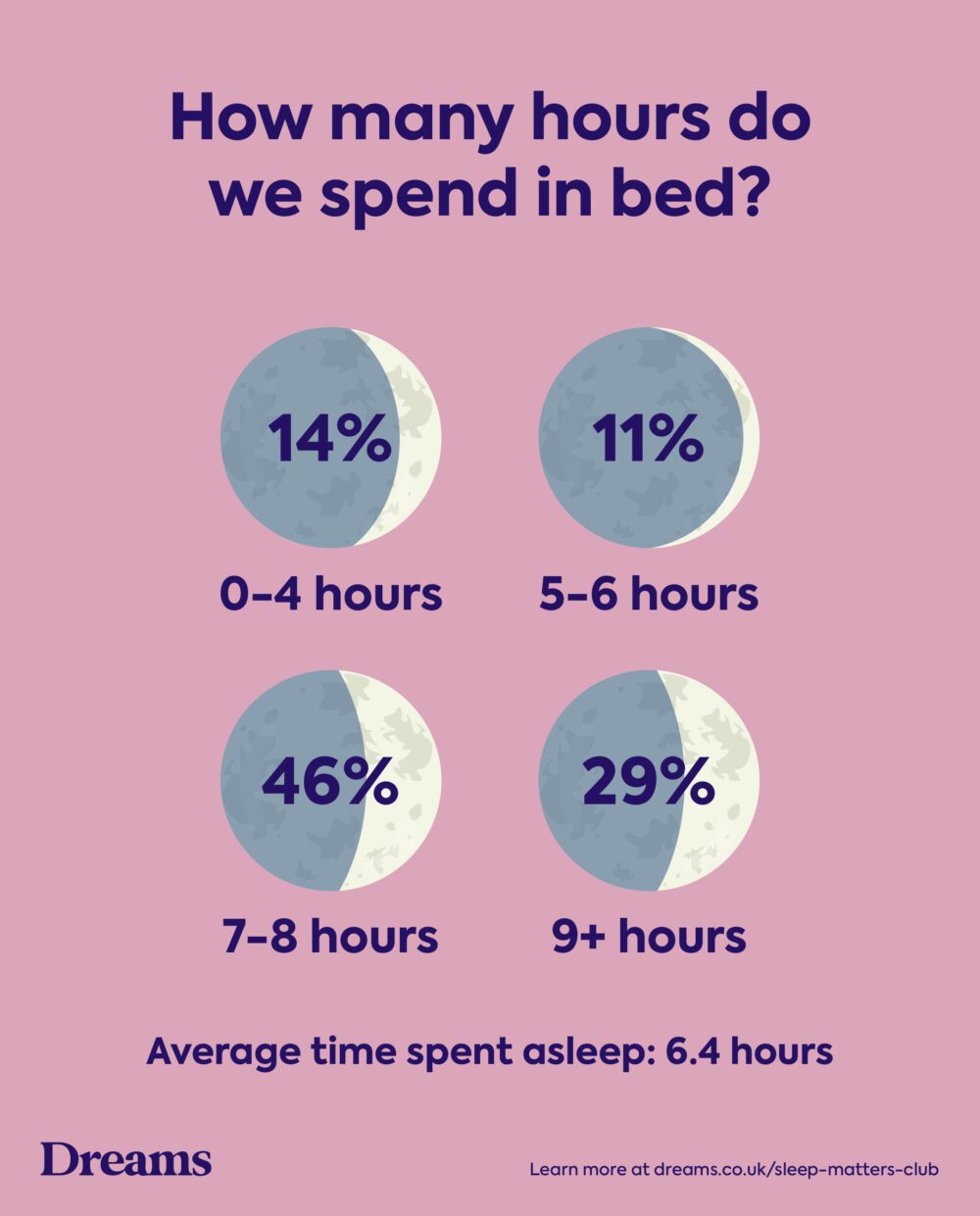
On average, Brits spend 7.2 hours in bed each night and get 6.4 hours of actual sleep. That’s over 20 minutes more sleep than we were getting in 2024, when the average was 6.0 hours.
Women tend to spend a bit more time in bed (7.4 hours) compared to men (7.0 hours), and women are also clocking slightly more sleep time at 6.4 hours versus 6.3 hours for men.
More time in bed doesn’t always mean better rest, as only 5% of us always wake up feeling refreshed, and just 27% feel refreshed often. Another 39% say they sometimes wake up feeling good. That still leaves almost a third of us dragging ourselves out of bed feeling less than our best, with 24% rarely feeling refreshed and 6% never experiencing that fresh morning feeling.
When we asked people to rate their sleep quality over the past month, the results painted a mixed picture.
40% rated their sleep as good (with 11% saying “very good” and 29% saying “fairly good”), while 26% rated it as bad (20% “fairly bad” and 6% “very bad”). The remaining 34% sat somewhere in the middle.
There’s a notable gender split here. Women are more likely to rate their sleep as bad (29%) compared to men (23%). And when it comes to waking up refreshed, 7% of men say they always feel that way versus just 3% of women. The 35-44 age group bucks the trend somewhat, with 44% always or often waking up refreshed and over half (51%) rating their sleep as good, suggesting this age group has figured something out despite the demands of careers and families.
The effects of poor sleep are showing up in our daily lives. When we don’t sleep well, 54% of us experience low energy the next day, 51% feel fatigued, 39% notice low mood, and 35% become more irritable. Women feel the impact more: 61% experience low energy after a bad night’s slumber, compared to 46% of men.
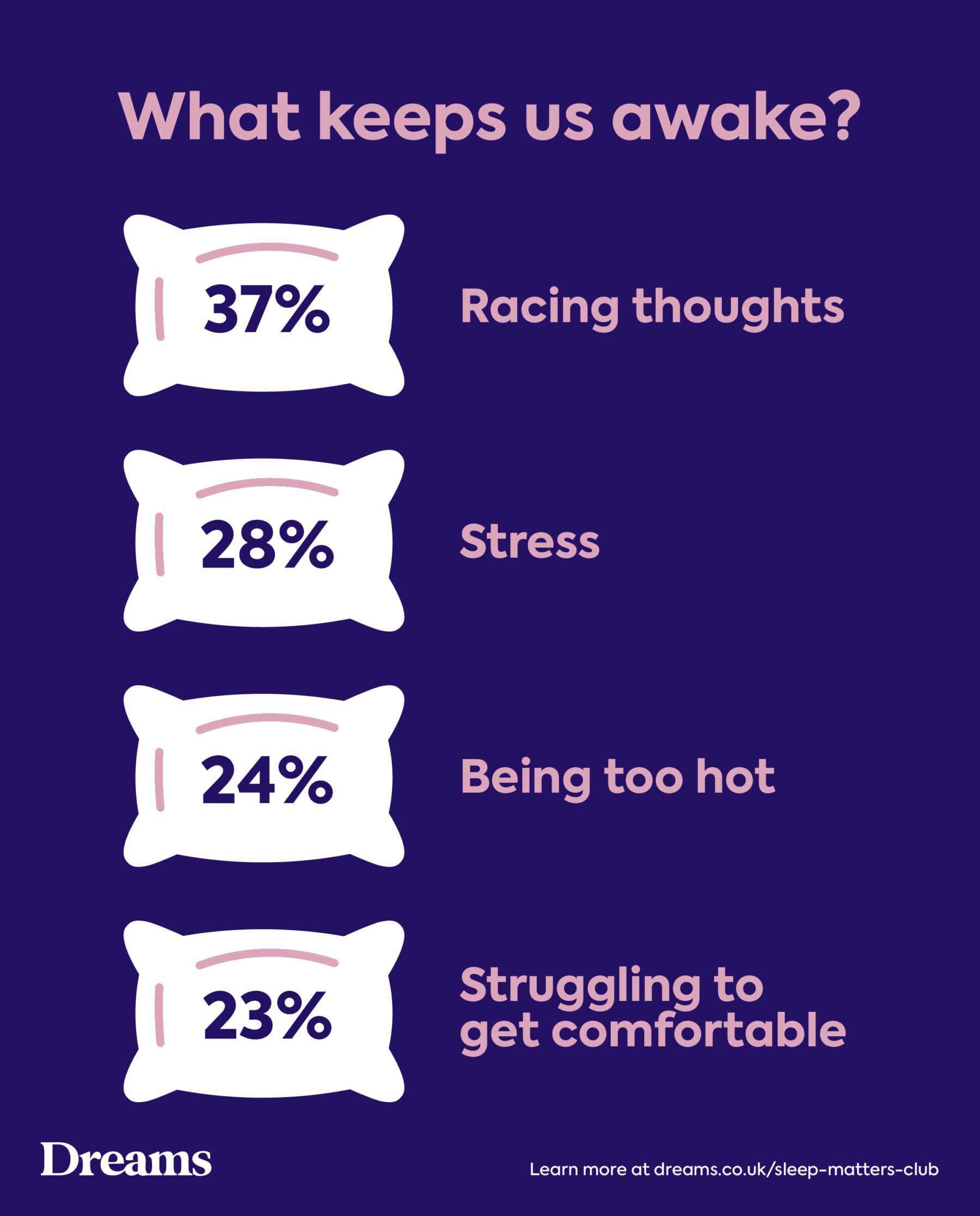
If you’re lying in bed with your mind racing through tomorrow’s to-do list, you’re in good company. Racing thoughts and a busy mind top the list of sleep disruptors in 2026, keeping 37% of us awake.
This is a shift from 2024, when being too hot was the main culprit at 37%, followed closely by stress at 31%. While stress still affects 28% of us, it seems our brains have become even busier at bedtime.
Here’s what’s disturbing our sleep:
On average, we’re experiencing disturbed sleep 3.4 nights per week, with 19% of us dealing with broken sleep every single night. Perhaps surprisingly, it’s the over-55s who are feeling it the most. Both the 55-64 and 65+ age groups average around 3.8 nights of disrupted sleep per week.
Here’s something that might resonate if you’ve ever woken up with a sore back. Over three-quarters of us (75%) have been woken up by pain or discomfort, 45% of us at least once a night. Only 25% say they never experience this.
For those who do experience it, the average is 1.9 times per night. That’s a lot of interrupted sleep cycles! Surprisingly, 18-24-year-olds experience this most frequently, waking 2.5 times on average due to pain or discomfort. Whether that’s related to lifestyle, posture, or mattress quality is worth considering.
If you’re waking multiple times due to discomfort, it’s more common than you might think. 18-24 year olds are the most affected, with a quarter (25%) waking four or more times per night. That’s nearly double the national average! The 35-44 age group follows at 16%, while older age groups actually fare better, with just 10% of over-65s experiencing this level of disruption. Could it be down to long hours at a desk, budget mattresses, or simply not prioritising sleep just yet? If pain is regularly interrupting your sleep, it might be worth looking into a mattress designed for proper support. Your back will thank you.
Over 60% of us worry about sleep at least some nights. We’ve become so aware of sleep’s importance that the very act of trying to sleep has become stressful for many.
There’s a bright side, though. This is actually an improvement from 2024, when 10% worried every night and 27% worried most nights. Perhaps being better informed about sleep isn’t so bad after all…
Age makes a remarkable difference to how much we fret about sleep. A massive 44% of 18-24-year-olds worry about not getting a good night’s sleep most nights or every night. Compare that to just 17% of over 65s. Whether it’s the pressures of early careers and education, social media comparisons, or simply having more on their minds, younger Brits are losing sleep over… losing sleep. Men are also more carefree about it all, with 15% never worrying compared to just 8% of women.
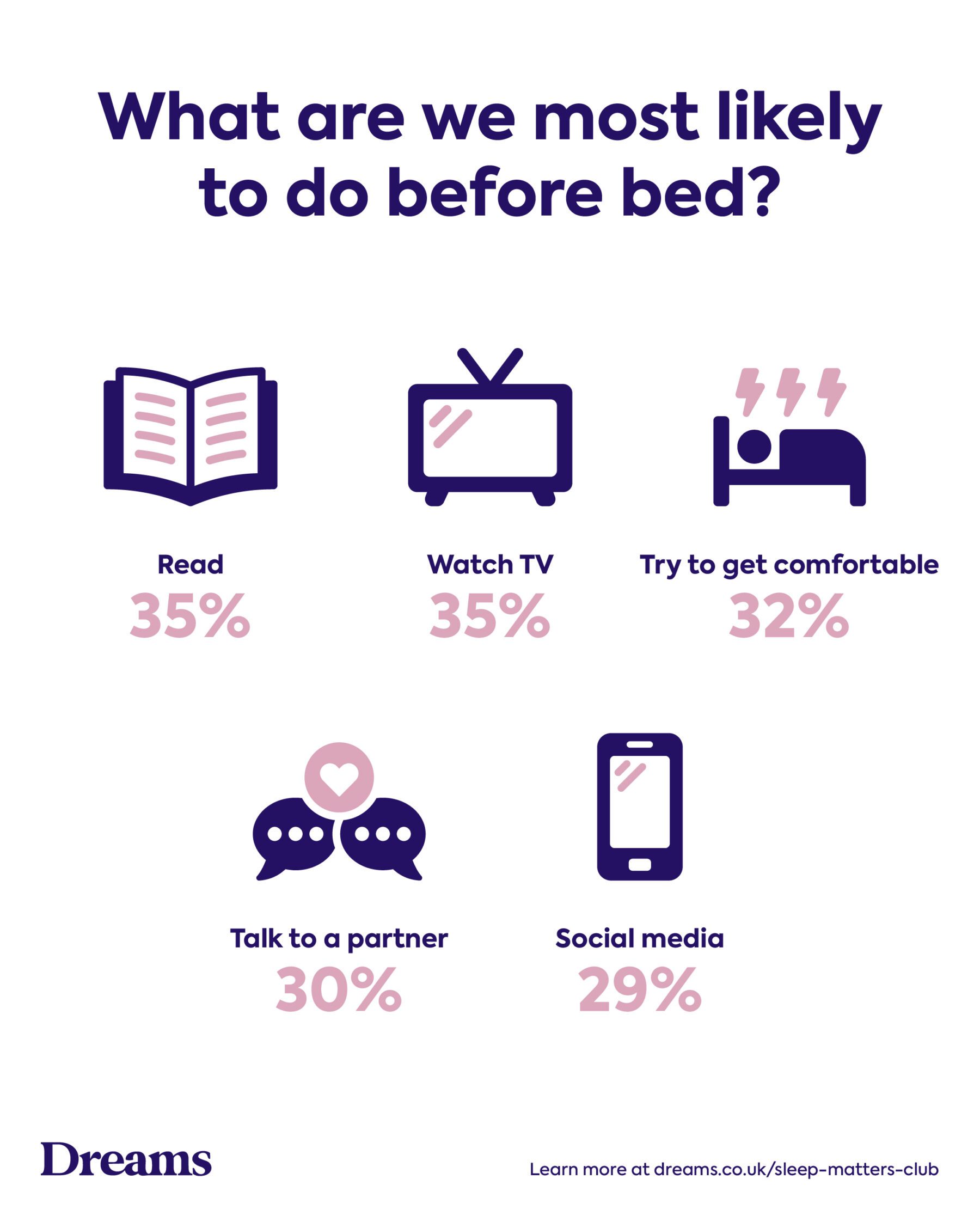
Forget what some sleep experts say about keeping your bedroom sacred. For many of us, bed has become the command centre for everything from catching up on TV to answering emails.
Here’s the full breakdown of what we get up to in bed before nodding off:
Reading has made a comeback. It’s now the most popular pre-sleep activity at 35%, up from 27% in 2024. There’s something somewhat reassuring about that relaxing pre-bed routine.
Meanwhile, social media scrolling has dropped, from 34% in 2024 to 29% in 2026. Perhaps we’re finally taking those “put down your phone” warnings seriously.
Here’s something employers might not want to hear. 8% of us often or always take naps during the day while working from home. Another 16% do it sometimes, and 12% admit to the occasional sneaky snooze.
The younger workforce is leading this trend. A notable 17% of 18-24s often or always nap while working from home, with 15% of both 25-34s and 35-44s doing the same. Whether this is a sign of burnout, poor nighttime sleep, or simply making the most of no commute is open to interpretation.
If you’ve been anywhere near social media in the past couple of years, you’ll have seen sleep hacks going viral. From the Sleepy Girl Mocktail to military techniques promising you’ll drift off in minutes, we asked the nation what they’ve actually tried.
The Military Sleep Method has captured the nation’s imagination. Originally developed for US Navy pilots who needed to fall asleep in 2 minutes under any conditions, this technique involves progressively relaxing your muscles from your face to your feet while clearing your mind. 16% of Brits have tried it, making it the most popular sleep technique in our survey. Another 22% are curious and would consider giving it a go.
Does it work? The original claim of falling asleep in two minutes after six weeks of practice came from a 1981 book, and sleep experts say the underlying principles are sound (they’re similar to proven relaxation techniques used in therapy). You might not hit that two-minute mark, but it could certainly help.
Remember when TikTok convinced everyone to drink tart cherry juice before bed? The Sleepy Girl Mocktail (a blend of tart cherry juice, magnesium powder, and sparkling water) went viral in 2023 with millions of views.
6% of our respondents have tried it, with another 15% interested. The science behind it isn’t entirely TikTok nonsense either. Tart cherries do contain natural melatonin, and magnesium is known to promote relaxation.
This trend skews younger and female. It’s most popular among 35-44s (15%) and 25-34s (11%), and women (19%) are nearly twice as interested in trying it as men (11%). The Military Sleep Method, meanwhile, appeals most to 25-34s (28%) and least to over 65s (17%).
Other techniques people are trying:
63% of people haven’t tried any of these techniques and aren’t particularly interested. Sometimes the old ways work just fine.
Over half of us (51%) have tried some form of sleep aid. The days of simply counting sheep are well behind us.
Pillow spray tops the list. 21% of us have spritzed our pillows with lavender or other calming scents, though this is far more popular among women (30%) than men (12%). Sleep supplements come in second, most used at 19%, followed by the classic eye mask at 17%.
Here’s what we’re using:
The rise of sleep tech is notable. 8% of us now wear something to bed that tracks our sleep, and 6% have invested in a smart mattress. Younger people are leading the charge on wearables, with 14% of both 18-24s and 35-44s using sleep-tracking devices, compared to just 6% of 55-64s and 2% of over 65s. We’ve come a long way from warm milk and a good book (though that can still work, too).
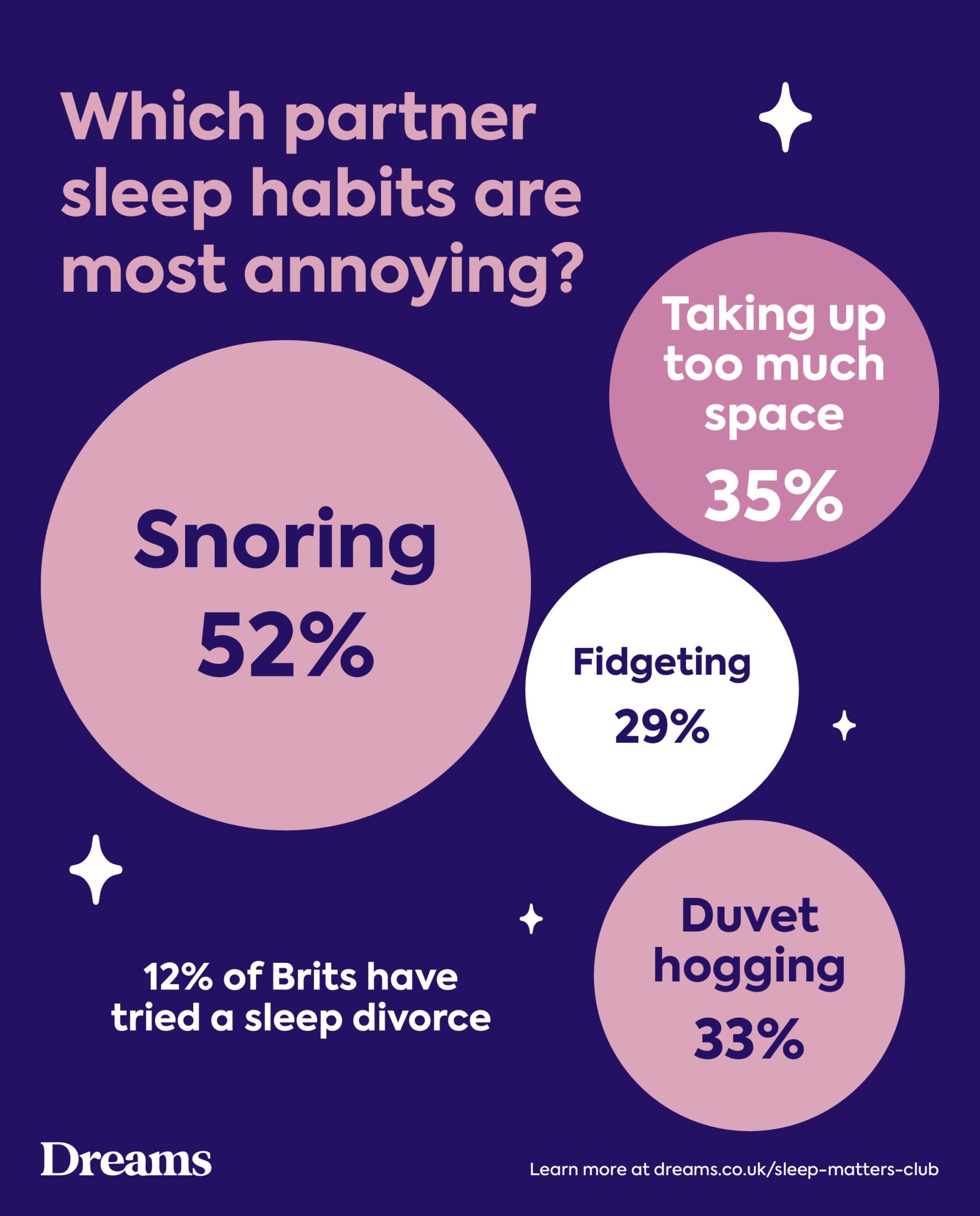
You might have heard of “sleep divorce“, the practice of sleeping in a separate bed from your partner. It’s been making headlines for years now, and our survey shows it’s gaining real traction in British bedrooms.
12% of Brits have tried sleep divorce, and another 9% are considering it. That’s over one in five couples either sleeping apart or thinking about it. The trend is most popular among 45-54-year-olds, showing it’s the more established couples who are discovering that sometimes, sleeping apart means staying together.
Why the appeal? When a quarter of us (25%) admit we sleep better without our partner there, the maths starts to make sense. Between the snoring and the duvet hogging, sometimes love means letting each other sleep in peace.
Before you start clearing out the spare room for a sleep divorce, some middle-ground approaches are gaining popularity.
The Scandinavian Sleep Method keeps couples in the same bed but gives each person their own duvet. No more midnight tug-of-war. 6% of Brits have tried it, and another 11% are interested in giving it a go.
The German Sleep Method takes things a step further, with separate mattresses and bedding. 5% of our respondents have tried it, with 8% curious to try. If you’ve ever been woken by your partner’s restless legs or found yourself rolling into the dip they’ve created in your shared mattress, you’ll understand the appeal.
For those who do share a bed (62% of us currently sleep with a partner), we asked what people find most irksome about it. The answers won’t surprise anyone who’s ever been elbowed awake at 3 am.
A quarter of us (25%) admit we sleep better when our partner isn’t there. Whether that leads to more sleep divorces remains to be seen.
Here’s one that might cause some domestic discussions. When we asked people whether they’d rather share their bed with their partner or their pet, the results were surprisingly close.
That’s right. 13% of Brits would choose their pet over their partner for bed-sharing privileges. Women are more than twice as likely to prefer their furry friend, with 18% choosing a pet over a partner compared to just 8% of men. We’re not judging. Pets don’t snore (well, some do), and they don’t hog the duvet.
31% of us allow pets in our beds, with younger people far more likely to do so. Half of 18-24s (50%) and 40% of 25-34s let their pets sleep with them, compared with just 12% of over-65s. Of those who do share with pets, 69% say they actually like having them there (rising to 75% among women).
The other reasons pets end up in bed? 30% say their pet gets in anyway, regardless of rules, 22% simply can’t say no to that face, 16% say their pet complains if they’re not allowed, and 8% report that their partner insists. On that last point, 13% of men say their partner insists on the pet being allowed in bed, while only 4% of women gave that reason.
We asked people what life events have had the biggest impact on their sleep. The answers reveal just how connected our sleep is to what’s happening in our lives.
Illness and health conditions top the list at 31%. When our bodies are struggling, so is our sleep. This rises sharply with age, affecting 44% of people aged 65 and over.
Here’s what people said had made the biggest impact on their sleep over the years:
The mental health connection deserves closer attention. While 26% of the overall population say mental health has impacted their sleep, the figures are dramatically higher for younger age groups. A striking 38% of both 18-24s and 25-34s report mental health affecting their sleep, along with 32% of 35-44s. By contrast, older generations report far lower figures. If you’re a younger person struggling with sleep and mental health together, you’re far from alone.
If you’re battling bedtime anxiety, it might be worth exploring our guide on reducing anxiety for better sleep.
When we asked people what their bed means to them, the answers showed just how important this piece of furniture really is.
Beds are clearly about much more than just sleep.
We’ve all been there. The alarm goes off, and the only thing that could possibly make you leave your cosy cocoon is… what exactly?
We asked people what would motivate them to get up an hour earlier than usual:
That last statistic says it all, really. 28% of us are committed to our lie-ins no matter what’s on offer. We respect that.
Younger people are far more motivated by fitness, with 26-28% of 18-44-year-olds willing to sacrifice sleep for the gym. Spending time with a partner is a bigger motivator for those in their relationship-building years, rising to 42% for 25-34s and 41% for 35-44s. Meanwhile, older generations are most likely to be in the “nothing would get me up early” camp.
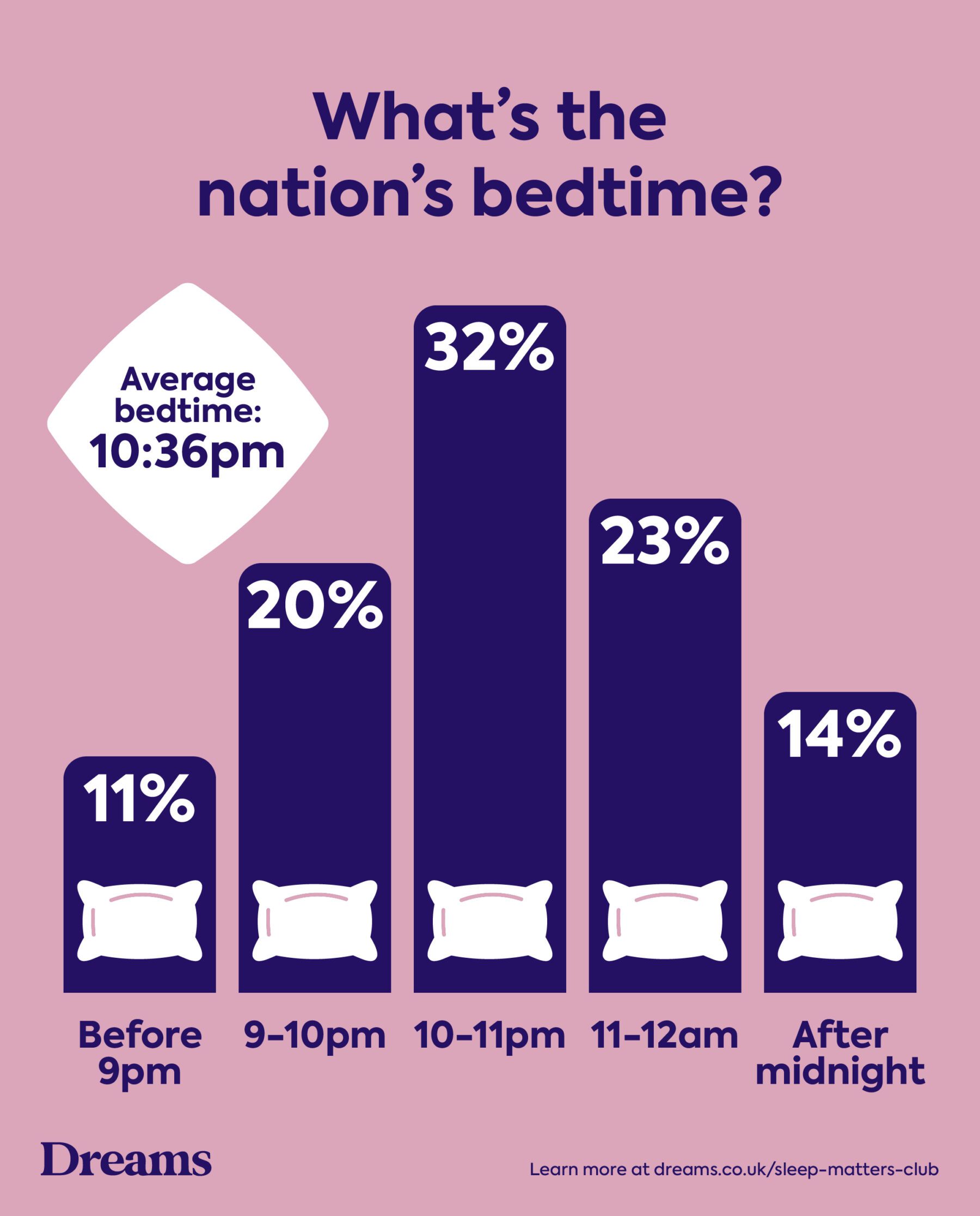
Most of us (55%) head to bed between 10 pm and midnight, with 10 pm to 11 pm being the most popular bedtime window at 32%.
Average bedtime: 10:36 pm
As for mornings, over half of the nation (56%) is up before 7 am. The most common wake-up time is between 6 am and 7 am (29%), though 7% of early birds are awake before 5 am.
Average wake time: 6:58 am
The 35-44 age group are the nation’s earliest risers, waking at 6:36 am on average. Whether it’s young children, peak career demands, or the school run, this age group has a lot of reasons to be up before everyone else.
Meanwhile, 18-24s enjoy a more leisurely start, not surfacing until 7:28 am on average. The over-65s split the difference, presumably enjoying retirement but still bound by decades of early alarm habits.
Pyjamas remain the nation’s sleepwear of choice at 44%, followed by underwear only (19%), sleeping naked (18%), and a simple T-shirt (8%). On the naked front, the over-65s are leading the charge at 24%, having apparently decided life’s too short for pyjama buttons. Men (31%) are also far more likely than women (9%) to sleep in underwear only.
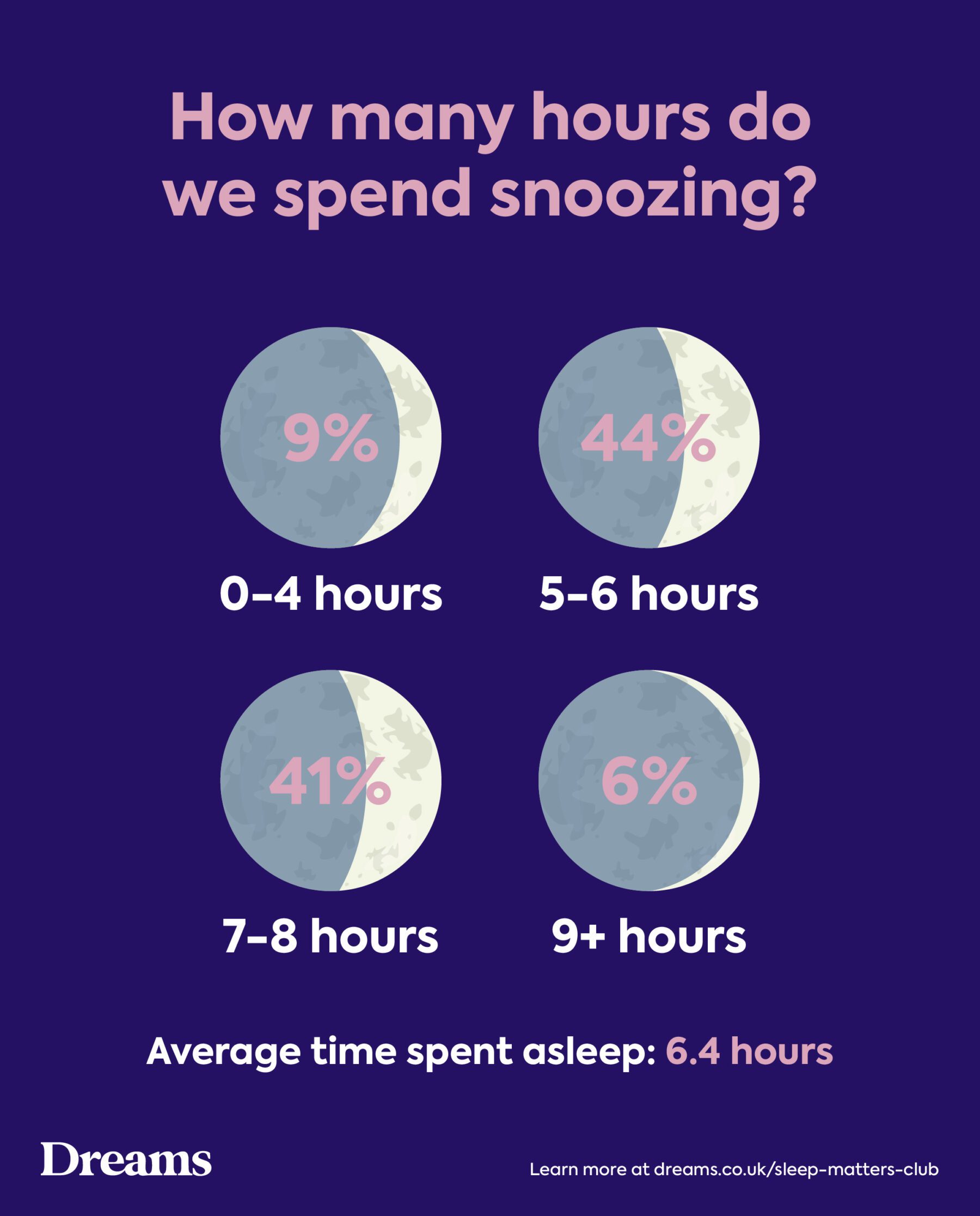
And when the alarm goes off? 45% of us never hit snooze. Those who do snooze average about 1.7 times each morning, though 18–24s are the nation’s lie-in champions at 2.2 snoozes per alarm, closely followed by Scottish respondents at 2.1.
The average mattress in UK bedrooms is now 6.4 years old, slightly older than the 6.1 years we saw in 2024.
If yours is getting on a bit, it might be worth seeing what’s out there. Our Sleepmatch technology can help you find the right mattress for your body and sleep style in just a few minutes.
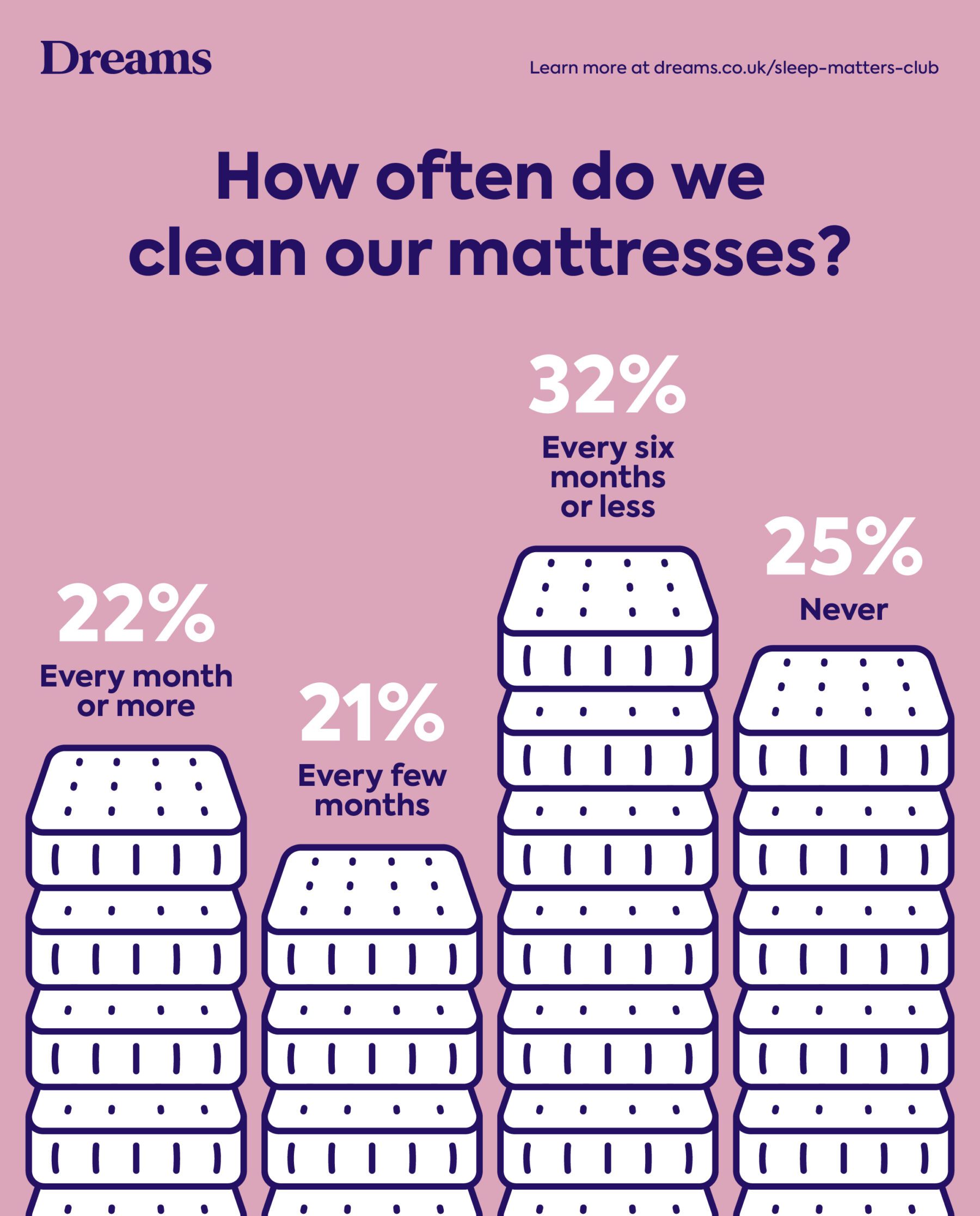
And when it comes to mattress hygiene, let’s just say there’s room for improvement. A quarter of us (25%) have never cleaned our mattresses. Ever. Women (29%) are even more likely than men (21%) to have never cleaned theirs. Londoners are the exception, with a third (34%) cleaning their mattress monthly. The rest of us, it seems, have other priorities.
When it is finally time to say goodbye to an old mattress, 38% of us take it to the tip, while 26% recycle it through a mattress retailer. Just 9% give it away, 6% put it out with general rubbish, and 6% donate to a charity shop. Younger people (25-44) are more likely to give mattresses away (17%) rather than hauling them to the tip.
While mattresses get all the attention, we also asked about the other essentials.
Bed frames are the real veterans of the bedroom. The average British bed frame is 9.3 years old, with 29% of us sleeping on frames that are 11 years or older. Only 18% have had theirs for two years or less.
Pillows average 3.6 years old. Sleep experts generally recommend replacing pillows every 1-2 years, so many of us might be overdue. Londoners have held onto theirs longest at 4.2 years, while Northern Irish sleepers are more likely to refresh theirs, averaging just 2.6 years.
Duvets sit in the middle at 4.6 years old on average. A third of us (33%) have had our duvet for 2-3 years, while a quarter (25%) have been snuggling under the same one for 6 years or more.
Fresh bedding is one of life’s simple pleasures. But how often are we actually changing our sheets?
On the positive side, nearly three-quarters of us (74%) change our sheets at least every fortnight. On the less positive side, less than 1% admitted they never change them at all.
There’s an interesting age split here. The 25-34 and 35-44 age groups are most likely to change sheets several times a week (15% and 22% respectively), while older generations tend toward the once-a-week or fortnightly rhythm.
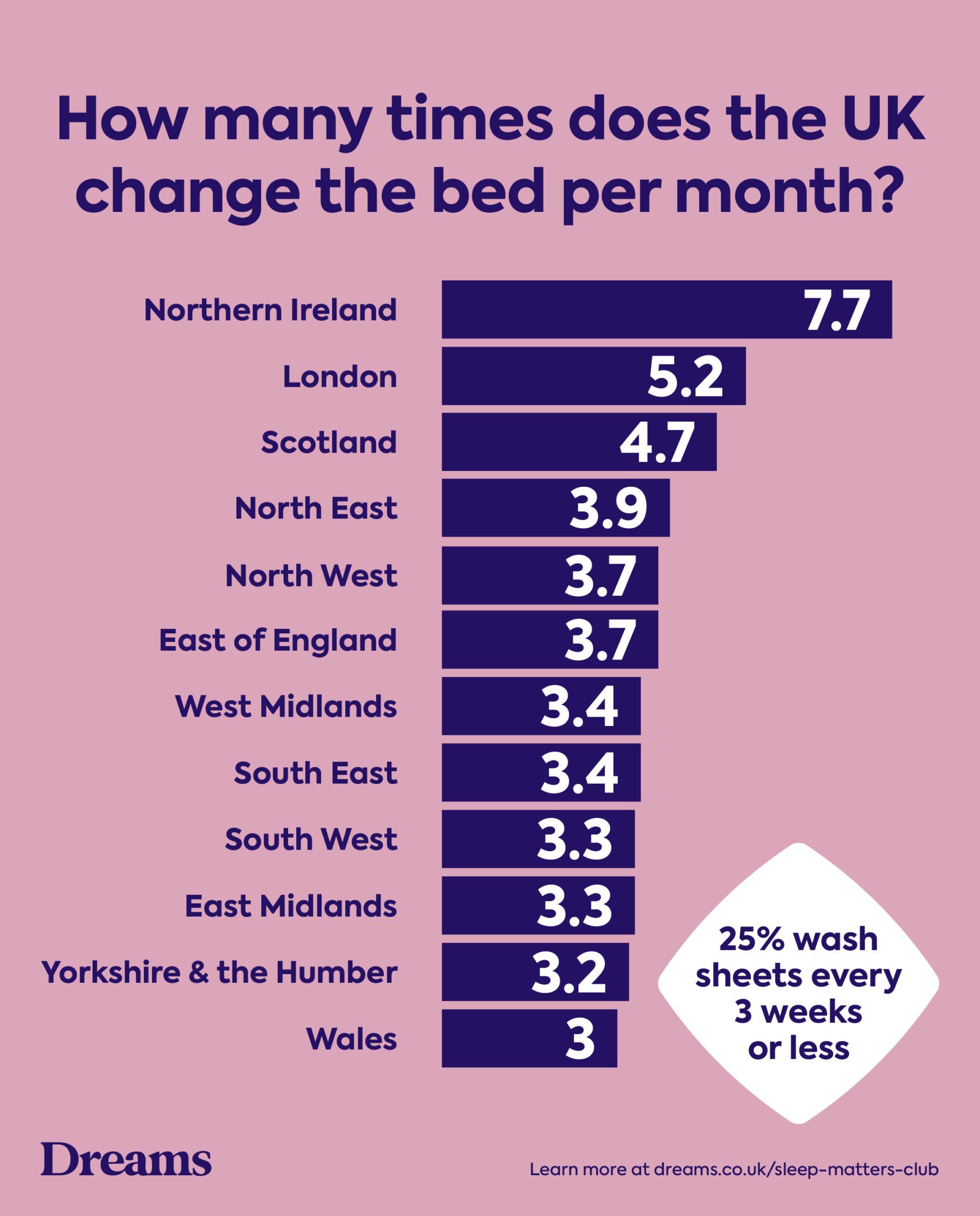
Where you live seems to influence how often you strip the bed. Northern Ireland tops the chart at 7.7 times per month, though this comes from a smaller sample. London follows at 5.2 times per month, with Londoners clearly committed to crisp sheets. Scotland comes third at 4.7 times per month.
At the other end of the spectrum, Wales averages just 3.0 times per month, with Yorkshire and the Humber (3.2) and East Midlands (3.3) not far ahead.
Here’s the full regional breakdown (average sheet changes per month):
The overall picture? We’re sleeping a bit longer and worrying about it a bit less. Fewer of us are doom-scrolling before bed, and more of us are picking up a book instead. Small improvements, but they add up.
Expert advice
If this survey has made you think about your own sleep habits, here are a few things that might help:
For more practical advice on getting a better night’s rest, explore our full guide to ways to sleep better at night.
This survey was conducted by OnePoll on behalf of Dreams in January 2026, with 2,000 UK adult respondents.
Want more snooze-worthy tips?
Problems Sleeping
8 min read
9 min read