Divan bed guide: what is it, types, storage & how to choose
Last updated: November 2026
If you're researching divan beds but aren't sure what sets them apart, whether they suit your sleep style, or how to match one to a mattress, this guide covers it all.
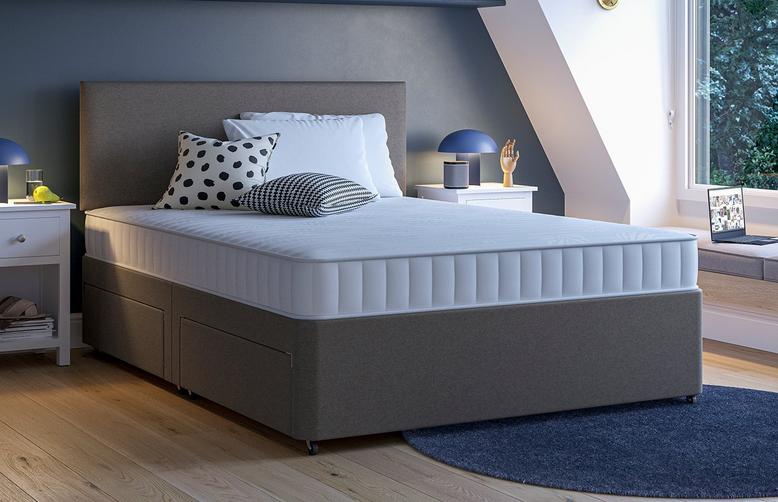
The internal frame is typically constructed from engineered wood or solid pine, giving the base its structural rigidity. On the outside, this frame is padded and wrapped tightly in fabric; plain weave, velvet-effect or faux leather depending on the model.
Divan beds are one of the most common bed types in the UK, particularly popular in smaller bedrooms and properties where floor space is a priority. While divans are usually just a simple foundation for your mattress, in most cases it does also come with optional storage from drawers to a lift-up mattress.
How does a divan bed work?
A divan base functions as a self-supporting platform. Unlike a slatted frame, which suspends the mattress across a series of individual strips, a divan holds the mattress on a continuous, unbroken surface. This surface is either a firm, solid panel (platform top) or a pocket-sprung layer (sprung base), depending on the model.
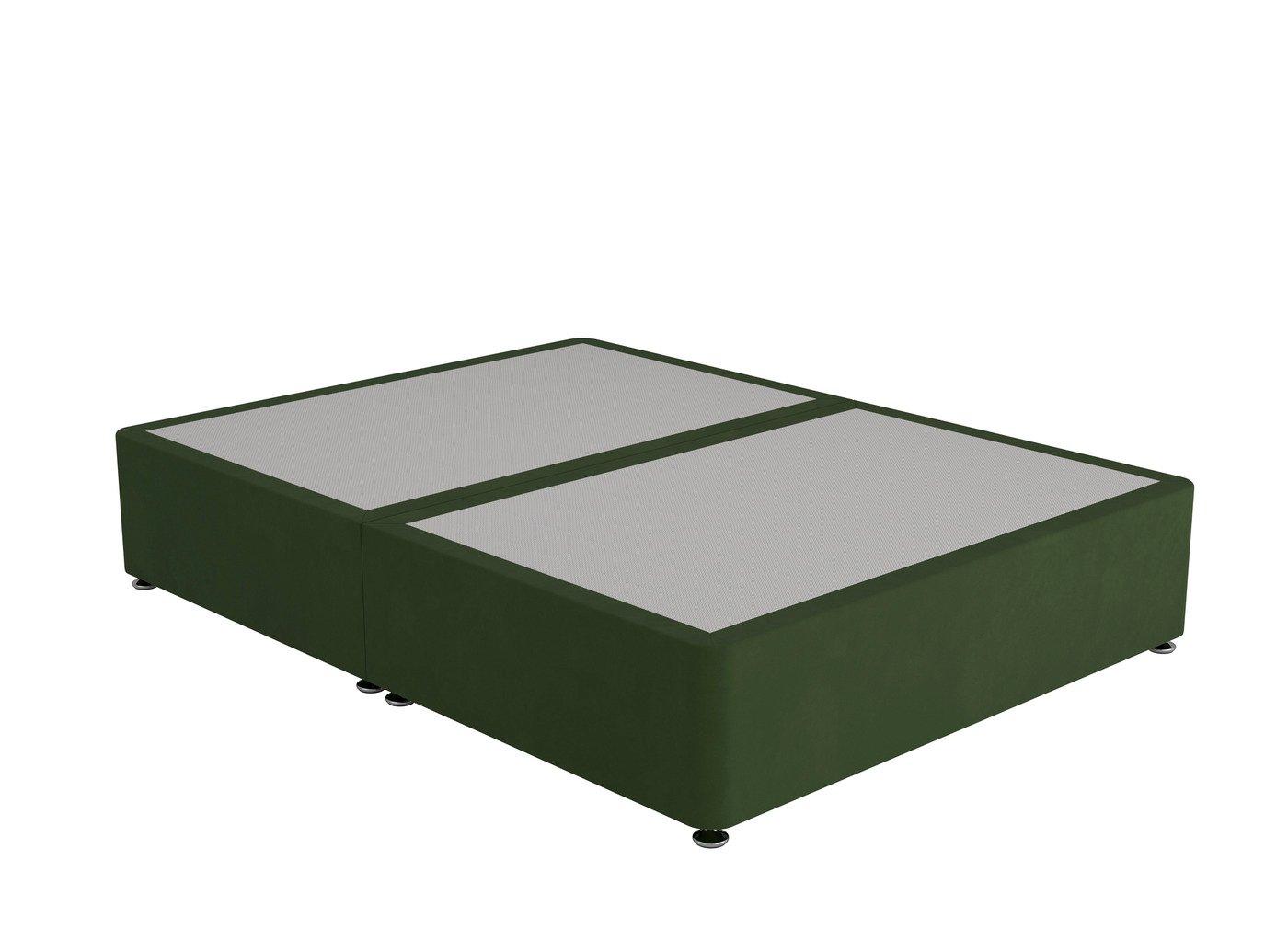
The base arrives in two halves for double sizes and above, and each half is an independent box that connects to the other using a linking bar. The two halves are not rigidly bolted but held by the bar, which allows small adjustments when positioning the bed in a room.
Storage, where included, sits inside the base box itself. Drawers are recessed into the sides of the box. An ottoman mechanism uses a gas-assisted piston mounted inside the base to lift the mattress upward; the gas piston provides enough resistance to hold the mattress open at full height, freeing both hands for access to the storage beneath.
What are the benefits of divan bed bases?
- Consistent surface across the full sleeping area. No slat gaps means the mattress rests on an unbroken surface. This produces more even wear over time and gives better performance for mattress types that rely on a flat base — particularly memory foam and orthopaedic mattresses.
- Storage built into the structure. Drawers or the ottoman mechanism are components of the base itself. The storage footprint is identical to the sleeping footprint; no separate furniture needed.
- Simpler to move than most frames. Each half of a double or larger divan is its own self-contained box. Moving house or repositioning the bed means moving two manageable boxes rather than dismantling a frame with multiple rails, slats and fixings.
- Fewer mechanical weak points. A slatted frame has individual slats, corner joints and multiple fixings. A divan has none of these — the base is a single solid construction per half, meaning less to work loose or develop noise over time.
- Lower visual profile. Without legs elevating the frame, the base sits close to the floor. In a bedroom, this tends to make the space feel more open, particularly in rooms with lower ceilings.
For more on comfort and performance, see are divan beds comfortable?
What are the disadvantages of a divan bed?
- No gap underneath. The close-to-floor profile that keeps a divan looking clean also means no clearance for storage boxes or containers beneath the bed. If you rely on under-bed boxes, a divan requires a different approach to storage.
- Drawer clearance requirements. Side drawers need a clear run to open. Measuring the available space beside the bed before ordering is straightforward but essential — a drawer that can only open halfway is a frustration that is easy to prevent and impossible to fix once the bed is assembled.
- Airflow is more restricted. A fully enclosed base limits air movement beneath the mattress compared to an open slatted frame. For most sleepers and mattress types this makes no practical difference, but it is worth noting for anyone who runs warm or uses a mattress designed to benefit from airflow from below.
- No headboard included. Divan bases are sold without a headboard as standard. This gives complete freedom of choice — but it is an additional cost and decision.
Divan bed base types
Known for being supportive and secure, divan bed bases differ from other bed frames by having a platform top rather than slats. Made from hard-wearing wood, our divan bed bases come in two main types: platform and pocket sprung.

Platform top bases
A platform top base has a firm, rigid panel across the top of the box, typically hardboard or solid timber. The mattress rests on this panel with no movement or flex from below.
This is the right base for any mattress that relies on a stable, consistent surface: memory foam, latex, gel foam, orthopaedic designs and most hybrids. These mattress types are engineered to do all the body-contouring work from within the mattress itself.

Pocket sprung bases
A pocket sprung base has a layer of individually wrapped springs built inside the box. These springs respond to body weight, adding a second layer of cushioning and movement beneath the mattress.
This base type pairs well with pocket spring mattresses, which are designed to work with reactive support from below. The springs in the base and the springs in the mattress create a layered system, each responding to different areas of the body. The combined feel is typically softer and more responsive than a platform top arrangement.
Which should you choose?
If you already own a mattress, check whether it contains foam layers. If it does, choose a platform top base. Platform top bases give a slightly firmer overall sleep feel, because all the bed's character comes from the mattress rather than any spring response from below. A traditional pocket spring mattress without foam layers suits either type, though a sprung base will give a softer overall feel.
Divan bed storage types
Storage built into a divan bed is part of the base structure itself, contained within the footprint of the bed and completely hidden when not in use. Here is what's available and how each type works.
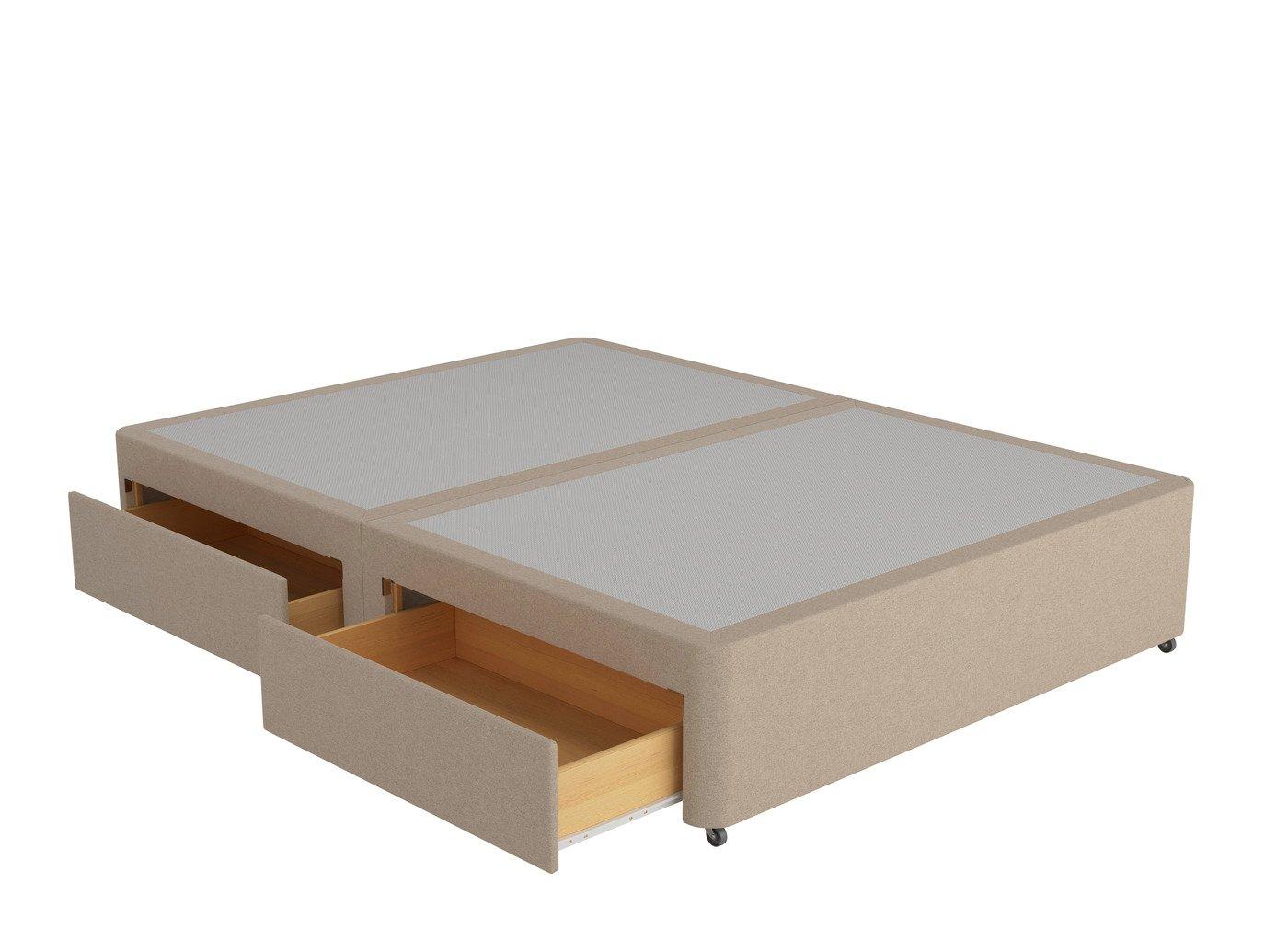
Side drawers: 2 or 4
Side drawers come in two configurations: two drawers (one on each side of the base) or four drawers (two on each side). Four drawers give you storage equivalent to a medium chest of drawers, built into the bed.
How they work: each drawer is a rectangular timber box mounted on runners inside the divan base. The runners, wooden channels or ball-bearing metal rails depending on the model, allow the drawer to slide in and out smoothly. The drawer box occupies a cavity in the side of the base frame, with a fabric-covered or panel-fronted face flush with the exterior when closed. Standard drawers run the full depth of the base, typically 28–30cm.
Practical note: you need clearance beside the bed for the drawers to open fully. If the bed sits against a wall on one side, two drawers positioned on the accessible side is the better choice over four.
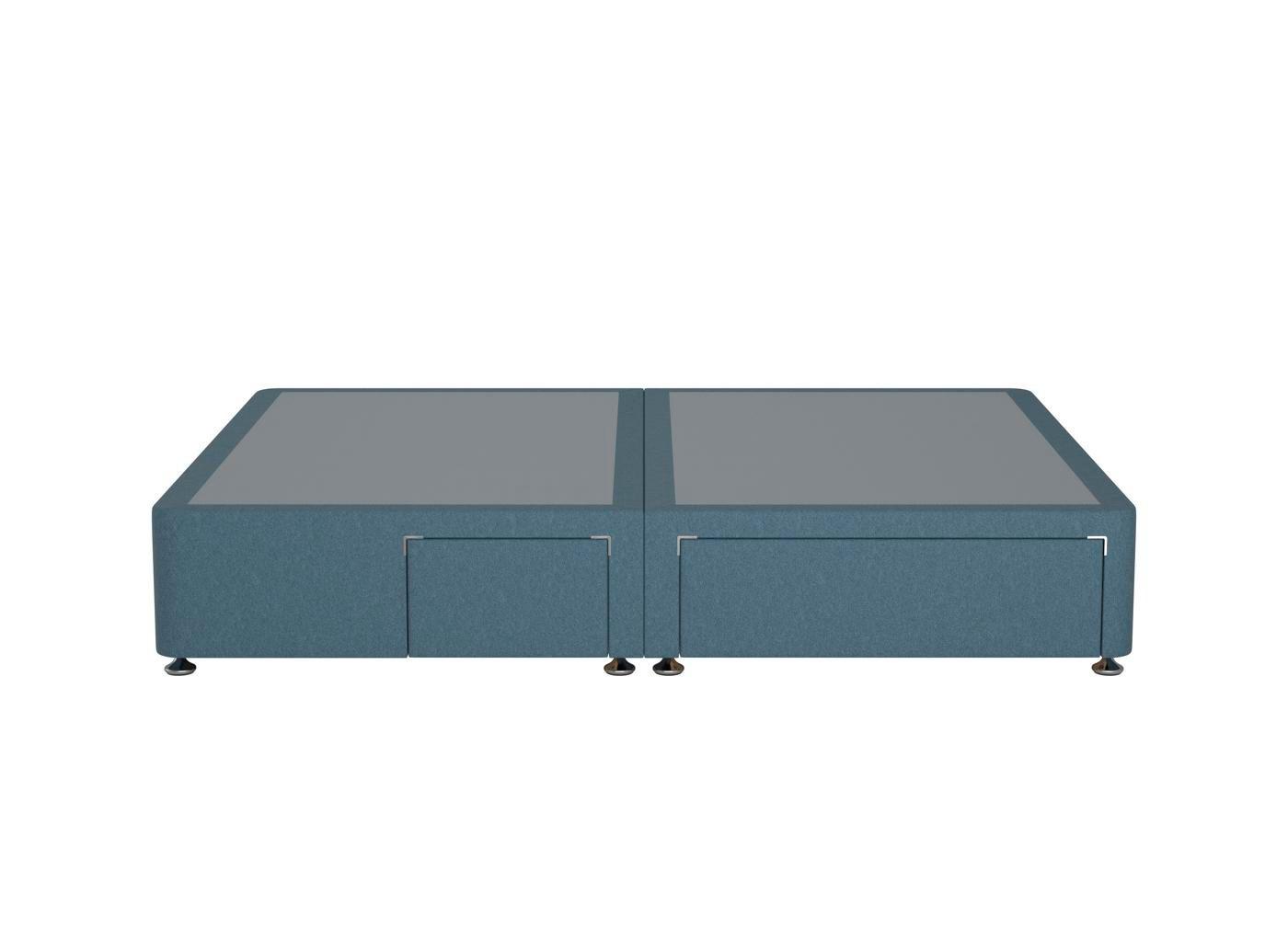
Continental drawers
Continental drawers are half-depth, roughly half the length of a standard drawer. Some divan models offer a 2+2 configuration: two full-depth drawers on one side and two continental drawers on the other, giving flexibility where room layout makes one side less accessible.
How they work: the same runner mechanism as a standard drawer but with a shorter box, so the drawer opens over a shorter distance. Useful where a bedside table is positioned close to the base and a full-length drawer would conflict with it.
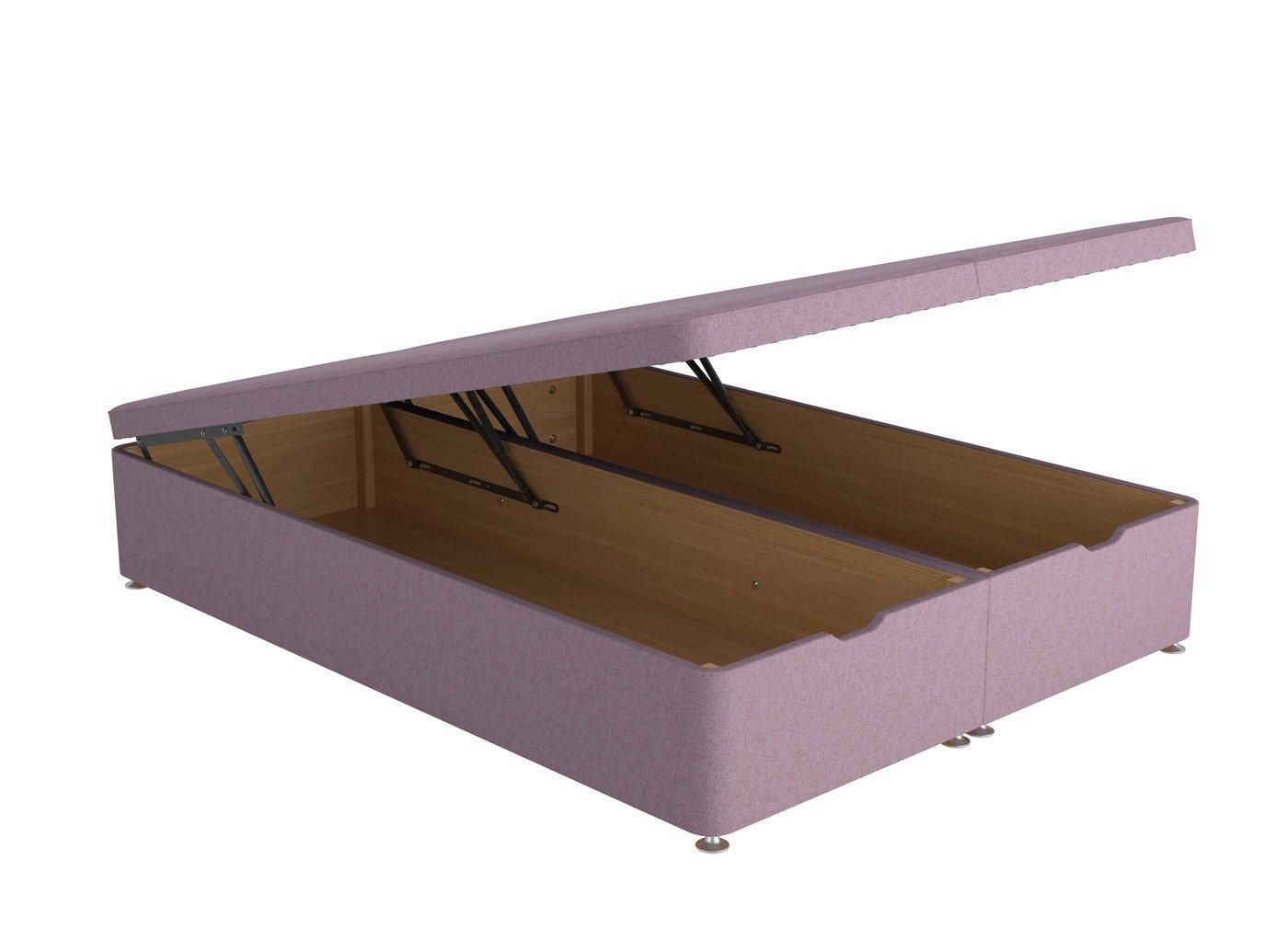
Ottoman lift
An ottoman divan base looks identical to a standard divan from the outside. The difference is beneath, the entire mattress lifts to reveal the full storage area inside the base. This can open from the foot end or from the side, depending on the model. Foot-lift is better for rooms where side clearance is limited. Side-lift gives broader access to the full depth of the storage but requires clear space on one side.
How it works: one or two gas-assisted pistons are mounted vertically inside the base. When you lift the mattress edge, the pistons extend and hold the mattress open without effort and with no propping required. To close, you lower the mattress and the pistons retract, compressing the gas back into the cylinder. The mechanism requires no electricity and no manual effort beyond the initial lift. Total storage area is typically 90–95% of the full bed footprint, making this the highest-capacity storage option available in a divan bed.
This format suits bulkier or less-frequently accessed items: seasonal duvets, suitcases, spare pillows, because the mattress needs to be lifted to access it.
No storage
Platform top and sprung bases are also available without any storage, which is a simpler, lower-cost option if storage elsewhere in the room is sufficient.
To make sure your chosen drawers have room to open before you order, use our home measuring guide. For a broader comparison of all storage bed types, see our storage beds guide.
View our range of Divan Bed Bases
SHOP ALL DIVANSDivan bed vs ottoman bed: what's the difference?
Both offer under-bed storage. The key distinction is in the mechanism and how accessible the storage is.
A divan bed with drawers stores items in side-opening drawers recessed into the base. The storage is accessible while the mattress stays in place; you open a drawer the way you would open any drawer. This makes drawer storage well suited to items you reach for regularly.
An ottoman bed base lifts the entire mattress to reveal the full area beneath. The storage volume is significantly greater than a drawer system, the complete bed footprint, but the mattress needs to be lifted each time, which suits items you access occasionally rather than daily.
The choice between the two comes down to what you're storing and how often you need it. For everyday items, drawer storage is more convenient. For seasonal or bulky storage, an ottoman base provides more capacity with less day-to-day intrusion.
For a full side-by-side breakdown, see our divan beds vs ottoman beds guide, or learn more about ottomans in our ottoman bed buying guide.
Divan bed sizes and height
Divan bases are available in all standard UK sizes. The right size depends on who's sleeping in it and your room dimensions — allow at least 60cm clearance on each side for comfortable access, and more if you're choosing side drawers.
| Size | Dimensions |
|---|---|
| Small single divan | 75cm x 190cm (2ft 6in x 6ft 3in) |
| Single divan | 90cm x 190cm (3ft x 6ft 3in) |
| Small double divan (queen size) | 120cm x 190cm (4ft x 6ft 3in) |
| Double divan | 135cm x 190cm (4ft 6in x 6ft 3in) |
| King size divan | 150cm x 200cm (5ft x 6ft 7in) |
| Super king divan | 180cm x 200cm (6ft x 6ft 7in) |
Height: sleeping height depends on base depth (typically 30–35cm), the feet or castors chosen, and mattress depth. The combination typically puts the sleeping surface 50–65cm from the floor. If getting in and out of a lower bed is a concern, legs and a deeper mattress bring the height up. For a lower, more minimal profile, glides or castor feet keep the base closer to the floor.
Weight capacity: because the load distributes across the full base area rather than individual slat or leg contact points, divan bases have strong weight tolerances. Check the individual product specification for confirmed limits; most standard models comfortably support two adult sleepers, but specifications vary between products.
For full room planning dimensions, see our bed and mattress size guide.
Types of feet on a divan bed
Feet affect the height of the base, how it moves on different floor types, and the ease of access beneath for cleaning.

Castors
Wheels, plastic or metal, attached to the base underside. Allow the base to roll, making repositioning and cleaning straightforward. On hard floors, castor cups prevent unintended movement. Castors give the lowest base height of the three foot types.

Glides
Flat pads that slide rather than roll. More stable than castors once positioned, the base won't drift on a smooth floor without deliberate effort. Work on both carpet and hard floors. Sit slightly higher than castors.
]&w=3&h=1&$webPformat$)
Legs
Fixed raised feet. Give the base the highest floor clearance and the most frame-like visual profile. If you choose legs alongside side drawers, confirm the leg height is sufficient for the drawers to open without catching the floor; most divan manufacturers specify compatible leg heights for drawer-equipped models.
Divan bed styles and colours
Because the base is fully upholstered, the fabric and colour you choose become part of the room's scheme. A divan base is a large piece of furniture and its finish has a genuine visual impact, particularly in smaller bedrooms where the bed takes up a significant proportion of the floor area.
- Neutral fabrics: plain greys, creams, beige and white are the most versatile. They sit quietly in the background and give maximum flexibility as the rest of the room changes. If you plan to redecorate over time, a neutral base is the practical choice.
- Velvet-effect finishes: these add texture and a soft sheen, giving depth to a colour without needing much else in the room. They work particularly well in richer tones such as navy, bottle green, charcoal, or deep teal for a deliberate, layered bedroom look.
- Faux leather: these finishes give a clean, contemporary feel. They wipe down easily and suit a minimal or modern room. Generally more resistant to surface marking than fabric.
On headboard pairing: a divan base without a headboard leaves a significant area of wall visible behind the bed. Choosing a headboard in a contrasting fabric or colour, a velvet headboard against a plain fabric base, for example, is one of the simplest ways to add visual interest without a full redecoration.
For styling ideas across the full bedroom, visit our bedroom inspiration hub. For headboard options compatible with all Dreams divan bases, browse our headboard range.
What’s the difference between a divan base and a bed frame?
A divan base and a standard bed frame support a mattress in fundamentally different ways, and that difference affects which mattress types suit each, how the bed feels, and how it performs over time.
| Divan bed | Slatted bed frame | |
|---|---|---|
| Mattress surface | Continuous - full contact across the whole area | Gapped - mattress rests across individual slat strips |
| Best for | Memory foam, latex, orthopaedic, hybrid | Pocket spring; some hybrids |
| Airflow beneath | Limited - enclosed base | Good - open structure |
| Storage | Built into the structure | Separate purchase |
| Floor clearance | Minimal | Variable - depends on leg height |
| Moving | Two self-contained box halves | Multiple parts: frame, slats, fixings |
| Noise over time | Less - fewer mechanical joints | More potential points of movement |
| Visual profile | Low, clean, fully enclosed | Visible legs and frame structure |
For mattress lifespan: a divan generally wins for memory foam and orthopaedic mattresses; the continuous surface prevents uneven compression. A slatted frame can benefit pocket spring mattresses through better airflow, but only where slat spacing suits the mattress specification.
For storage: a divan wins outright; storage is built in, with no additional floor space required.
For visual impact: a frame often wins where a statement structure is part of the bedroom scheme; a solid wooden or upholstered frame with visible legs has a different aesthetic role than a low, enclosed divan.
Not sure which is right for you? Our bed buying guide covers all bed types. Or browse our full range of beds to compare directly.
Are divan beds good for your back?
For most people, yes, but the answer depends on which base type is matched to the mattress above it.
The continuous surface of a divan base means there are no points where the mattress loses support, no slat gaps where the mattress can dip slightly over time. For sleepers with back pain, this consistency matters: an orthopaedic or firm mattress placed on a base that supports it fully across every centimetre performs better than the same mattress over slats with spacing between them.
The base type is particularly relevant for back support. A platform top base gives the firmest possible foundation where the mattress receives no movement or flex from below, so all the support characteristics come from the mattress itself. Most orthopaedic mattress manufacturers specify a platform top base for this reason. A sprung base introduces a secondary layer of cushioning beneath the mattress, which softens the overall feel, useful for some, counterproductive for those with specific back conditions.
For a full guide to mattress choices for back pain, see our mattress for back pain guide.
Divan bed and mattress compatibility
Getting the base and mattress pairing right extends the life of both and gives you the sleep feel the mattress was designed to deliver.
| Mattress type | Recommended base | Why |
|---|---|---|
| Memory foam | Platform top | Foam requires a stable surface — a sprung base causes uneven compression |
| Latex | Platform top | Same principle as memory foam — reactive from within, not from below |
| Orthopaedic | Platform top | Designed for maximum firm support; a sprung base undermines this |
| Hybrid (foam + springs) | Platform top preferred | Foam layers benefit from a solid foundation |
| Pocket spring | Either - sprung preferred | Springs work well with a reactive base; platform top is also compatible |
| Open coil | Platform top | Benefits from a stable, unmoving base |
One combination to specifically avoid: memory foam mattress on a pocket sprung base. The reactive movement of the sprung base works against the compression-based support system of the foam, causing the mattress to wear unevenly.
If you're buying a base and mattress together, our bed and mattress sets are pre-matched for compatibility. Or use Sleepmatch for a personalised recommendation based on your sleep style.
How long do divan beds last, and how do you care for them?
A typical divan bed lasts between 8 and 15 years, with high-quality models easily exceeding a decade when properly maintained:
- Rotating the mattress. Even on a divan, rotating the mattress every 3–6 months distributes wear across the full surface and extends mattress life. For single-sided mattresses, rotate 180 degrees (head to foot) rather than flipping.
- Cleaning the exterior. The upholstered fabric can be spot-cleaned with a damp cloth and mild detergent. Avoid saturating the fabric as damp interiors take time to dry and can affect the structural components. A fabric protector spray applied when the base is new extends the life of the finish.
- Keeping drawers running smoothly. Wooden drawer runners can stiffen over time, particularly in damp conditions. A small amount of candle wax or furniture wax applied to the runner surfaces keeps drawers sliding smoothly. Ball-bearing metal runners require no maintenance.
- Stopping a divan from squeaking. Squeaking almost always comes from loose connections rather than the base itself. The most common causes: the linking bar between the two halves (tighten the wing nuts), castor sockets where the wheel meets the cup (reseat the castor), or foot fixings that have worked slightly loose (retighten). A small amount of wax or silicone spray on metal contact points eliminates most friction-based noise.
For a full breakdown of divan bed strength, weight limits or signs you need to replace, see how strong are divan beds and how long they last. For noise specifically, see do divan beds make noise.
How to assemble a divan bed
Divan beds require no specialist tools. A basic screwdriver is sufficient for most models.
Single and small single bases arrive in one piece:
- Screw your chosen feet or castors into the pre-drilled holes on the underside of the base
- Stand the base upright and the bed is ready for the mattress
Double, king and super king bases arrive in two halves:
- Lay both halves upside-down and attach feet or castors to each half
- Turn both halves the right way up and position them side by side, aligned flush along the join
- Slide the linking bar into position across the join, it slots into brackets on each half
- Tighten the wing nuts on both sides of the linking bar until the connection is firm and the two halves feel solid as a unit
- Fit the headboard before placing the mattress, easier to do before the mattress is in place
If you'd prefer not to assemble yourself, our assembly service is available at checkout.
How to attach a headboard to a divan bed
Divan bases have pre-drilled holes beneath the fabric at the head end making it easy to attach.
Strutted headboards connect via bolts that screw into these holes, with the headboard suspended above the base:
- Screw the headboard bolts into the pre-drilled holes at the head end until snug, leaving a small gap for the strut hooks to slot over
- Lift the headboard and lower the strut hooks over the bolts
- Adjust the strut height using the available height positions to set the headboard where you want it
- Check that the headboard is level, then tighten the bolts fully to lock the position
Floor-standing (full-height) headboards rest against the head end of the base and connect through the same pre-drilled holes from the front:
- Position the headboard flush against the head end of the base, sitting on the floor
- Align the fixing points on the headboard with the pre-drilled holes
- Insert the bolts and tighten until the headboard sits firmly with no movement
View our divan assembly guides
Manufacturer's assembly guides
Follow the link below to view your manufacturer’s care guidance online.
Divan bed FAQs
Why is it called a divan bed?
The word 'divan' comes from the Turkish dīvān, a term that originally described a low cushioned bench or council chamber used in Ottoman and Persian courts. As the word entered European languages in the 18th and 19th centuries, it came to mean any low, padded piece of furniture. By the 20th century, the term had been adopted in Britain to describe this specific type of upholstered bed base.
The connection explains the overlap you'll sometimes see between 'divan' and 'ottoman' as both words share the same Ottoman court origin. Today they refer to distinct bed types, but the shared etymology is why the two are so frequently confused.
Can you put any mattress on a divan base?
Not any; the base type and mattress type need to match. Memory foam, latex, orthopaedic and hybrid mattresses need a platform top base. Pocket spring mattresses suit both platform top and sprung bases. The compatibility table above covers all combinations.
Are divan beds good for elderly people?
Generally yes. The solid, stable construction minimises the risk of movement or instability over time. Height can be adjusted using leg choices to make getting in and out easier. A platform top base paired with a medium to firm mattress provides consistent support appropriate for most older sleepers.
What is the difference between a divan bed and a normal bed frame?
A standard bed frame uses a visible structure such as legs, rails and slats to support the mattress above the floor. A divan replaces all of this with an enclosed upholstered box, sitting lower, removing the visible frame, and incorporating storage into the base itself.
What is a continental drawer on a divan bed?
A continental drawer is a half-depth drawer, roughly half the length of a standard full drawer. Designed for rooms where space beside the bed is limited, or where a full-length drawer would conflict with a bedside table or other furniture.
Is a divan better than a slatted bed?
It depends on mattress type and priorities. For memory foam and orthopaedic mattresses, a divan base is better, the continuous surface supports these mattress types as designed. For pocket spring mattresses, either works. For storage, divans win because it is built in.
What is the healthiest type of bed to sleep on?
There is no single answer, it depends on how you sleep, your body weight and any specific back or joint considerations. The most important variable for most people is mattress choice rather than base type. A divan base with a well-matched mattress is appropriate for most sleepers. Those with specific orthopaedic needs should look at a platform top base paired with an orthopaedic or firm mattress. Use Sleepmatch for a personalised recommendation.
Are divan beds good for a small bedroom?
Yes, they are one of the best options for small bedrooms. The compact, flush-to-mattress profile means no frame overhang on any side. The built-in storage removes the need for a separate chest of drawers or storage unit, which can meaningfully reduce the total amount of furniture the room needs to contain.
Ready to find your divan base? Browse our full divan beds range. Replacing an existing bed? Our recycling service collects your old bed when we deliver the new one.


