What Is Salt Stomping and Can It Help You Sleep?
9 Min Read |
With contributions from Sammy Margo
Last Modified 25 November 2026 First Added 25 November 2026
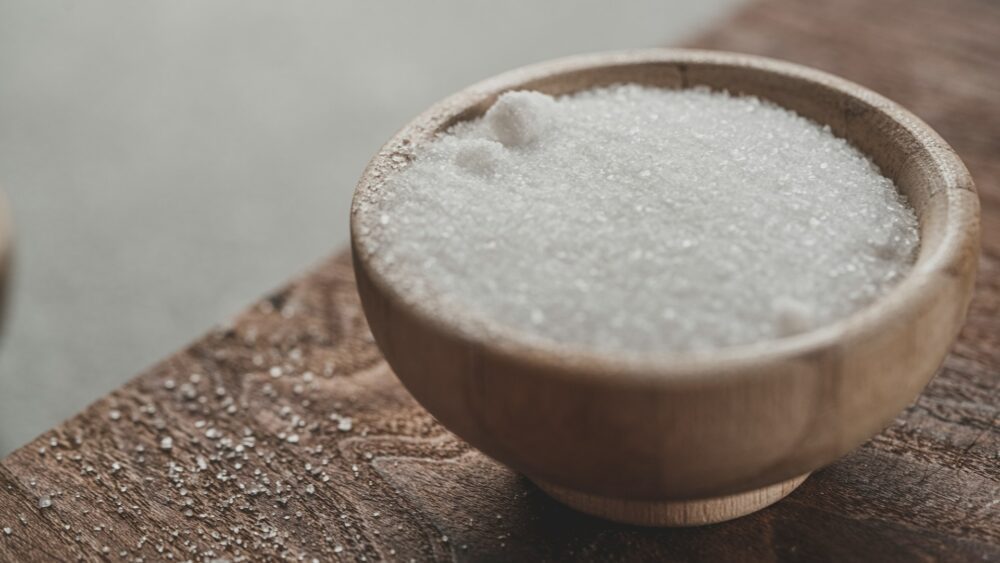
Bathroom light low, baking tray on the floor, bare feet crunching about on a layer of Epsom salt. Somewhere, a confused cat is watching from the doorway. It’s called salt stomping, and it’s been doing the rounds on TikTok as a way to unwind before bed.
Bedtime scrolling may be how plenty of people come across trends like this. In our 2026 Sleep Survey, almost a quarter of people (24%) said they watch videos on TikTok, YouTube and the like in bed before going to sleep. Here’s what salt stomping involves, what the research says about each claim and some evidence-backed ways to wind down instead.
The lowdown: Salt stomping is a TikTok bedtime trend where people stand or gently stomp barefoot on coarse salt for 5 to 10 minutes before bed. No studies have tested it, and the idea that feet absorb magnesium from salt isn’t supported by research. Experts put any calm from salt stomping down to the screen-free pause, which a warm bath or slow breathing may offer too.
Salt stomping means standing, or gently stomping, barefoot on a layer of coarse salt for a few minutes before bed. You might also see it called salt stepping or standing on salt.
Most salt stomping videos show people pouring Epsom salt, sea salt or Himalayan pink salt into a tray. Then it’s 5 to 10 minutes standing on it, shifting weight from foot to foot (think treading grapes, minus the wine). There’s no single origin story. The trend has been described as a mash-up of older wellness ideas, from earthing and reflexology to Epsom salt baths, as The Nod explains.
In one viral TikTok video, creator Tammy Weatherhead stands on salt for 10 minutes while doing her skincare. The video has racked up more than 300,000 likes.
Viral bedtime tricks clearly have pull. We asked about named sleep techniques, from the military method to mouth taping. More than a third of the people we surveyed (37%) had tried at least one.
There’s no research on salt stomping itself, so there’s no evidence that it improves sleep. The trend leans on a handful of bigger claims, though, and some are best taken with a pinch of salt.
Foot reflexology, where a trained practitioner presses points on the soles of the feet, has been put to the test in trials. A 2021 review of 42 trials linked it with better sleep in adults with sleep problems. Standing on salt is a different thing, though, with no practitioner deciding where the pressure goes.
Earthing is the idea that touching the ground with bare skin changes the body through an electrical exchange. Most earthing studies connect people to the ground indirectly, through conductive materials wired to a plug socket or a rod in the soil. A 2023 review of earthing research notes there’s little detailed research on what happens when bare skin touches the ground itself. A tray of salt on the bathroom floor isn’t the earth either.
Lowering cortisol and resetting the nervous system are two of the trend’s biggest claims, and neither has been put to the test. Cortisol, a stress hormone, rises and falls through the day on its own. Feeling calmer after salt stomping doesn’t show whether cortisol levels have changed.
Epsom salt is magnesium sulphate, so some fans believe their feet absorb magnesium from it. A 2017 review of the research found that claims about magnesium soaking in through the skin are scientifically unsupported. The review also points out that the study often quoted on Epsom salt baths never appeared in a peer-reviewed journal.
The Epsom salt claims are about magnesium dissolved in bath water, too. Dry salt on dry feet may be an even bigger ask.

 Insight from Dreams Sleep Expert, Sammy Margo
“There aren’t any clinical studies to show that standing on salt improves sleep. The idea that your feet absorb magnesium or that it ‘resets’ your nervous system isn’t supported by scientific evidence. The soles of our feet have some of the thickest skin on our bodies, so meaningful absorption through them is very unlikely.”
Plenty of people say salt stomping helps them unwind, and the ritual around the salt may explain why.
Insight from Dreams Sleep Expert, Sammy Margo
“What I think is actually happening is much simpler. For a few minutes, you’re standing still, you’re off your phone and you’re focusing on the sensation of the salt beneath your feet. Taking that mindful pause can help calm your mind and body before bed, which is one of the foundations of good sleep. It’s less about the salt itself and more about the time you’re taking to wind down.”
Part of it may be the pause. Ten minutes standing still, phone in another room, means ten minutes away from the screen and the group chat. In our 2026 Sleep Survey, 29% of people said they look at social media in bed before sleep, while only 8% use meditation or calming techniques.
The salt also gives the mind something to focus on. Paying attention to the crunch underfoot is a lot like sensory grounding, a technique therapists use to bring attention back to the present moment. Our guide to the 5-4-3-2-1 grounding technique shows a salt-free version you can do in bed.
A few other things could play a part too:
Fancy giving salt stomping a go anyway? Here’s a simple version that keeps the crunch on the tray and off the carpet.
Salt stomping can get a bit messy!
For most people with healthy skin, salt stomping is generally low risk. It’s worth skipping, or checking first, in a few situations.
Insight from Dreams Sleep Expert, Sammy Margo
“As both a sleep expert and chartered physiotherapist, I’d urge some caution when trying this trend. Rough salt crystals can irritate the skin, make cracked heels worse and cause small abrasions. This is particularly important for anyone with diabetes, neuropathy, poor circulation or reduced sensation in their feet, and I’d advise those people not to try it. A wet, salty shower floor can also be a slip hazard, particularly for older adults.”
Salt stomping isn’t a fix for ongoing sleep problems. Anyone who’s been struggling to sleep for a while, or whose sleep is affecting daily life, should speak to their GP or a healthcare professional.
If the wind-down ritual is the part that helps, there are other ways to get it. These come with stronger research and a lot less sweeping up.
Insight from Dreams Sleep Expert, Sammy Margo
“If you enjoy the ritual and your feet are healthy, it’s unlikely to do harm if done carefully, but there are other ways to achieve similar relaxation benefits without the grit. A warm bath or shower, gentle stretching or slow breathing can all help you wind down before bed.”
Have a warm bath or shower
In a 2019 review, a warm bath or shower 1 to 2 hours before bed was linked with falling asleep faster and better sleep quality. The sweet spot was water at around 40-42.5 °C. Even 10 minutes may be enough, so there’s no need to soak until your toes go wrinkly. Epsom salt can go in too if you like the feel of it, though the warmth is the part that’s been studied. Our guide to the benefits of a hot bath has more.
Slow your breathing
A simple breathing exercise for stress can be done sitting, standing or lying in bed. Our guide to breathing techniques for sleep has a few more to try.
Keep your feet warm
Chilly toes under the duvet? Our post on sleeping with socks on looks at whether a cosy pair could help.
Make your wind-down screen-free
Putting the phone away before bed is another simple change that may help. For more ideas, from muscle relaxation to mindfulness, head to our Mind Relaxation Hub, with expert advice from mental health charity Mind.
Our sleep expert Sammy Margo says, “If you’re struggling with your sleep, I’d focus on the habits we know make a difference: a consistent wake time, natural daylight in the morning, a cool, dark bedroom, less screen time late in the evening and a calming pre-bed routine. If poor sleep continues for more than a few weeks, it’s worth speaking to your GP, as cognitive behavioural therapy for insomnia (CBT-I) is the first-line, evidence-based treatment.”