
Why Is My Bedroom So Hot?
9 Min Read |
Last Modified 17 August 2026 First Added 17 August 2026
You have had the windows open since four. The rest of the house feels almost bearable. Then you go upstairs at ten and walk into a wall of warm air that has apparently been waiting for you all evening. Your bedroom is hotter than every other room you have been in today, and it shows no sign of giving that heat back. And you are about to try to sleep in it.
This is not bad luck or a broken thermostat. It is a combination of where the room sits in the house, what the house is made of and what the weather has been doing outside for the past 48 hours.
The lowdown: Bedrooms are usually upstairs, usually under the roof and usually smaller than the rooms below them, which is a recipe for trapped heat. Brick, plaster, and concrete absorb warmth all day and release it slowly through the evening, so the room is still warming up while you are trying to fall asleep. That matters because falling asleep depends on your body shedding heat, which is harder to do in an already warm room. Most UK homes were built to keep heat in rather than let it out.
Warm air rises. Whatever heat builds up in your kitchen, hallway and living room over the course of the day drifts upwards and collects on the top floor. If your bedroom is upstairs, it receives the rest of the house’s warm air and generates its own.
Then there is the roof. Bedrooms usually sit directly under it, and a roof takes direct sun for most of the day with nothing above it to provide shade. Loft conversions get the worst of this because they have a roof on two or three sides instead of one.
Size matters too. Bedrooms tend to be smaller than living rooms, so they have less air to absorb the same amount of heat. A small room with one window and a closed door warms up fast and struggles to shift that warmth anywhere.
Add a south- or west-facing window, and you have the full set. West-facing rooms take the late afternoon sun, which arrives at a low angle and comes straight through the glass rather than glancing off the roof.
The frustrating part is not the afternoon. It is 11 pm, when the outside air has cooled, and your bedroom apparently has not.
Brick, block, plaster and concrete are all good at storing heat. They soak it up slowly through the day, then give it back just as slowly once the air around them cools. So the walls, floor and ceiling of your bedroom are still quietly radiating warmth hours after sunset. On a really hot day, the room can peak in the evening, long after the outdoor peak has passed. Which is why the coolest part of the house at 11 pm is often the kitchen floor, as anyone who has taken a glass of water down there at midnight will tell you.
Outside, the same thing happens on a much bigger scale. The Royal Meteorological Society explains the urban heat island effect. Roads, pavements and buildings hold onto the day’s heat and release it slowly overnight, keeping towns and cities warmer than the surrounding countryside. The gap is usually widest after dark. So if you live somewhere built up, the air you pull in through the window isn’t as cool as it would be a few miles out.
Some nights it barely cools at all. The Met Office calls a night in which the temperature never drops below 20°C a tropical night, and notes that these are becoming more frequent in the UK, particularly during heatwaves. The UK Health Security Agency now factors overnight temperatures into its heat health alerts for exactly this reason. When the outside air never cools, your bedroom has nothing cooler to swap its heat with.
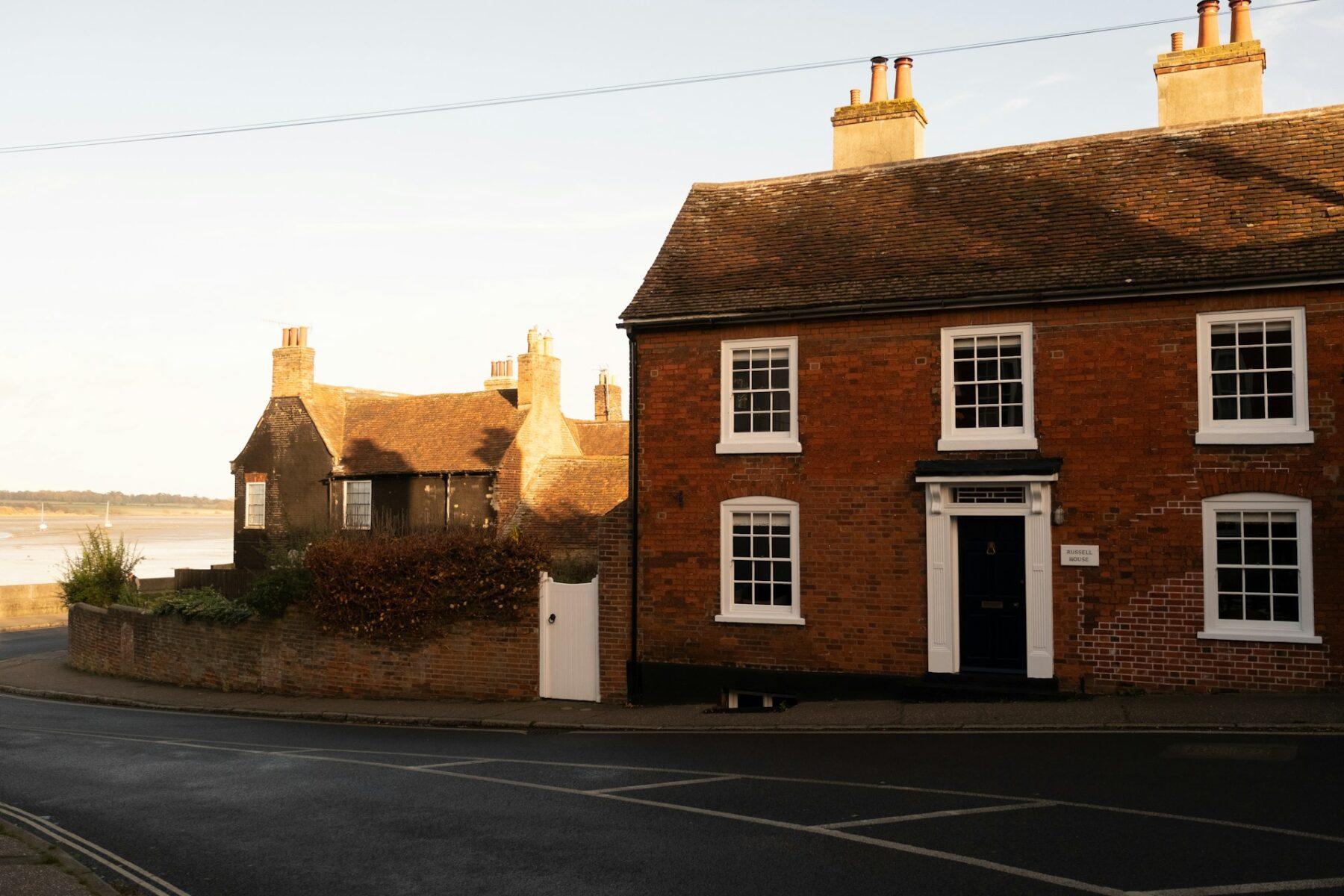
British housing was designed around the problem of staying warm in winter. Thick walls, small windows, draught proofing, loft insulation. All of it works, and all of it works in summer too, which is the issue.
The Climate Change Committee commissioned Arup to assess how well existing homes cope with hot weather. Its summary of that research found that the majority of existing UK homes fail the overheating standard now used in building regulations for new builds. Overheating was modelled as more common in the south of England, London, and in smaller dwellings such as flats. The same summary makes a point that catches a lot of people out. Energy efficiency measures such as wall or loft insulation reduce the risk of overheating when installed properly, and considerably increase it when installed without adequate ventilation.
Measurements from real homes back this up. Researchers at Loughborough University looked at bedroom and living room temperatures recorded in 750 English homes during the summer of 2018. That summer is close to what is expected to be a normal one by the 2050s. They found the main bedroom overheated in around 19% of the housing stock. They also asked a more practical question. Did people have a cooler room to escape to? Very few flats and small homes had one at all.
That matters more than it sounds. In a house, the spare room or the sofa is a genuine option on the worst nights, and plenty of us have taken it. In a one-bedroom flat, there is nowhere else to go.
Some rooms are always going to be harder work than others in summer heat:
If your bedroom ticks three or more of these, you are working against the building itself. That is worth knowing, because it changes where you put your effort. Fan placement will only take you so far. Keeping the heat out in the first place does more.
Falling asleep depends on your core body temperature dropping. Research on the temperature dependence of sleep describes sleep onset and a fall in core temperature as things that happen together, with deep non-REM sleep accompanied by further cooling of the body and brain. Your body sheds that heat through the skin, mostly at the hands and feet. Hence, the foot out of the duvet. In a room that is already warm, there is less of a gap to shed into, so the whole process takes longer.
Dr Laurence Wainwright teaches at the University of Oxford’s School of Geography and the Environment and researches in its Department of Psychiatry. Speaking during the June 2026 heat warnings, he pointed out that a tropical night in a UK home can mean an indoor temperature as high as 28°C. At that point, he said, a good night’s sleep is all but impossible for most people.
That plays out in the numbers. In our 2026 Dreams Sleep Survey, being too hot was the third most common reason people gave for a disturbed night, named by 24% of those who have had broken or bad nights. Only racing thoughts and stress came higher.
In a heatwave, it stops being a minority problem. Polling carried out by YouGov for Greenpeace UK after the June 2026 heatwave found that 65% of UK adults struggled to sleep during it. Nearly half of those lost three or more hours a night. In the same poll, 44% said their home had been uncomfortably or dangerously hot.
Warm, damp air makes it worse again. Sweat evaporates more slowly, so your body loses one of its main cooling routes. We have covered that separately in our guide to humidity and sleep. And if you overheat at night, even in a cool room, the cause is more likely to be with your body than your building. Our piece on night sweats is the better starting point for that.
The Climate Change Committee’s research found that low-cost measures do a real job here. Blinds and curtains proved effective ways to limit overheating, as did opening and closing windows at the right time of day. No air conditioning required. The timing is the part most of us get wrong. Windows and curtains shut through the hottest hours keep the sun and hot air out; then you open everything up once the air outside has genuinely dropped below the temperature indoors.
Your bed is the other half of it. A mattress that traps heat around your body will undo a lot of the good work in the room, which is where cooling mattresses and breathable bedding earn their keep. Swapping to a lower tog summer duvet is the cheapest change most people can make, and our duvet buying guide covers which tog to use when.
For the room itself, we have put the practical details in one place. Our 30 tips to keep cool at night cover everything from window timing to what to do with your feet. And our guide to the best sleep temperature explains what you should aim for and how to measure it.
Sleeping hot every night, not just in July? Browse our cool-night sleep mattresses, designed to move heat away from your body rather than trap it.
Warm air rises to the top floor, so heat from the rest of the house collects up there. Bedrooms also sit directly under the roof, and they are often smaller than the rooms below, so the same amount of heat pushes the temperature further. South- and west-facing windows add to it.
The building materials are still giving back the heat they absorbed during the day. Brick, plaster and concrete release stored warmth slowly, so your bedroom can keep warming up for hours after the outdoor temperature has peaked. In built-up areas, the outside air also stays warmer overnight.
Warm air rises, so heat generated anywhere in the house collects on the upper floors. Upstairs rooms also sit under the roof, which takes uninterrupted sun all day.
A night where the temperature does not fall below 20°C. The Met Office says these are becoming more frequent in the UK during heatwaves, and overnight temperatures are now built into the UK Health Security Agency’s heat health alerts.
It can, if the room is not ventilated properly. The Climate Change Committee’s research found that energy efficiency measures such as wall or loft insulation reduce overheating risk when installed correctly, and considerably increase it when they go in without adequate ventilation.
It is common. Measurements taken across English homes found the main bedroom overheating in around 19% of the housing stock. And after the June 2026 heatwave, 44% of UK adults said their home had been uncomfortably or dangerously hot.