Is Sleeping Without a Pillow Good or Bad for You?
8 Min Read |
Last Modified 7 September 2026 First Added 7 September 2026
Wake up with a stiff neck often enough, and you start suspecting the thing under your head. That’s usually about the point you start researching pillows and wondering whether you need one at all.
Neck, hip, and lower back pain is a common cause of disrupted sleep for around one in six of us, according to our 2026 UK Sleep Survey. Going without a pillow is rare, though. Fewer than one in a hundred British adults told us they sleep with none at all.
So is it worth a try? That depends almost entirely on how you sleep.
The lowdown: No study has ever compared sleeping with a pillow against sleeping without one, so nobody can give you a straight yes or no. What the research shows is that a pillow’s job is to keep your neck aligned with the rest of your spine. Front sleepers need the least height to manage that; side sleepers need the most. If you sleep on your side, going without is likely to leave your neck bent all night.
Sleeping without a pillow is unlikely to suit most people, though front sleepers are a genuine exception.
The reason there isn’t a cleaner answer is that a pillow isn’t really about your head. Its job is to hold your neck in a neutral position, meaning your cervical spine stays roughly in line with the rest of your back. When your neck spends the night bent towards the far end of its range, the structures in there are under more strain than they need to be.
So the question isn’t whether pillows are good or bad. It’s how big the gap is between your head and the mattress when you lie down, and what happens if nothing fills it.
Nobody has ever run a trial comparing sleeping with a pillow to sleeping without one. Everything we have compares pillows with other pillows, in studies that tend to be small and short.
The most recent look at it is a 2025 systematic review of pillows and chronic neck pain. It screened more than 29,000 records and found just five studies worth including, covering 239 people between them. Pain scores improved only slightly and not significantly; sleep quality showed no significant difference, and no pillow type came out clearly ahead of the others.
Earlier work had been more encouraging. One set of trials had people sleep on five different pillows for a week each, with their own pillow as the comparison, and latex performed best for waking headache and shoulder or arm pain, while feather performed worst. The 2025 review, looking across everything since, doesn’t find that any one type wins.
Height has held up better as a principle, though a review of pillow height research concluded there are still no firm answers on the ideal height for sleeping on your back or your side.
Those earlier trials turned up one other thing. People’s own pillows, the ones they’d picked out themselves, didn’t guarantee waking up without symptoms either. And therefore, choosing your own is no guarantee that you got it right.
It helps to think about what actually happens when you lie down. On your back, there’s a small gap between your head and the mattress, right where your neck curves in. Turn onto your side, and that gap gets a good deal bigger, because your shoulder is now holding your head away from the bed. Turn to your front, and it all but disappears.
Everything comes back to that gap. A pillow is there to fill it, and how much pillow you need depends entirely on which way you’re facing.
Front sleepers are the one group for whom going without a pillow genuinely makes sense. Your head is already close to the mattress, so a normal pillow tips your neck backwards and holds it there for hours.
Our own advice for front sleepers is a soft, low pillow with a natural filling that lets your head sink in rather than sit up. No pillow at all is a reasonable version of the same idea. If you’d rather keep something under your head, our Front & Back Sleeper Pillow is designed around this position.
Back sleepers need some support, though not a great deal of it. The natural curve at the back of your neck leaves a gap that wants filling, and with nothing there, your head tips backwards.
A medium or medium firm pillow is the usual suggestion for back sleepers, enough to support the curve without pushing your chin towards your chest. The same Front & Back Sleeper Pillow covers this position too, which helps if you drift between the two overnight.
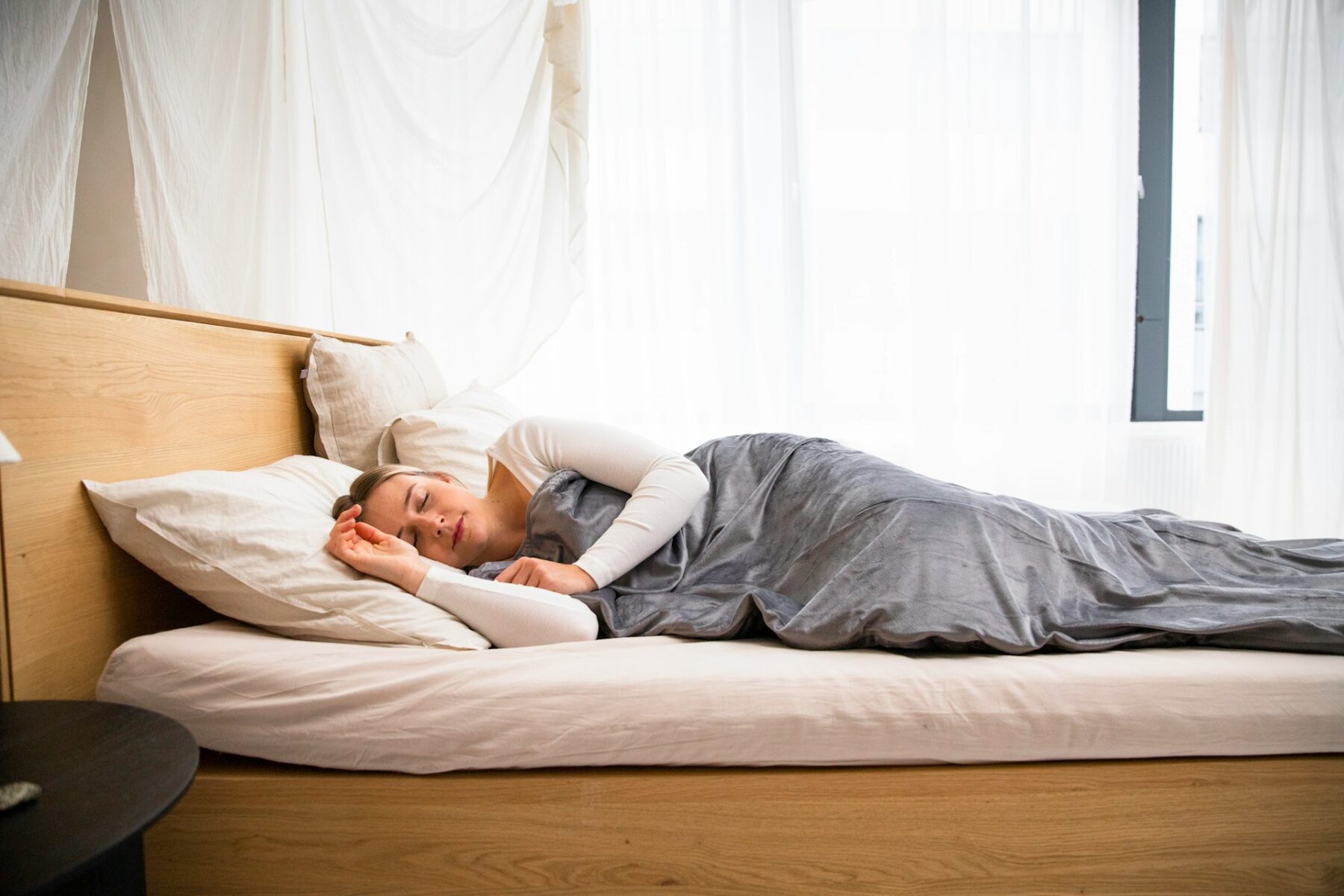
Side sleepers should keep their pillow. This is the position where a pillow does the most work, bridging the distance between your ear and your shoulder.
With nothing there, your head drops towards the mattress and your neck bends sideways for however long you’re asleep. Side sleeper pillows tend to be firmer and taller for exactly this reason, and memory foam is popular because it holds its shape rather than flattening under your head. Our Dreams Side Sleeper Pillow is specifically designed for this gap.
How firm your mattress is affects how much pillow you need, because a softer mattress lets your shoulders and head sink further in. A 2022 study comparing soft, medium and firm mattresses found that lying on the soft one raised the head by around 30mm compared with the medium, and increased peak loading on the neck discs by 49%. The researchers suggested a softer or thinner pillow to go with a soft mattress.
So if you’ve recently changed your mattress and your pillow suddenly feels wrong, that’s a likely reason. Our mattresses come in comfort grades from soft to very firm, and the two work as a pair rather than separately.
The clearest benefit is for front sleepers. With your head already close to the mattress, removing the pillow reduces the backward bend in your neck, and pillow height is one of the main factors affecting how your neck sits while you’re asleep.
Comfort counts for something too. Some people simply find they sleep better flat, and that matters in something you spend a third of your life doing.
Also, sleeping without a pillow is often said to keep facial wrinkles at bay. The research points somewhere rather different. A review in the Aesthetic Surgery Journal found that sleep wrinkles come from the face being compressed against whatever you’re lying on, with those forces at their strongest when you sleep on your side or your front. The authors suggest sleeping on your back. Taking your pillow away doesn’t reduce that compression at all, and sleeping face down on a bare mattress is exactly the position they describe as the problem.
Posture is the one claim we couldn’t find any research for. There’s plenty of work on spinal alignment while you’re asleep, but none of it connects going without a pillow to how you stand or sit during the day.
For anyone who isn’t a front sleeper, going without a pillow means your neck stays bent for hours at a time. Waking with a stiff or sore neck, a headache, or an ache across your shoulder is the usual sign that whatever is under your head isn’t working. The same signs turn up when a pillow is too tall, so it cuts both ways.
Snoring is worth a mention too. In one small study of people with sleep apnoea, a memory foam pillow cut snoring events by around 47% compared with a standard one, though that trial compared two pillows rather than testing going without one.
And if you’ve had neck or back trouble before, it’s worth a word with your GP or a physiotherapist before you start experimenting.
Sleeping without a pillow needs a fair trial, and that means more than a night or two. The mornings will tell you more than the evenings will. How you feel climbing into bed is about comfort. How you feel climbing out of it is about whether your neck was actually supported.
It’s also worth remembering there’s a lot of ground between a thick pillow and no pillow at all. If yours feels too high, something lower or softer fixes that without leaving your neck unsupported. Our pillow buying guide goes through the fillings and firmness levels if you fancy working out what would suit you.
There’s no research showing that sleeping without a pillow improves posture. Posture during sleep is about keeping your spine in a neutral line, and for most sleeping positions, that needs something under your head rather than nothing. Nobody has shown a link between what you sleep on and how you carry yourself during the day.
Claims about wrinkles and hair breakage relate to friction against the pillowcase, so the fabric is the variable rather than whether a pillow is there at all. Sleeping face down on a bare mattress involves plenty of friction too.
There’s no reliable figure for how long it takes to adjust because nobody has measured it. Give it a few nights and monitor how you feel in the mornings.
If the problem is the height rather than the pillow, there’s a lot of middle ground to explore: Browse our pillows.