Does Eating a Banana Before Bed Help You Sleep?
6 Min Read |
Last Modified 8 September 2026 First Added 24 March 2025
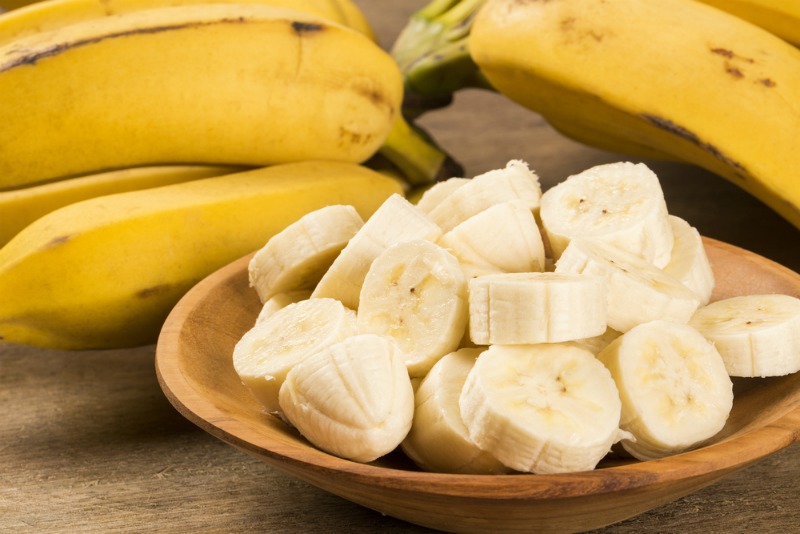
It’s 10 pm, you’re peckish, and the fruit bowl is closer than the biscuit tin. Bananas have long had a reputation as the sleep-friendly choice, and there’s something to it.
Eating a banana before bed might help you sleep a little, mostly because it’s a light snack that stops you from lying there hungry. Bananas do contain nutrients associated with sleep, including potassium, magnesium, vitamin B6, and tryptophan. The amounts are small, though, and the evidence that a banana in particular improves your sleep is thin.
The lowdown: A banana about an hour before bed is a sensible snack. It won’t sit heavily, and it should see off the 3 am hunger that wakes people up. It brings potassium, magnesium, vitamin B6 and a little tryptophan, though the amounts are modest and the research on bananas and sleep comes down to one very small trial. Think of it as a good habit rather than a sleep aid.
Bananas are worth eating before bed, though as a snack rather than a sleep aid. One won’t do you any harm, and it may well help you settle, largely because it’s easy to digest and quiet on the stomach. Going to bed hungry is a real cause of broken sleep, so heading that off is doing a proper job.
What a banana won’t do is knock you out. The nutrients everyone points to are involved in sleep, but a banana delivers them in food-sized amounts rather than the doses used in research. That gap is the whole story, and we’ve laid it out below.
Here’s what a medium banana (about 118g of fruit) gives you, according to USDA composition data:
| Nutrient | In a medium banana | Why it comes up in sleep advice |
|---|---|---|
| Potassium | About 420mg | Involved in normal muscle and nerve function, which is where the cramp claims come from. |
| Vitamin B6 | About 0.43mg | The strongest entry here. The NHS names bananas as a good source of B6 and puts adult needs at 1.4mg a day for men and 1.2mg for women, so one banana covers a decent share. B6 helps the body convert tryptophan into serotonin. |
| Magnesium | About 32mg | Often linked to relaxation, though this is a small amount. Our guide to magnesium and sleep has the details. |
| Tryptophan | About 11mg | The amino acid the body uses to make serotonin and then melatonin. The amount in a banana is very small. |
| Carbohydrate | About 27g | Carbohydrates help tryptophan reach the brain, and it’s what makes a banana filling. |
One clinical trial has looked at this head-on. Researchers gave a bedtime banana or a glass of whole milk to 21 people with insomnia, who were split into banana, milk, and control groups. Both the banana and milk groups reported better sleep quality afterwards. On the overnight sleep study, though, total sleep time only rose in the milk group.
So people felt they’d slept better after a bedtime banana, while the equipment didn’t see much. With 21 people split three ways, that’s a promising hint rather than proof.
The tryptophan story goes the same way. A meta-analysis of tryptophan supplementation found that it can cut the time you spend awake at night, with the effect measured per gram. A banana has about 11mg. You’d need roughly 90 of them to reach a single gram, which is less a bedtime snack and more a weekly shop.
None of that makes a banana a bad idea. It just means the useful part is probably the snack itself rather than any single nutrient in it.
One banana is plenty. A medium one gives you everything in the table above without sitting heavily on your stomach.
Two is fine if you’re properly hungry, though there’s no reason to think a second one helps you sleep. The trial above used a single portion, and nobody has tested whether more does anything. Your own stomach is the better guide here.
Eat your banana about an hour before bed. That’s the sweet spot because it gives your body a head start on digesting, and you’re not lying down on a full stomach.
Timing matters more than people think. In our 2026 UK Sleep Survey, 9% of UK adults put a broken night down to eating too late. Pairing your banana with a bit of protein, a spoonful of peanut butter or a few almonds, slows things down and keeps you full for longer.
There’s more on this in our episode on whether eating late keeps you awake.
There’s no evidence that bananas cause nightmares. They contain tyramine, a compound sometimes blamed for vivid dreams, but the link has never been properly tested.
If your dreams have taken a turn lately, a late or heavy meal is a likelier culprit than the fruit bowl. We’ve looked at which foods have been linked to nightmares in more detail.
A banana isn’t the only easy option. These are the ones that come up most often, with the same caveat that the evidence for any single food is modest:
There’s more in our guides to foods that help you sleep, midnight snack ideas and the best drinks before bed.
Snacks help. The basics help more: Work out when to turn in with our Sleep Cycle Calculator. And if you’re waking through the night, whatever you eat, a supportive mattress is doing far more heavy lifting than anything in the fruit bowl.