15 Sleep Relaxation Techniques for Maximum Zzz
8 Min Read |
Last Modified 19 October 2026 First Added 3 March 2017

Being tired at bedtime yet somehow wide awake is one of life’s more annoying contradictions, and a busy brain is often to blame. In our 2026 UK Sleep Survey, racing thoughts or a busy mind topped the list of reasons for a bad night, named by 37% of the 2000 UK adults we asked, with stress close behind at 28%.
Sleep relaxation techniques are simple mental and physical exercises designed to help your body clock out for the day and gently ease into sleep. According to a review of stress and sleep research, stress hormones like cortisol are linked with alertness, handy for a looming deadline but not so helpful when you’re trying to drift off.
We’ve rounded up 15 of our favourites, starting with the ones that have the most research behind them and finishing with what to do if sleep still won’t come.
The lowdown: When your body’s running on empty, but your brain’s still buzzing, relaxation techniques may help you press pause on the day and drift off more easily. Progressive muscle relaxation and mindfulness are among the best-researched. For something to try tonight, breathing tricks like 4-7-8 and humming bee breath take minutes and cost nothing.
Progressive muscle relaxation (PMR) is a technique where you tense one muscle group at a time, hold for a few seconds, then let it go, working slowly through your whole body. In a 2021 trial of 60 students comparing three relaxation methods, 20 minutes of recorded PMR left people feeling more relaxed and showed an immediate trend towards physical relaxation compared with a control group.
Work from your feet upwards:
Pulling faces in the dark can feel a bit daft, but nobody’s watching (unless the cat is).
Writing tomorrow’s jobs on paper before bed may help you fall asleep faster than running through them in your head. In a 2018 sleep lab study of 57 young adults, people who spent five minutes writing a to-do list fell asleep significantly faster than those who listed tasks they’d already finished.
Keep a notepad on your bedside table and be specific, since more detailed lists were linked with dropping off sooner (“ring the garage about the MOT” beats “car stuff”).
Guided imagery means picturing a calm scene in as much detail as you can, such as a quiet beach or a starry sky, a bit like a mini holiday without the airport queues. In the 2021 trial of PMR, deep breathing and guided imagery, guided imagery had a similar relaxing effect to PMR.
If your mind wanders off to the gas bill, steer it gently back to the beach, or try cognitive shuffling for sleep.

Mindfulness meditation means paying attention to the present moment, such as the feel of your breath, without judging the thoughts that pop up. In a 2015 randomised clinical trial of 49 older adults with moderate sleep problems, a mindfulness programme improved sleep quality more than sleep hygiene education.
In bed, notice the rise and fall of your breath and gently come back to it whenever a thought turns up. Our guide to meditation techniques to help you sleep has more ideas.
Yoga nidra is a guided practice, usually done lying down, that moves your attention slowly around your body while you rest, and some people call it non-sleep deep rest, or NSDR. Despite the name, there are no poses involved. In a randomised trial of 41 people with chronic insomnia, both yoga nidra and cognitive behavioural therapy for insomnia (CBT-I), the recommended treatment, improved sleep efficiency and sleep quality. The yoga nidra group also spent more of the night in deep sleep, which is pretty impressive for something you do lying down, though with so few people the findings are encouraging but early.

Slow belly breathing means letting each breath sink gently down into your tummy, away from your chest and shoulders. The NHS breathing exercise for stress suggests practising for at least five minutes:
In the 2021 relaxation trial, deep breathing left people feeling more relaxed, though their bodies took a short while to settle, so give it a few minutes.
The 4-7-8 breathing technique, popularised by US doctor Andrew Weil, means breathing in through your nose for a count of four, holding for seven and breathing out slowly through your mouth for eight. We’ve found little published research testing 4-7-8 on its own, so think of it as a structured way to slow your breathing down, and our guide to the 4-7-8 breathing method for sleep has the full step-by-step.
Humming bee breath, or bhramari pranayama, is a yoga breathing exercise where you breathe out slowly while making a steady humming sound, a bit like a bee. In a small study from 2010, five minutes of slow bhramari breathing lowered blood pressure and slightly lowered heart rate.
Breathe in through your nose and hum steadily as you breathe out for around five minutes, ideally after warning anyone you share a bed with.
Alternate nostril breathing, or nadi shodhana, is a yoga breathing exercise where you breathe through one nostril at a time, closing the other with your fingers. In a 2023 randomised trial in people with high blood pressure, both nadi shodhana and humming bee breath showed a calming effect on the nervous system.
Double exhalation means breathing out for twice as long as you breathe in, such as in for three and out for six. It’s the easiest rule here to remember when you’re half asleep, and a 2006 theory paper proposes that slow, deep breathing may shift the nervous system towards a calmer state, though the idea hasn’t been tested in the paper itself.

The lying-down counting breath works a bit like counting sheep, using your breath instead. Breathe in, hold and breathe out for four counts each, adding a count every few rounds, though we haven’t found research on this exact routine.
Rain, waves or the whirr of a fan can help some people drift off and mask a noisy street. Our guide to white, pink and brown noise for sleep looks at what research has found so far, and our pick of relaxing sounds to help you sleep has playlists to try.
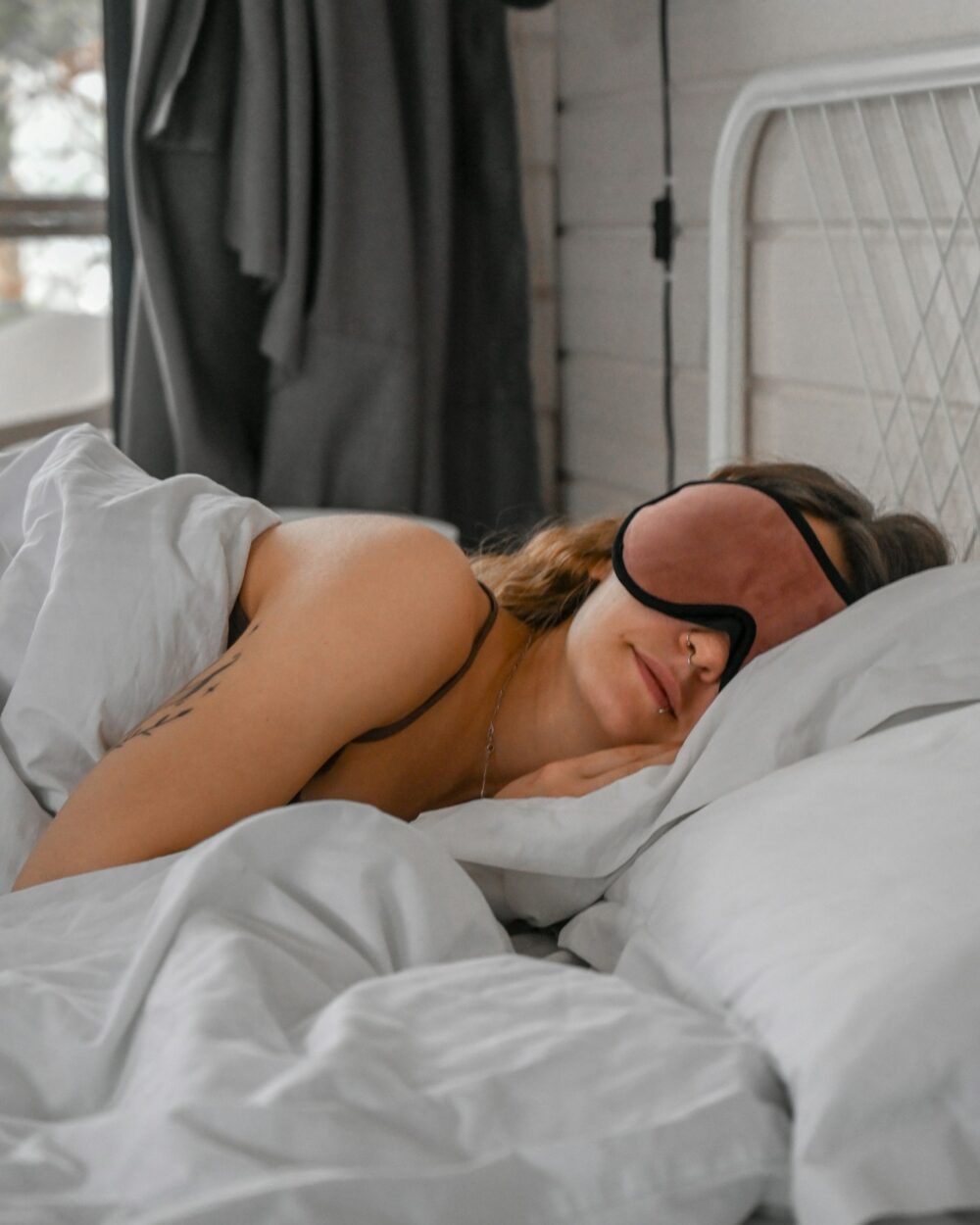
Your bedroom is the stage for everything else on this list, so it’s worth getting the basics right. The NHS advice on insomnia suggests keeping it dark and quiet, using curtains, an eye mask or earplugs if needed, and our guide to the best temperature for sleep covers the rest.
If you wake up stiff, our Sleepmatch mattress finder can point you towards the right mattress for how you sleep, while a supportive pillow can help keep your neck comfortable. For the look of the room, browse our calming bedroom ideas and relaxing bedroom colours.
A caffeine-free warm drink or small snack (toast crumbs optional) can be a comforting ritual, though we haven’t found strong evidence that any single food or drink brings on sleep. Our guides to the best drinks before bed and late night snacks that won’t give you indigestion have ideas.

If you’ve given a few of the techniques above a go and you’re still wide awake, it might be time to get up. Leaving a warm bed sounds backwards, but lying awake for ages may teach your brain to link your bed with feeling wide awake and fed up. NHS insomnia guidance from Cardiff and Vale University Health Board suggests getting up if you’ve been awake for around 20 minutes, then heading back once you feel sleepy.
Keep it calm and cosy with a book in low light, and if you tend to wake in the small hours, try our tips on how to get back to sleep in the middle of the night.
Trouble relaxing at night is often linked to stress or worry, and our guide on how to reduce anxiety for a better night’s sleep may help.
Dim the lights, put screens away and pick one technique from this list to try once you’re tucked in. Our guide to creating the perfect bedtime routine has more ideas.
Give racing thoughts a calmer job to do with guided imagery, mindfulness or a counting breath. Our guide on what to think about to fall asleep has more ideas.
The NHS recommends seeing a GP if changing your sleeping habits hasn’t helped your insomnia or if poor sleep is making it hard to cope with daily life.
Hungry for more ways to switch off? Explore our relaxation techniques for sleep and anxiety, curated with Mind.