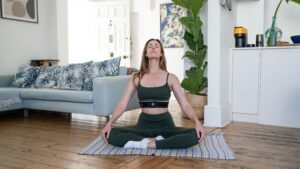
Mindfulness Exercises To Unwind
5 Min Read |
Last Modified 24 September 2026 First Added 24 September 2026

It can be hard to focus on the present moment. We often have busy lives and responsibilities that have us thinking about too much at once. Mindfulness can help us with that, and some find it’s a helpful way to relax, whether at bedtime or during the day.
In this article, we’ll explain what mindfulness is, how to tell if it’s right for you, and what exercises you might like to try to unwind.
Mindfulness describes a very wide range of techniques and practises that help us focus on the present moment. It’s not about trying to get rid of difficult thoughts or trying to completely clear our mind. The aim of mindfulness is to help us:
You can practise mindfulness yourself with self-guided techniques. There are also mindfulness courses and apps, and mindfulness can be brought into other wellbeing practises, like yoga.
People who use mindfulness often find that it helps them:
Anyone can try mindfulness, but sometimes it can be difficult. It can take practise, and it might not always be right for you.
Even if you do find mindfulness helpful, you might find some techniques work better than others. What works for us changes over time as well, so you might find it more or less helpful at different times in your life.
Before trying mindfulness, it can help to think about things like:

There are many varying ways to try mindfulness for the first time. Lots of them you can do without any special equipment.
You can do mindfulness at any time and in any place. If you find it helps you relax, you could try adding it into a bedtime routine.
If you’re looking for mindfulness exercises to help you relax and unwind, some of these might be helpful.
This is when you focus your attention on different parts of your body and notice how they feel. You can start with any body part, but try and scan your whole body over the practice. You could focus on any feelings of tension, warmth or relaxation in your body. After your body scan, you might want to try things that help you relax the tense parts of your body.
This is when you focus on the colours and sensations of colouring or drawing, rather than trying to draw something specific. You also need to try and avoid getting too hung up on whether it looks good or not – it’s about the experience, not the outcome.
This is when you sit or lay down quietly and focus on your breathing, thoughts, and body sensations. If your mind starts to wander, try and take notice and bring your attention back to the present. You might be able to find apps, online guides, or classes that help you mindfully meditate if you find it hard to do on your own.
There are lots of other ways to practise mindfulness. These are just some of them. You can find out more about mindfulness on the Mind website.
It’s OK if mindfulness doesn’t work for you. There can be lots of reasons why this happens. You might not be in the right place emotionally to focus on our thoughts in a mindful way, or you might just find it doesn’t benefit you.
If you’re looking for other ways to unwind, Mind has information on a range of relaxation tips and exercises you might like to try.
If you find that trying mindfulness makes you very upset, or triggers mental health symptoms like panic attacks or flashbacks, it might help to seek some support for your mental health. Mind has some information on where to start in seeking support for your mental health. Their A-Z of mental health has information on support options for specific mental health experiences.
Browse more relaxation tips on the Mind Relaxation Hub, only on Dreams’ Sleep Matters Club.