
How to Sleep with Sciatica: the Best (and Worst) Positions
9 Min Read |
Last Modified 30 July 2026 First Added 2 April 2026

When you have sciatica, how you sleep matters. Two positions tend to give the most relief: on your side with a pillow between your knees, or on your back with a pillow under your knees. Stomach sleeping is often advised against.
Our 2026 Sleep Survey found that neck, hip, and lower back pain are among the most common causes of disrupted sleep in the UK, cited by nearly 1 in 5 people. The right sleep setup won’t cure sciatica, but it can make a real difference to how much pain you’re in overnight and how rested you feel the next day.
Sciatica is pain caused by irritation or compression of the sciatic nerve, the largest nerve in the body. It runs from the lower back through the hips and down each leg. The NHS describes sciatica as typically causing a shooting pain, burning sensation, or numbness that travels from the lower back or hip area into the leg, usually on one side.
The most common cause is a herniated or slipped disc pressing on the nerve root. Other causes include spinal stenosis, spondylolisthesis, and piriformis syndrome. According to the Cambridge University Hospitals NHS, around 90% of people with sciatica recover within three months.
It’s worth knowing that sciatica is not the same as general lower back pain. The nerve element means certain positions affect it differently, which is exactly why standard sleep advice for back pain doesn’t always apply and why getting your sleep setup right matters.
Lying down can sometimes increase discomfort, particularly if your position isn’t well supported. Inflammation also tends to peak in the evening, so by the time you get to bed, symptoms are often at their worst. The right position with the right support can help reduce pressure on the nerve and ease symptoms.
There’s no single position that works for everyone, but these three are the ones most consistently recommended by spine specialists:
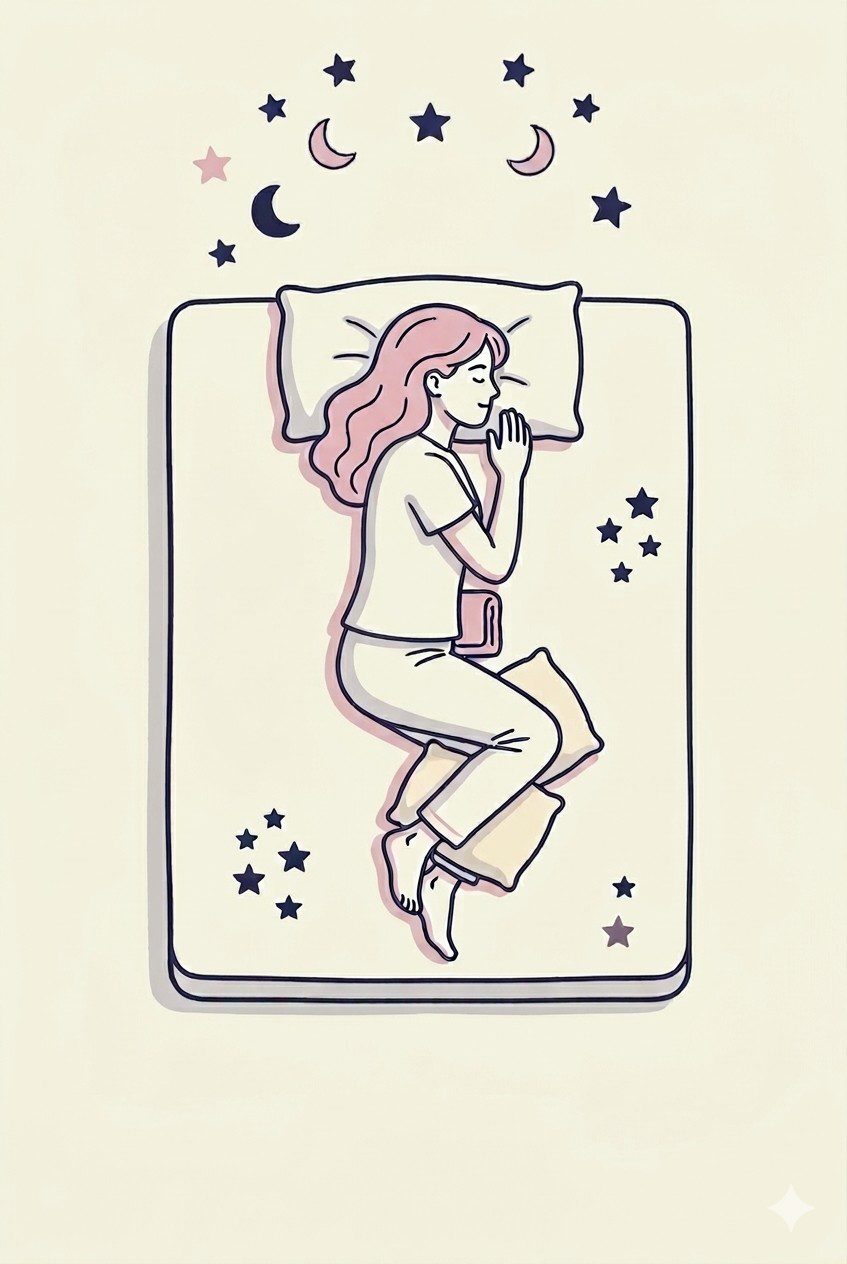
This is the most widely recommended position for sciatica, backed by spine specialists. Sleeping on your side helps take pressure off the sciatic nerve and keeps your pelvis in a neutral position. The pillow between your knees is the key part – without it, your top leg can pull your spine out of alignment, which aggravates the nerve.
How to set it up:
If you want to understand more about the mechanics of side sleeping and how it affects spinal alignment, our guide to sleeping on your side covers this in detail.
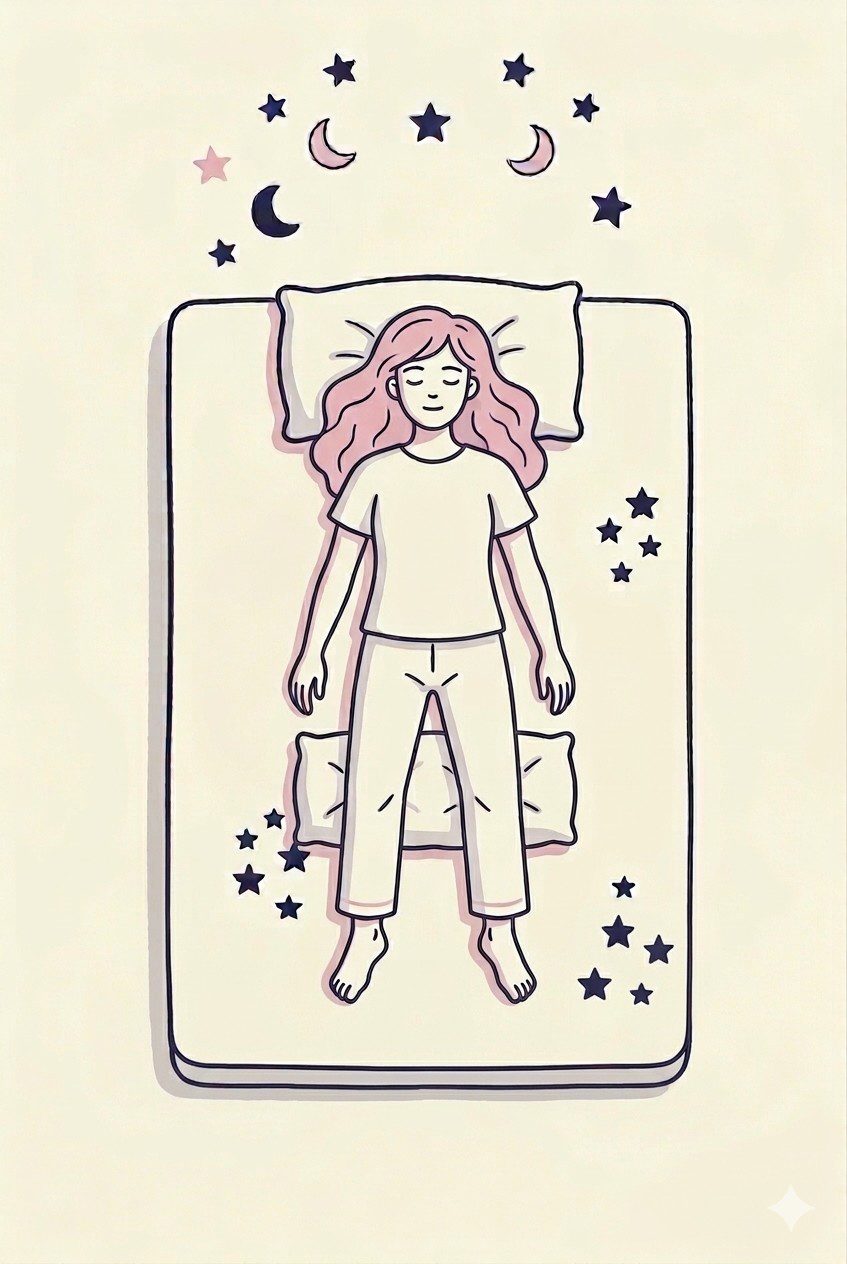
Back sleeping distributes your body weight evenly and takes pressure off your lower spine. Elevating your knees with one or two pillows reduces the natural arch in the lower back, which in turn reduces tension through the sciatic nerve pathway. Spine specialists and Healthline both identify this as one of the two best positions for sciatic pain relief.
How to set it up:
See our guide to sleeping on your back for more on why back sleeping works well for spinal alignment.
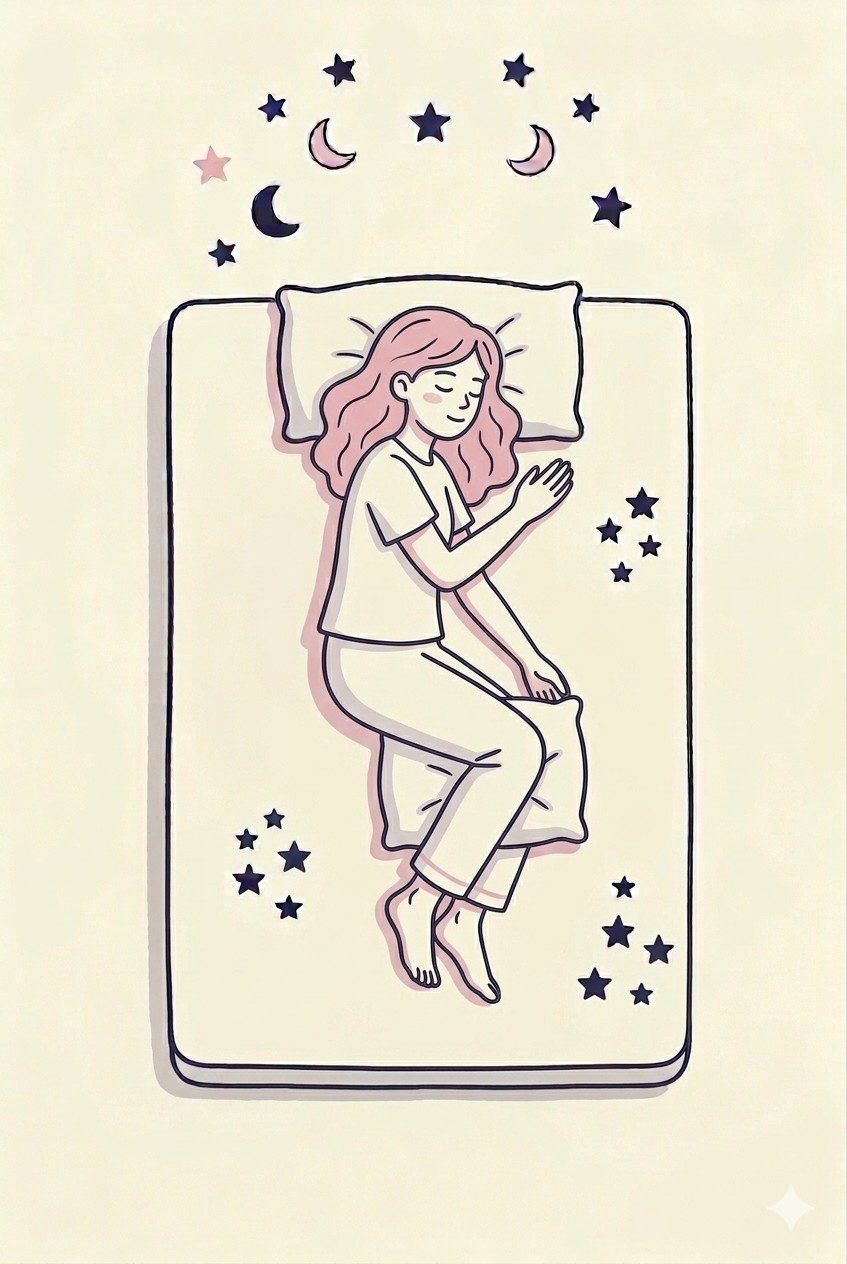
For sciatica, gently drawing your knees toward your chest may reduce pressure on the affected nerve root, particularly in disc-related cases. This is sometimes called a flexion position, and it works because it slightly changes the shape of the spinal canal, creating more room for the nerve.
How to set it up:
Worth noting: this position works well for disc-related sciatica but may not suit everyone. If it increases pain rather than easing it, go back to option 1 or 2.
All sleep position illustrations have been generated by Gemini.
Sleeping on your stomach is often advised against for sciatica. As spine specialists explain, stomach sleeping flattens the natural curve of the lower spine and can add unnecessary strain on the muscles and joints around the nerve. It also tends to force the neck into an unnatural rotation to breathe, adding discomfort further up the spine.
If you’re a committed stomach sleeper and find it very hard to change position, placing a thin pillow under your hips rather than under your head can help reduce the spinal extension. But it is worth gradually transitioning away from it if sciatica recurs. Our guide to sleeping on your front explains the longer-term implications and some tips for making the change.
Getting your position right is half the battle. The other half is what you’re lying on. Here are some ideas on how to optimise your sleep setup:
A medium-firm mattress is generally recommended for sciatica and back pain-related sleep issues. A systematic review published in the journal Sleep Health found that medium-firm mattresses are often recommended for promoting sleep quality and spinal alignment in people with or without back pain.
Too soft, and your body sinks into the mattress, pulling your spine out of alignment and increasing pressure on the nerve. Too firm and pressure points build up around the hips and shoulders, which can also cause pain. The goal is a surface that supports your spine’s natural curve without letting it sag.
If you’re unsure what firmness is right for your body type and sleeping position, Sleepmatch is worth trying. It’s our in-store technology that analyses your body and sleeping position to recommend a mattress that fits you specifically, rather than guessing based on a general firmness scale.
For specific mattress options, our orthopaedic mattress range offers extra support for the back and hips. We also have a range of firm mattresses and medium mattresses if you want to explore by firmness.
Pillow support matters more than most people realise when you have sciatica. The pillow between your knees (for side sleepers) or under your knees (for back sleepers) is actively working to keep your pelvis neutral and relieve nerve pressure. It needs to be firm enough to stay in place through the night rather than going flat. Our pillow buying guide covers fill types and firmness in detail.
The pillow under your head should keep your neck in line with the rest of your spine. If your head is propped too high or too low, it creates a chain of tension down through your back. For side sleepers, you generally need a firmer, thicker pillow than back sleepers.
What you do in the hour before sleep can genuinely affect how comfortable you are once you’re in bed. These four things are worth making a habit:
Light, targeted stretching before bed can reduce muscle tension around the sciatic nerve, making it easier to get comfortable. Focus on the piriformis muscle (deep in the hip area), hamstrings, and hip flexors – all areas that can tighten around the sciatic nerve and increase irritation.
Keep it gentle. Aggressive stretching when the nerve is already irritated can make things worse. The goal is to release tension, not push through pain. If you’re working with a physiotherapist, they’ll likely have given you specific stretches already – stick to those.
Many people find heat on the lower back or hip area helpful before bed – it relaxes tight muscles around the nerve. Some prefer ice during a flare-up to reduce inflammation. There’s no universal rule. Use whichever gives you more relief. Apply for no more than 15 to 20 minutes, and never directly on the skin.
Sitting for a long time, particularly on a soft sofa, can compress the sciatic nerve and leave you in more pain by the time you get to bed. The NHS advises against sitting or lying still for long periods, even when moving is uncomfortable, as staying active generally speeds recovery. A short walk or some gentle movement in the evening is better preparation for sleep than a long static stint on the sofa.
Pain and sleep quality have a circular relationship – poor sleep makes pain feel worse, and pain makes sleep harder. Building a consistent wind-down routine, keeping the same bedtime, and making sure your room is cool and dark all help. Our guide to creating a good bedtime routine covers this in more detail.
Most cases of sciatica improve with time and the right sleep setup. But if your symptoms aren’t shifting after a few weeks, are getting worse, or are affecting your ability to get through daily life, it’s worth speaking to your GP. They can refer you for physiotherapy (free on the NHS) and discuss other options that might help.
If you experience sudden loss of bladder or bowel control, numbness in the groin or inner thighs, or sudden severe weakness in both legs, don’t wait – go to A&E or call 999. These symptoms need to be checked urgently. The NHS sciatica page has full guidance on when to seek emergency help.
For more on managing back pain at night and building a sleep setup that works around it, our back pain and sleep guide and how to prevent back pain in bed are both useful.
It’s just bad timing, mostly. Inflammation builds throughout the day and tends to reach its peak by bedtime. Add a poor sleep position or a mattress that doesn’t support you properly, and the nerve can flare up. The right setup makes more difference than you might expect.
Medium-firm is generally recommended. A 2015 systematic review found medium-firm mattresses best supported spinal alignment and sleep quality for people with back pain. Too soft and your spine loses its alignment; too firm and pressure builds around the hips and shoulders. Our Sleepmatch service can help you find the right firmness for your specific body and sleeping position.
Most cases improve within a few weeks to three months with self-management. According to the Cambridge University Hospitals NHS, around 90% of people with sciatica are better within three months. If symptoms persist beyond six weeks without improvement, see your GP.