The Best Mattress for Side Sleepers
Last updated: June 2026

17% of UK adults regularly lose sleep to neck, hip or lower back pain, and side sleepers are particularly prone to pressure at the shoulders and hips. The best mattresses for side sleepers are soft to medium-firm, with enough give to cushion your shoulders and hips while keeping your spine in a straight line. Side sleeping concentrates pressure on these joints more than any other position, so your mattress needs to absorb that impact rather than resist it. Soft to medium-firm memory foam, hybrid, and latex mattresses all work well. The right choice depends on your body weight, whether you run hot at night, and whether you have any existing back or joint pain.
Below, we break down the best mattress types for side sleepers, how firmness affects pressure points and spinal alignment, and what to look for if you sleep on your side with back pain.
What firmness is best for side sleepers?
H2 - What firmness is best for side sleepers? Soft to medium-firm is the recommended range for most side sleepers. Almost a quarter of UK sleepers say they can't get comfortable in bed, and for side sleepers, a common culprit is mattress firmness. When you lie on your side, your shoulders and hips are the widest points pressing into the mattress. A firm mattress will not let them sink in enough, which pushes your spine into a curve rather than keeping it straight. A soft to medium mattress allows your shoulder and hips to yield into the surface, which distributes pressure more evenly and keeps the spine level.
The exact firmness that works best depends on your build. Lighter people (under 11 stone) tend to sleep better on a soft mattress, since they do not have enough weight to sink into a medium mattress. Heavier builds (14 stone and above) usually need a medium or medium-firm to prevent the hips from dropping too far and bowing the spine in the other direction. If you are in between, a medium is usually the safest starting point.
Too firm: what goes wrong
A mattress that is too firm for a side sleeper keeps the hips and shoulders at the surface. The narrower waist gets no support at all. This creates a lateral curve in the spine that builds muscle tension overnight. You will typically feel this as a stiff lower back, a sore hip, or an aching shoulder in the morning. Pins and needles in the arm are a common sign that a mattress is preventing proper circulation at the shoulder joint.
Too soft: what goes wrong
A mattress that is too soft lets the heaviest part of the body (usually the hips) sink too deeply. This drops the pelvis below the level of the shoulders, creating a downward curve in the lower spine. Over time, this compresses the lumbar discs, leading to lower back pain. If you wake up feeling like you have been folded in half, your mattress is probably too soft for your weight.
| BODY TYPE | COMFORT LEVEL |
|---|---|
| Lighter builds | Soft |
| Average to Heavier builds | Medium |

As a general rule, the more you weigh, the more resistance you need from your mattress. Heavier builds create more downward force, which means they sink deeper into the same material than lighter builds do. A soft mattress that provides perfect alignment for a lighter person will allow a heavier person to sink too far, dropping the hips below the shoulders and curving the spine. If you are above 14 stone and sleeping on your side, a medium mattress is usually the right starting point.
If you are unsure, our Sleepmatch™ mattress finder recommends the best mattresses for you based on your weight, sleeping position, and comfort preferences.
TAKE THE QUIZWhat type of mattress is best for side sleepers?
Memory foam, hybrid, latex, and gel mattresses can all work well for side sleepers. What matters is that the material responds to different body weights in different areas, so the shoulders and hips can sink in while the waist stays supported. Here is how each type handles that:
Memory foam
Memory foam responds to heat and pressure, softening and moulding around the contours of your body. For side sleepers, this means the foam compresses more where your shoulder and hip press in, and less where the gap at your waist is. The result is close contouring that keeps the spine aligned without creating pressure points. Memory foam is particularly good for side sleepers who experience joint pain, as it distributes body weight across a larger surface area than a firmer material would.
Hybrid mattresses
Hybrid mattresses combine a pocket spring base with a foam or latex comfort layer on top. For side sleepers, this combination is often the best of both worlds: the spring system provides responsive, targeted support under different zones of your body, while the foam top layer specifically cushions the shoulders and hips. Hybrids are a strong choice for side sleepers who want pressure relief without the "stuck in the mattress" feeling that pure memory foam can create. Hybrid mattresses also tend to feel cooler than all-foam options because the spring layer allows airflow. Side sleepers with back pain often do particularly well on a hybrid with a zoned spring system, as the springs will be softer under the shoulders and firmer under the lower back.
Shop hybrid mattresses
Pocket sprung mattresses
Pocket sprung mattresses use individual springs sewn into separate fabric pockets, so each coil moves independently in response to the weight pressing on it. For side sleepers, this matters because the shoulder and hips are much heavier than the waist. Independent springs allow those heavier points to compress further while leaving the lighter areas between them properly supported. The result is a natural contouring effect that mirrors what the body needs without relying on foam to do the work. They tend to suit side sleepers who prefer a more traditional, responsive feel rather than the close-conforming sensation of memory foam.
Latex mattresses
Latex offers responsive contouring with a slightly springier feel than memory foam. It moulds to your body when you press into it, but springs back quickly when you move, making turning over easier. For side sleepers, this means good pressure relief at the shoulders and hips without the slow-response sinking of memory foam. Latex also sleeps cooler and is naturally hypoallergenic, making it a good option for side sleepers who run warm or have allergies. It tends to work particularly well for side sleepers with hip or joint pain.
Shop latex mattresses
Pillow top mattresses
A pillow top mattress has an extra layer of soft cushioning sewn directly onto the top surface, creating immediate softness at the point where the body meets the mattress. For side sleepers, this is particularly effective at reducing shoulder and hip pressure because the pillow top absorbs the initial impact before the underlying support layers take over. Pillow top mattresses tend to feel plush but supportive, which makes them a good option for side sleepers who find standard medium mattresses too firm but worry a soft mattress will lack support.
Gel mattresses
Gel mattresses feature a gel layer that responds to body shape and temperature. The gel conforms to the body's curves in a similar way to memory foam, but with better heat dissipation, preventing the warmth build-up that foam can cause. For side sleepers, the gel layer provides cushioning at the shoulders and hips while remaining responsive enough to fill the gaps between those pressure points. A good option for side sleepers who like the feel of foam but tend to overheat.
Shop gel mattresses
View mattresses
SHOP NOWBest mattresses for side sleepers with back pain
Back pain for side sleepers is almost always linked to spinal alignment. If your mattress is too firm, your hips and shoulders cannot sink in enough, which forces the spine into an upward lateral curve and strains the muscles along it. If it is too soft, the hips drop below the shoulders, and the spine curves downward, compressing the lumbar discs. The right mattress keeps your spine in a neutral position from the neck to the hips, regardless of your body weight.
For side sleepers with back pain, the key features to look for are:
Zoned support
A zoned support system divides the mattress into sections with different firmness levels. For side sleepers, this typically means softer zones under the shoulders (to allow them to sink in) and firmer zones under the hips and lower back (to prevent them from dropping too far). This combination is significantly more effective for back pain than a mattress with a single firmness throughout. Many hybrid and pocket sprung mattresses include zoned support. Look for it in the product specification if back pain is a concern.
Medium-firm overall feel
A medium-firm mattress sits in the range where the shoulders and hips have enough give to reduce pressure, but the overall structure is firm enough to prevent the spine from sagging. For most side sleepers with back pain, this is a better starting point than a soft mattress, which may feel comfortable initially but can worsen lower back pain over time as the hips sink deeper. If you weigh above 14 stone, lean toward the firmer end of medium-firm for adequate lumbar support.
Browse all mattresses for back pain
Pressure relief at the shoulder
Upper back and shoulder pain in side sleepers is often caused by a mattress that does not allow the shoulder to sink in properly. This forces the arm into an awkward angle and compresses the shoulder joint throughout the night. A mattress with a soft comfort layer (memory foam, latex, or a pillow top) directly over a supportive core provides the right cushioning at the shoulder and support underneath.
Sufficient depth
A mattress needs to be deep enough to avoid "bottoming out", the point where your body sinks through the comfort layers and hits the support core. For side sleepers, this is especially relevant for heavier builds. A mattress of at least 25cm is generally recommended. Thinner mattresses may feel fine initially but can bottom out over time, reducing the pressure relief that side sleepers need at the hips and shoulders.
Pressure points for side sleepers
A pressure point is any area of the body that bears concentrated weight against the mattress surface. For side sleepers, the main pressure points are the shoulders, hips, and (to a lesser extent) the head and ankles. These are the points where your body is widest and therefore where the most force concentrates.
Pressure points matter because of what happens to the spine when they are not properly cushioned. If the shoulder and hip cannot sink into the mattress surface, they stay elevated, which means the spine has to curve to bridge the gap between them and the mattress. That curve creates tension along the muscles of the back, hip, and neck. Adequate cushioning at the pressure points allows the shoulder and hip to drop to a level where the spine can rest in a straight line.
This is the fundamental reason why a mattress that’s too firm causes problems for side sleepers. It is not just that firm surfaces feel uncomfortable. It’s that they prevent the pressure points from reaching the depth needed for spinal alignment.

The best pillows for side sleepers
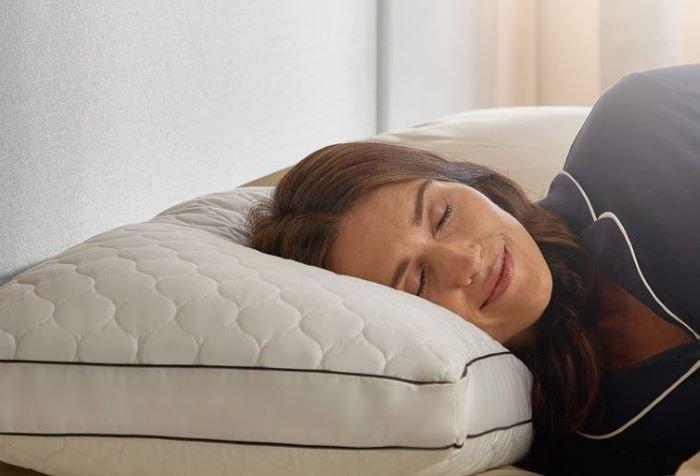
As well as choosing the right mattress, it’s important to get the right pillow for your sleeping position. Side sleeper pillows need to provide the right amount of height to ensure the neck stays in line with the spine. Anything too soft will result in the head dipping, whereas anything too high will bend the neck. For those who sleep on their side we recommend medium to firm pillows.
SHOP PILLOWSIf you're looking to improve your slumber, make sure you use our Sleep Cycle Calculator. It will help you discover the perfect time to go to sleep and wake up in the morning to unlock a rejuvenating night's rest and embrace a healthier, happier you.
Common questions about mattresses for side sleepers

Is memory foam good for side sleepers?
Yes, memory foam is one of the most recommended materials for side sleepers because it contours closely to the body and reduces pressure at the shoulders and hips. The main consideration is that traditional memory foam can retain heat. If you sleep warm, look for gel-infused or open-cell memory foam, or consider a hybrid mattress that combines a foam comfort layer with a spring base.
Can my mattress cause hip or shoulder pain?
Yes. A mattress that is too firm prevents the hip and shoulder from sinking in properly, which concentrates pressure on those joints throughout the night. Over time, this leads to soreness that is often worse in the morning and eases as you move around. If you wake with hip or shoulder pain and your mattress is firm, try a softer surface (or a mattress topper) first. A mattress that is too soft can also cause hip pain by letting the pelvis drop too far and straining the lower back.
How do I know if my mattress is causing back pain?
The clearest signs are waking with back, hip, or shoulder pain that was not there before, waking up tired, and pain that eases within an hour of getting up (which suggests muscle tension from poor alignment rather than an underlying injury). If your mattress is over 7-8 years old and showing visible sagging, or if the pain started around the time you got the mattress, it is worth considering a replacement.