Revenge Bedtime Procrastination: What Is It and How Do You Stop It?
8 Min Read |
Last Modified 30 July 2026 First Added 10 December 2021
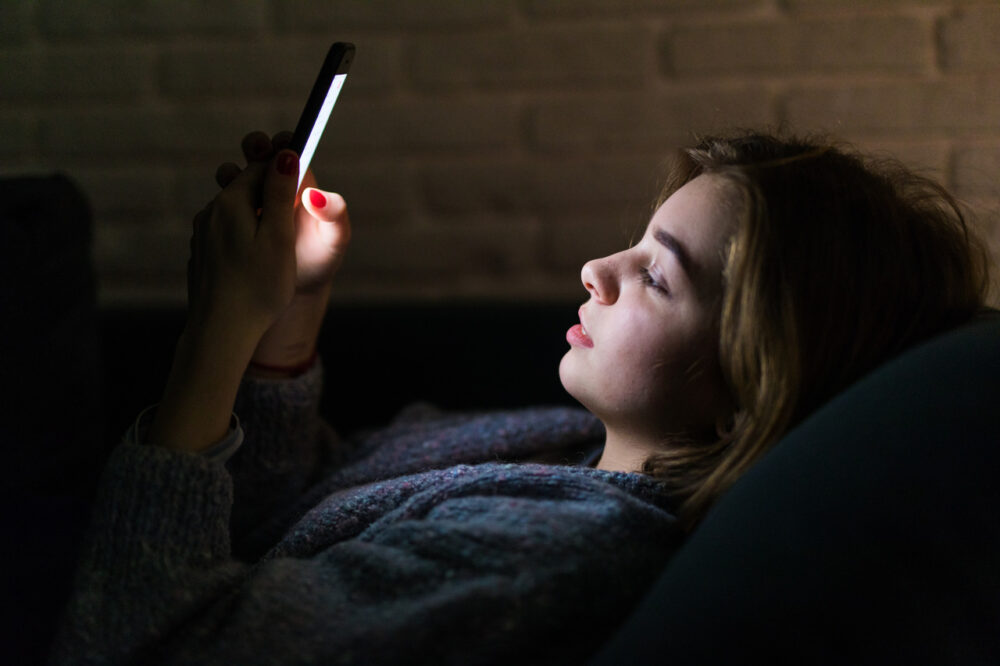
It’s 11:47 pm. We’re tired. The alarm is set for 6:30 am. And here we are, halfway through a TikTok rabbit hole, telling ourselves we’ll close the app after one more video. Then another. Then another.
There’s a name for this. It’s called revenge bedtime procrastination. And according to our 2026 UK Sleep Survey, it’s catching out more of us than you might think.
Almost a third of UK adults look at social media in bed before sleep. A quarter watch TikToks or YouTube videos. The average scroll lasts over 15 minutes. The clock keeps ticking. Sleep keeps slipping. Here’s what’s actually going on, and how to put the phone down without giving up your evening.
The lowdown: Revenge bedtime procrastination is the habit of staying up later than you intend to, with no practical reason, in order to reclaim some personal time the day didn’t give you. It often involves screens, scrolling or “one more episode” thinking. The term was coined in 2014, but the screen era has made it much harder to shake.
The phrase has three parts, and each one matters.
Bedtime procrastination itself was coined in 2014 by behavioural scientist Dr Floor Kroese and her team at Utrecht University, in a paper published in Frontiers in Psychology. They defined it as deliberately delaying sleep without any practical reason for doing so. No emergency. No shift work. Just a choice to stay up.
The revenge part came later. It started in China in the late 2010s, where overworked employees on the “996 schedule” of 12-hour days, six days a week, were said to be staying up late to reclaim some time for themselves. The phrase went global in 2020, when journalist Daphne K. Lee tweeted:
“A phenomenon in which people who don’t have much control over their daytime life refuse to sleep early in order to regain some sense of freedom during late-night hours.”
Three things define the behaviour: a delay in going to sleep that cuts your total rest, no good reason for staying up and full awareness of exactly what the morning is going to cost you.
You might be revenge bedtime procrastinating if:
One thing worth being clear on: this is different from insomnia, which is when you genuinely want to sleep and can’t. With revenge bedtime procrastination, sleep is available. We’re choosing not to take it yet.
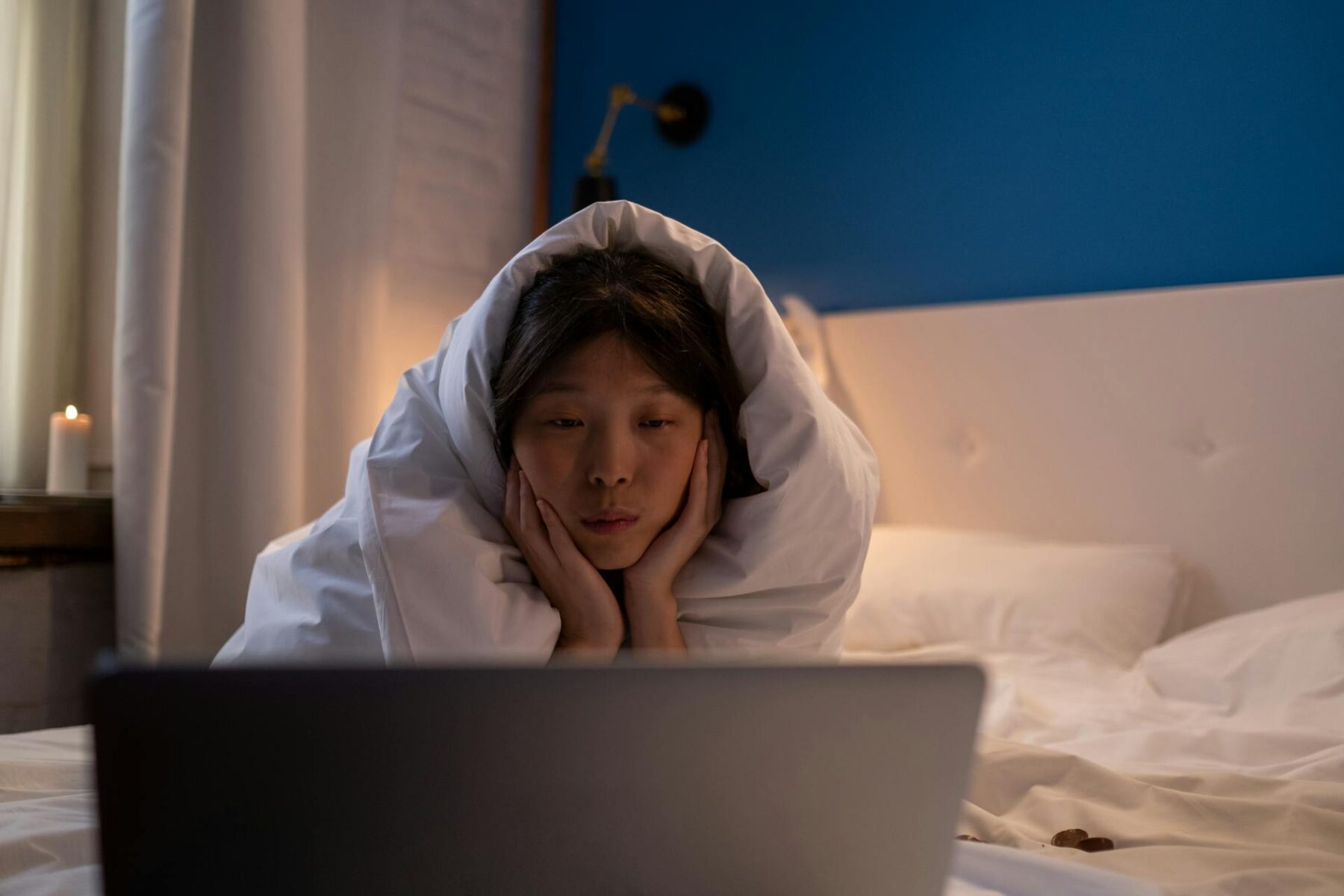
Our 2026 UK Sleep Survey asked 2,000 UK adults what they typically do in bed before they go to sleep, and how long they spend doing it. The results paint a pretty recognisable picture.
What we actually do in bed before sleep
Of those who do, the average social media scroll in bed runs to nearly 16 minutes, with TikTok and YouTube sessions stretching closer to 17. Late-night TV averages over 21. Stack two or three of these together, and you’ve quietly added an hour to the day before sleep even arrives.
The age split is sharper still. Among 25 to 34 year olds, 53.2% scroll social media in bed. Among 18 to 24 year olds, 51.2% are watching TikTok or YouTube before sleep. Among the over-65s, only 3.3% are watching videos in bed. The screen-led bedtime is a generational story.
There’s no single cause. A few likely culprits tend to combine:
At the root of it, revenge bedtime procrastination comes from feeling time-starved during the day. Long working hours. School runs. Caring responsibilities. Life admin. By the time the evening arrives, there’s often nothing left for us. So we take it later, even though we know we might regret it in the morning.
We want to sleep. We plan to sleep. Then we don’t. Behavioural psychologists call this the intention-behaviour gap, and it’s why sleep procrastination feels so familiar to so many people. Self-control tends to be at its weakest at the end of the day. The things competing for our attention (Netflix, TikTok, group chats, online shopping) are designed to keep us engaged.
Some people are wired to feel more alert in the evening. If you’ve got an evening chronotype and you’re being forced into an early-morning schedule, switching off at 10 pm can feel impossible. For more on this, our guide to resetting your body clock is a useful place to start.
Phones aren’t passive. They reward attention, in short, dopamine-hitting loops. Our 2026 Sleep Survey found that 11.3% of UK adults with disturbed sleep blame spending too long on a phone or tablet before bed as one of the main reasons. It’s a tough opponent at midnight.
Over a third of UK adults with disturbed sleep (36.5%) say racing thoughts or a busy mind are the reason. Another 28.4% cite stress. For some people, scrolling becomes a way of avoiding the quiet moment when the lights go off, and the thoughts start.
Research into bedtime procrastination is still relatively new, so we don’t yet have a full picture of who’s most affected. What our 2026 UK Sleep Survey does show is a clear generational pattern in the screen-led behaviours linked to it:
Daytime stress patterns also matter. People with high daytime demands (demanding jobs, caring duties, studies) often feel that the evening is the only time that’s truly theirs. Which makes it that much harder to hand it back.
One late night isn’t a big deal. The trouble is when it becomes the default, four, five, six nights a week. The effects don’t show up on the first night, or even the fifth. They build up over time.
Regular sleep loss can lead to:
Researchers have found that end-of-day mental resources matter; when our capacity for self-control is at its lowest, sleep procrastination is more likely. Stack that against accumulated tiredness, and the loop gets harder to break.

We’ve all been there. Closing the laptop, putting the phone down and going to sleep when we said we would is harder than it sounds. A few shifts that actually help:
For a deeper guide to building habits that stick, our take on the importance of evening routines is the place to go next.
No. Insomnia is when you want to sleep but can’t. Revenge bedtime procrastination is when you could sleep but choose to stay up. Different mechanism, different fix.
Because self-control is depleted by the end of the day, and the activities we choose instead (scrolling, streaming, gaming) are engineered to reward attention in short bursts. Stack stress and time-poverty on top, and the urge to stay up gets harder to resist.
It isn’t classified as a clinical sleep disorder. It’s a behaviour pattern, first named and formally defined in a 2014 paper by behavioural scientist Dr Floor Kroese. That said, if it’s happening consistently and your sleep is suffering as a result, it’s worth taking seriously. If it’s affecting how you function in the day, a chat with your GP is sensible.
Most new routines take a few weeks of consistency to embed. The most important first step is keeping your wake-up time steady, even after a late one. The rest gets much easier when your body knows what’s coming.
One late night isn’t going to derail your health. The issue is when revenge bedtimes become the routine, four, five, six nights a week. That’s when sleep debt starts to build up and the daytime cost catches up with you.
There are many great benefits of a good night’s sleep, including: sharper focus, steadier mood, stronger immunity, better decision-making and a lower long-term risk of cardiovascular and metabolic issues. Our guide to why we need sleep explains this in more detail.
Late nights happen. A binge of a new series. A long call with a friend. The World Cup. The trouble is when the late night becomes the default, four, five, six nights a week. A wind-down hour, a screen-free buffer before bed and a bed you actually look forward to climbing into can take a lot of the heat out of “five more minutes”. And help you reclaim the morning along with the evening.