Can You Wash Your Pillows?
8 Min Read |
Last Modified 28 September 2026 First Added 28 September 2026
We’re a nation of dedicated sheet washers. In our 2026 UK Sleep Survey, three-quarters of people said they change their bed sheets at least once a fortnight.
The pillow itself tends to get overlooked. Ours are 3.6 years old on average, and washing them rarely makes it onto the to-do list. So can you actually put a pillow in the washing machine? Let’s sort the washable from the definitely-not.
The lowdown: Most pillows can be washed, but the care label decides how. Plenty of synthetic pillows go in the machine at 30 or 40 degrees, washed in pairs on a gentle cycle. Solid memory foam and latex shouldn’t go in at all, so spot clean those and let them air dry completely. Some memory pillows wrap a foam core in washable fibre, so the label is worth a look either way.
In most cases, yes. Check the care label on your pillow first, because that’s the bit that counts.
Plenty of pillows are happy in the machine. Across our own range, most wash at 40 degrees, including the Dreams side sleeper pillow and the Silentnight Hotel Collection pillow pair. Some prefer a cooler 30 degrees, like the Dreams Cotton Comfort pillow and the Flaxby wool pillow.
Memory foam is the one that catches people out, because the answer changes from pillow to pillow. Usually it’s the cover that’s washable and the foam that isn’t. The Sleepeezee All Seasons Support memory foam pillow spells it out nicely: Cover at 40 degrees in the machine, inner filling sponge cleaned only.
There are exceptions, too. The Silentnight SleepResponse Support Memory pillow washes at 40 degrees as one piece because its foam core is wrapped in hollowfibre rather than being a single solid block. Who knew pillows could be so complicated? But don’t worry, the label will tell you whether it means the whole pillow or just the cover.
Latex is the one filling with a firm no across the board, so stick to spot cleaning there. Feather and down vary as well, and with some, like the Flaxby goose feather and down pillow, you’re only cleaning the cover with warm soapy water.
The rule of thumb is simple. If the label says machine washable, it’s machine washable. If it doesn’t say so, treat it as spot-clean only.
You spend around a third of your life with your face pressed against your pillow. Over the years, it collects sweat, skin cells, hair products and everything else a few thousand nights leave behind.
All of that is what turns a white pillow yellow over time. As our pillow buying guide explains, those patches are sweat and skin oils that have worked their way through the pillowcase and into the filling.
Researchers have taken a closer look at what builds up in there. A 2006 study in the journal Allergy examined 10 used pillows, aged between 18 months and more than 20 years, and found between 4 and 16 species of fungi in each one. The team behind it counted more than a million spores per pillow.
Before you throw yours out of the window, it was a small study of well-used pillows, and fungi are a normal part of everyday life. Still, it’s a decent nudge to put washing day in the diary.
Here’s a quick guide, although your own care label has the final say:
| Filling | Machine washable? | What to do |
|---|---|---|
| Hollowfibre and microfibre | Usually yes | Gentle cycle at the temperature on the label, washed in pairs |
| Memory foam | Usually the cover only | Wash the cover; sponge-clean the foam. A few with a fibre-wrapped core: wash whole |
| Latex | No | Spot clean by hand and air dry completely |
| Feather and down | Check the label | Some only need the cover cleaned with warm soapy water |
| Wool | Often yes, at a lower temperature | Cooler wash, usually 30 degrees |
Not sure what’s inside yours? Our pillow buying guide runs through every filling and how to tell them apart.
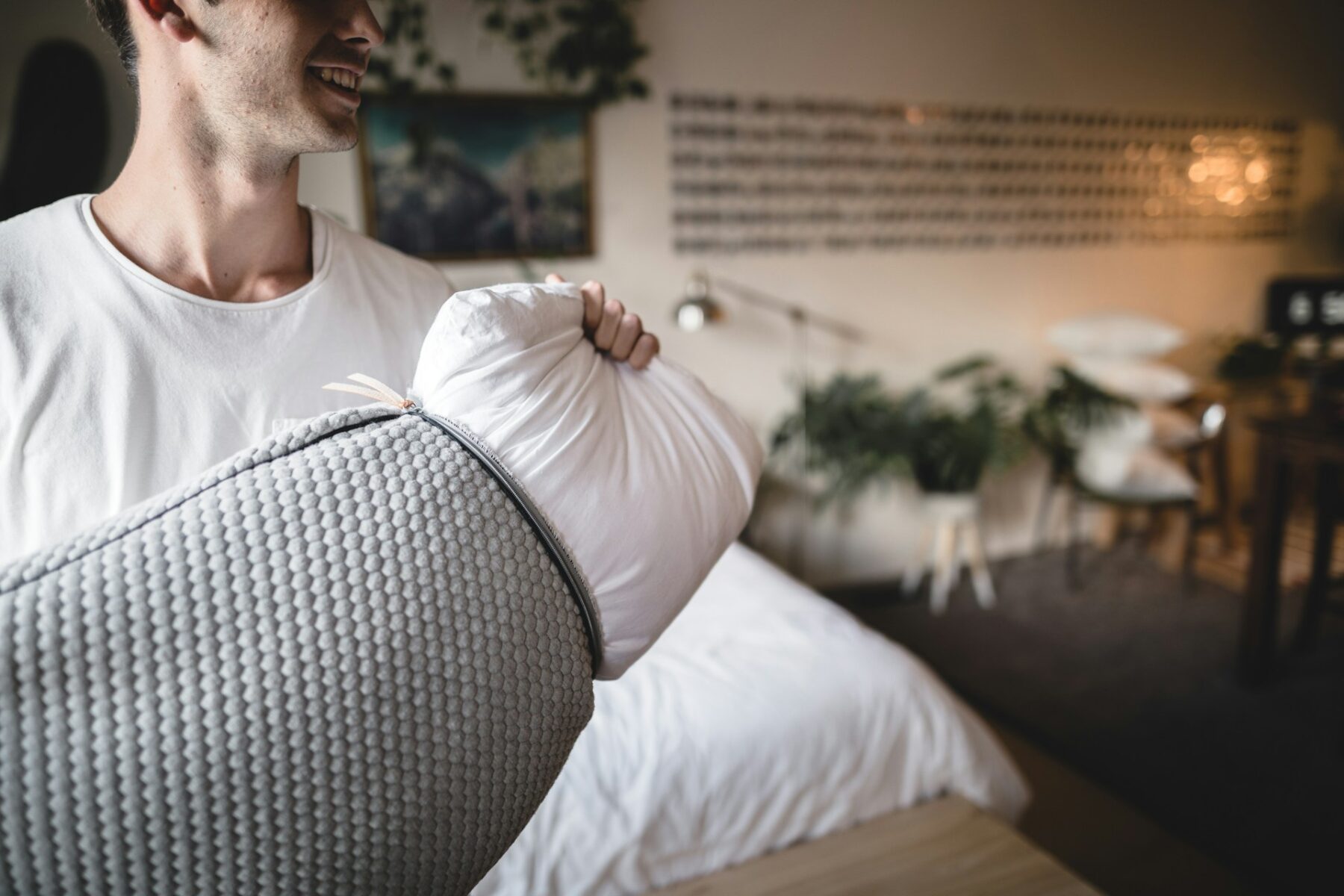
Once you’ve checked the label, the rest is straightforward:
If your label says spot clean only, as latex and solid memory foam usually do, dab any marks with a cloth dampened with a little mild detergent and warm water. Press out the moisture and leave the pillow to dry.
Drying deserves as much time as the wash itself. A pillow that goes back on the bed slightly damp is a pillow that smells musty by Wednesday, so this is one to take slowly.
Give yours plenty of time to dry all the way through, including the middle. Airing cupboards and sunny days are your friends here. Give the pillow a good shake and fluff it every so often to prevent the filling from clumping, and squeeze the centre before you make the bed. If there’s any dampness left, it needs longer.
Our guide to fluffing a pillow has a few tricks for getting the shape back afterwards.
Our pillow buying guide suggests washing pillows monthly where you can, with protectors going in weekly alongside your sheets. Monthly is the aim. Twice a year is still miles better than never.
Pillowcases and pillow protectors do the heavy lifting in between. Our bedding protection guide recommends washing protectors every one to two weeks with your bed linen, which stops dirt and grease reaching the pillow in the first place. Protectors also add 6 to 12 months to a pillow’s life.
Most of us are already in a decent rhythm with the rest of the bed. In our survey, a third of people change their sheets weekly, and another third do it fortnightly. Around one in five leave it a month or more. For more on that, read our guide to how often you should wash your bedding.
Here’s where it gets tricky. House dust mites are a common trigger for allergy and asthma symptoms, and they love a warm, slightly humid pillow.
Allergy UK advises washing bedding at 60 degrees or above, because that’s the temperature that kills mites. Washing cooler removes the allergen for a while, but the mites survive. NHS guidance from Cambridge University Hospitals says the same for pillows and duvets, where the material allows it. That last part is the catch, because most pillows are only rated to 30 or 40 degrees and a hotter wash than that can wreck the filling. If dust mites are your main worry, two things make a real difference.
If allergies are affecting your sleep or your breathing, it’s worth speaking to a GP or pharmacist about managing them.
A wash can freshen up a pillow. It can’t rebuild one that’s given up.
Our pillow buying guide recommends replacing pillows at least every two years, because fillings compress over time and stop supporting your neck properly. Persistent yellowing and waking up with a stiff neck are both signs it’s time. If your neck is the problem, our post on the best pillows for neck pain can help you choose the next one.
When you do replace them, old pillows don’t have to go in the bin. Textile recycling banks at supermarkets take them; many councils collect bedding for recycling, and clean, usable pillows are often welcomed by charity shops and homeless shelters.
Time for a fresh start? Keep yours cleaner for longer with our pillow protectors and covers, or browse all pillows if it’s time for a new pair.