World Sleep Day 2026: 7 Ways to Sleep Well and Live Better
11 Min Read |
Last Modified 6 March 2026 First Added 6 March 2026


 Featuring insights from Sleep Expert Sammy Margo
"On average, Dreams' survey shows that Brits are sleeping slightly longer and worrying about sleep less than in previous years, but that does not necessarily mean we are experiencing better quality sleep. In fact, 30% of us rarely or never wake up feeling refreshed."
Here’s a question for you. What did you do first this morning? Check your phone? Groan at the alarm? Lie there for a bit, willing yourself to feel more awake?
You’re not the only one. According to our 2026 Sleep Survey, fewer than 5% of us wake up feeling refreshed every morning. Let that sink in for a second. More than 95% of the country starts every single day already running on empty.
The same research found that the average Brit manages just over six hours of actual sleep per night, despite spending around 7.2 hours in bed. That’s about 50 minutes of lying there each night, tossing, turning, scrolling, or staring at the ceiling. And across an average week? We experience about 3.4 bad nights. That’s almost half the week running on fumes.
So, when World Sleep Day rolls around on Friday, 13th March, we think it’s worth more than a passing nod. This year’s theme, ‘Sleep Well, Live Better’, is exactly the kind of straightforward reminder we all need. Better sleep doesn’t just mean fewer yawns. It touches your mood, your focus, your patience with the kids, your appetite, and, honestly, your ability to enjoy life.
That’s why we’re sharing seven genuinely practical things you can do to sleep better, with some advice from Sleep Expert Sammy Margo too. No gimmicks. No ‘just relax’ advice (if only it were that simple). Just real, evidence-based changes that can make a real difference, starting tonight.
World Sleep Day happens every year on the Friday before the March equinox. It’s organised by the World Sleep Society, a global group of sleep health professionals who want to get us all talking (and thinking) more about how we rest.
Each year carries a theme, and for 2026, it’s ‘Sleep Well, Live Better’. The message is simple: how well you sleep shapes how well you live. Your morning mood, your energy at work, the way you handle stress, whether you snap at the people you love or handle the day with a bit more patience. It all starts with sleep.
The thing is, most of us already know that. What we don’t always know is what actually to do about it.

Sleep and mental health are tangled up together in ways that go way beyond ‘feeling grumpy after a bad night’.
In our survey, 26% said mental health has had one of the biggest impacts on their sleep. Among 18- to 24-year-olds, that figure rises to 38%. And when we asked what keeps people awake on any given night, ‘racing thoughts or a busy mind’ came out on top (37%), followed by stress (28%). Money worries (15%), work (14%), and relationships (13%) also featured. Add those up, and it’s clear: what’s going on in your head is one of the biggest barriers to a good night’s rest.
The tricky part is that it goes both ways. A bad night leaves you feeling low and less patient. And when you feel like that, falling asleep the next night gets harder. On average, people in our survey who had disturbed sleep spent about an hour and a half awake each time they tried to fall asleep. It creates a cycle where poor sleep feeds anxiety, and anxiety feeds poor sleep.
“Sleep is our foundation, and when you get it right, everything else improves too, including your mood, your focus, how you show up in your relationships and your overall resilience. When you consider that racing thoughts are stopping 37% of us from sleeping, that’s a concerning picture. Many of us are feeling overstressed and underslept.”
Sammy Margo, Dreams Sleep Expert
We’re not going to pretend these are revolutionary. You might have heard some of them before. The trick isn’t knowing them, it’s actually doing them. Pick one or two that feel realistic for your life right now and build from there.
That whirring mind at 11 pm? It didn’t appear from nowhere. Racing thoughts or a busy mind was the single most common cause of bad sleep in our survey (37%), with stress (28%) and worries about work, money and relationships all piling in behind it. When your brain has been running all day, it doesn’t just stop because you’ve climbed into bed.
Try giving it a buffer zone. Around 60 to 90 minutes before bed, stop checking emails, put the work laptop away, and resist the pull of doomscrolling. Our survey found that 11% of people spend too long on their phone before bed and know it affects their sleep. If that’s you, try swapping the screen for a book, a podcast or just a conversation with whoever shares your sofa. Your bedtime routine doesn’t need to be Instagram-worthy. It just needs to signal to your brain that the day is done.
Being too hot (24%) and struggling to get comfortable (23%) were among the top five causes of bad sleep in our survey. Your bedroom doesn’t need to look like a boutique hotel, but it does need to feel right.
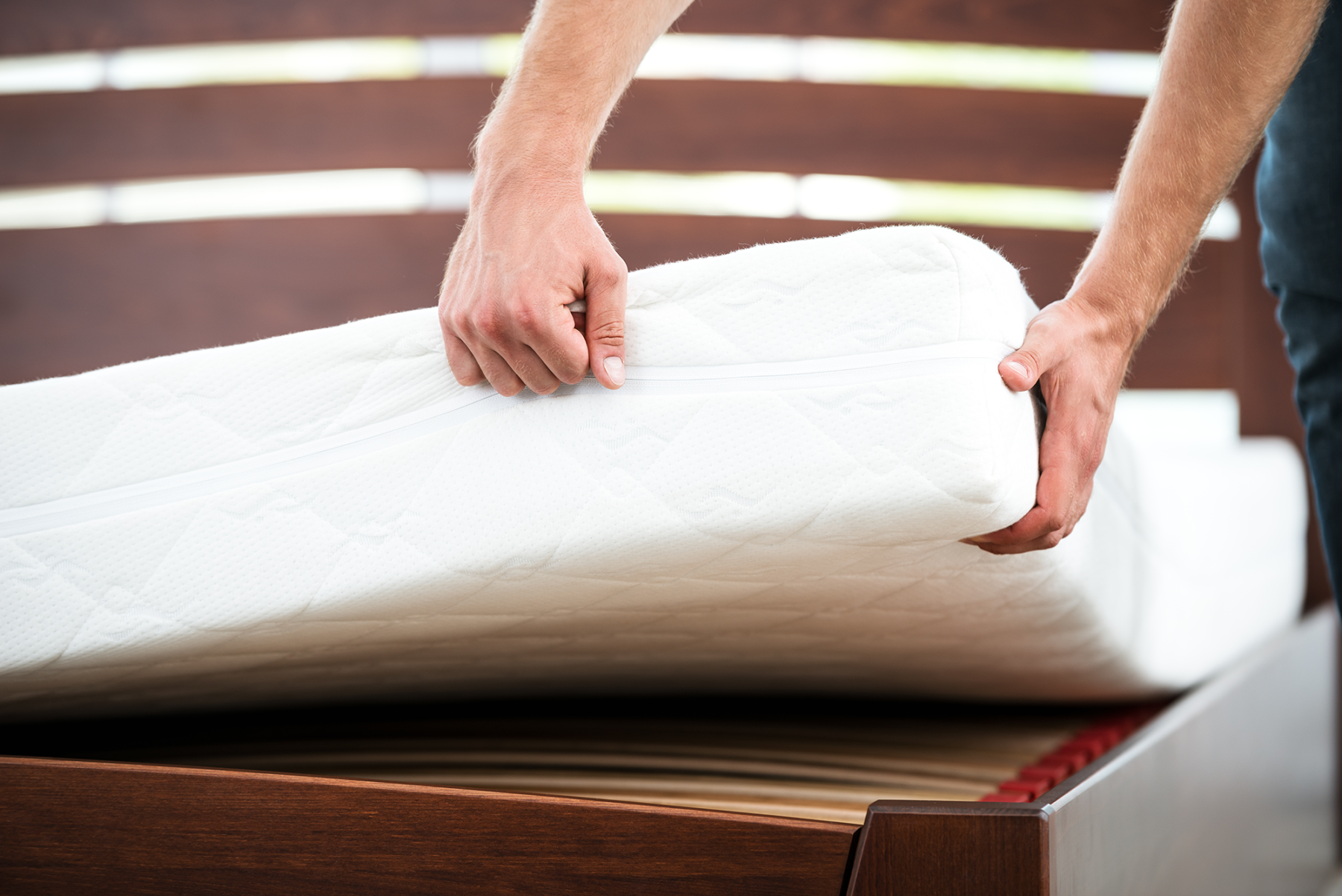
The ideal bedroom temperature for sleep is around 18 to 21°C, which sounds chilly, but your body actually needs to drop a degree or two to drift off. And if your mattress is over eight years old, it might also be time for an upgrade. Materials lose their support and shape over time, and what felt perfect in 2018 may be doing you no favours now. Not sure where to start? Our Sleepmatch technology can help you find the right mattress for your body in just three minutes.
We know. Nobody wants to hear this. But according to the Sleep Foundation, caffeine has a half-life of around five to six hours, which means that 3 pm coffee is still 50% active in your system at 9 pm. Think of it this way: if you wouldn’t drink half a cup of coffee at bedtime, maybe don’t drink a full one after lunch.
7% of people in our survey said too much caffeine was directly linked to their poor sleep. Small number, big impact. Try switching to decaf after midday for a week and see how you feel. If you need something warm in the evening, have a look at our picks for the best drinks before bed.

If your brain likes to serve up a full recap of every unresolved worry the moment your head hits the pillow, this one’s for you. Before bed, grab a pen and scribble down whatever’s on your mind. It doesn’t need to be neat or meaningful. Just get it out of your head and onto paper.
A Baylor University study published in the Journal of Experimental Psychology found that people who spent five minutes writing a to-do list before bed fell asleep significantly faster than those who wrote about tasks they’d already completed. You’re essentially telling your brain: ‘I’ve noted that. We can deal with it tomorrow.’ You might also find our guide to calming anxiety before bed helpful.
“To stop your brain from going into overdrive at bedtime, set a five-minute timer before you get into bed and write down everything that’s on your mind, from tomorrow’s to-do list to random worries. By giving your thoughts a dedicated ‘worry window,’ you’re telling your brain it doesn’t need to keep rehearsing them when it’s time to sleep.”
Sammy Margo, Dreams Sleep Expert
A Saturday lie-in is one of life’s true pleasures. But wildly different wake-up times can throw your circadian rhythm out of sync, which is basically your body’s internal clock telling you when to feel sleepy and when to feel alert.
Sleeping in until noon on Sunday and then trying to fall asleep at 10 pm the same night? That’s a recipe for lying wide-eyed in the dark, wondering why your brain has chosen this exact moment to think about that embarrassing thing you said in 2017. Try keeping your wake-up time within an hour of your weekday alarm. Your body will thank you by Monday.
According to Johns Hopkins Medicine, there’s solid evidence that regular exercise helps you fall asleep more quickly and improves sleep quality. But timing matters. A morning walk, a lunchtime swim, an after-work class? All great. A high-intensity gym session at 9 pm? Less great.
Vigorous exercise raises your core body temperature and releases adrenaline, both of which are the opposite of what your body needs in the run-up to sleep. The Sleep Foundation notes that vigorous workouts within an hour before bed can affect sleep efficiency and total sleep time. Aim to finish anything intense at least two to three hours before bed. If you prefer evening movement, gentle yoga or stretching is a much kinder wind-down. We’ve got a handy bedtime yoga routine if you fancy giving it a go.
Everyone has the odd rough night. That’s life. Kids get ill, deadlines loom, and the neighbours decide midnight is the perfect time to rediscover their love of power tools.
But if sleep problems are hanging around, night after night, for weeks at a stretch, it might be worth looking a little deeper. In our survey, 19% of people said they experience bad sleep every single night of the week. That’s almost one in five adults. If that sounds like you, talking to your GP is a good first step. The NHS website also has helpful information on sleep problems and when to seek further support.
You can also explore our guide to insomnia and how to manage it for more in-depth advice.
“Humans thrive on rhythm and routine. Go to bed and wake up at roughly the same time each day, even at weekends. If you’ve had a poor night, go to bed slightly earlier rather than sleeping in. Wind down properly with calming activities, limit caffeine late in the day, and make sure your bedroom is cool, dark and comfortable.”
Sammy Margo, Dreams Sleep Expert
Think about what a bad night actually costs you. Not in money, but in how you show up the next day. The short temper at breakfast. The brain fog in your afternoon meeting. The zero motivation to cook, exercise, or do anything beyond collapsing on the sofa. Only 40% of people in our survey rated their overall sleep quality as good. And over a quarter worry about not getting a good night’s sleep on most nights.
‘Sleep Well, Live Better’ isn’t just a catchy slogan. It’s measurable. It’s felt. It’s the difference between coping and actually thriving.
And it’s not always about the big changes. Sometimes it starts with the surface you’re sleeping on. If your mattress isn’t giving you the support you need (18% of people in our survey said they struggle with neck, hip, and lower back pain at night), that’s a problem worth solving. Our Sleepmatch technology maps 1,000 pressure points across your body to recommend the right mattress for how you actually sleep.
You don’t need to be a sleep scientist to take part. Here are a few ways to mark the day:
Share the #WorldSleepDay hashtag on social media and tell people about one change that’s helped your sleep. You’d be surprised how many people are quietly struggling and just need to hear that they’re not alone.
Take our sleep health calculator to get a personalised snapshot of your sleep habits. It’s quick, it’s free, and it might give you a nudge in the right direction.
Browse our Sleep Matters Club for practical tips and expert advice on getting better rest.
Or just pick one thing from the list above and try it tonight. Sleep isn’t something you can fix overnight, but every small shift counts.