
How a Tidy Bedroom Could Improve Your Sleep Quality
8 Min Read |
Last Modified 16 February 2026 First Added 16 February 2026

Ever climbed into bed feeling exhausted, only for your mind to start racing the moment the lights go out? Your bedroom might be part of the problem. A messy space doesn’t just look distracting; it can quietly keep your brain in work mode when it should be winding down. From piles of clothes to cluttered surfaces, what you see before sleep can influence how easily you drift off. Here’s why bedroom clutter affects your sleep, and what you can do about it.
Short answer? Yes. And there’s more research behind it than you might expect.
Research presented by Dr Pamela Thacher and colleagues has found that people at higher risk of hoarding disorder, and thus typically living with more clutter, report poorer sleep quality and more disturbances than those with less clutter. We’re not just talking about extreme cases either. The findings suggest that clutter can affect sleep even outside of severe hoarding behaviours. Researchers observed a clear pattern: people living with more clutter tended to report poorer sleep quality.
When you climb into bed surrounded by clutter, your brain doesn’t register it as rest time. It sees reminders. Half-finished jobs. Things you meant to deal with tomorrow. Instead of switching off, your mind starts quietly ticking through a mental to-do list, and that low-level buzz is hard to shake. If you’re curious about why this happens on a deeper level, our article on the psychology behind tidying your bedroom is worth a read.
Here’s the tricky part. Poor sleep doesn’t just make you tired. It affects your ability to make decisions, stay motivated and get things done. Which means the messier your room gets, the worse you sleep, and the worse you sleep, the less likely you are to tidy up the next day. Dr Thacher’s research flagged exactly this pattern, noting that poor sleep compromises the kind of cognitive function you need to actually deal with the mess.
It’s a cycle most of us have been stuck in at some point. You’re too tired to sort through the pile of clothes on the chair, so it stays there. Then the pile grows. Then it starts bothering you at 11 pm when you’re trying to drift off. Sound familiar?
The good news is that breaking the cycle doesn’t require a full weekend blitz. Even small, regular habits (a two-minute tidy before bed, putting clothes away as you take them off) can interrupt the pattern and help your brain start associating the bedroom with rest again.
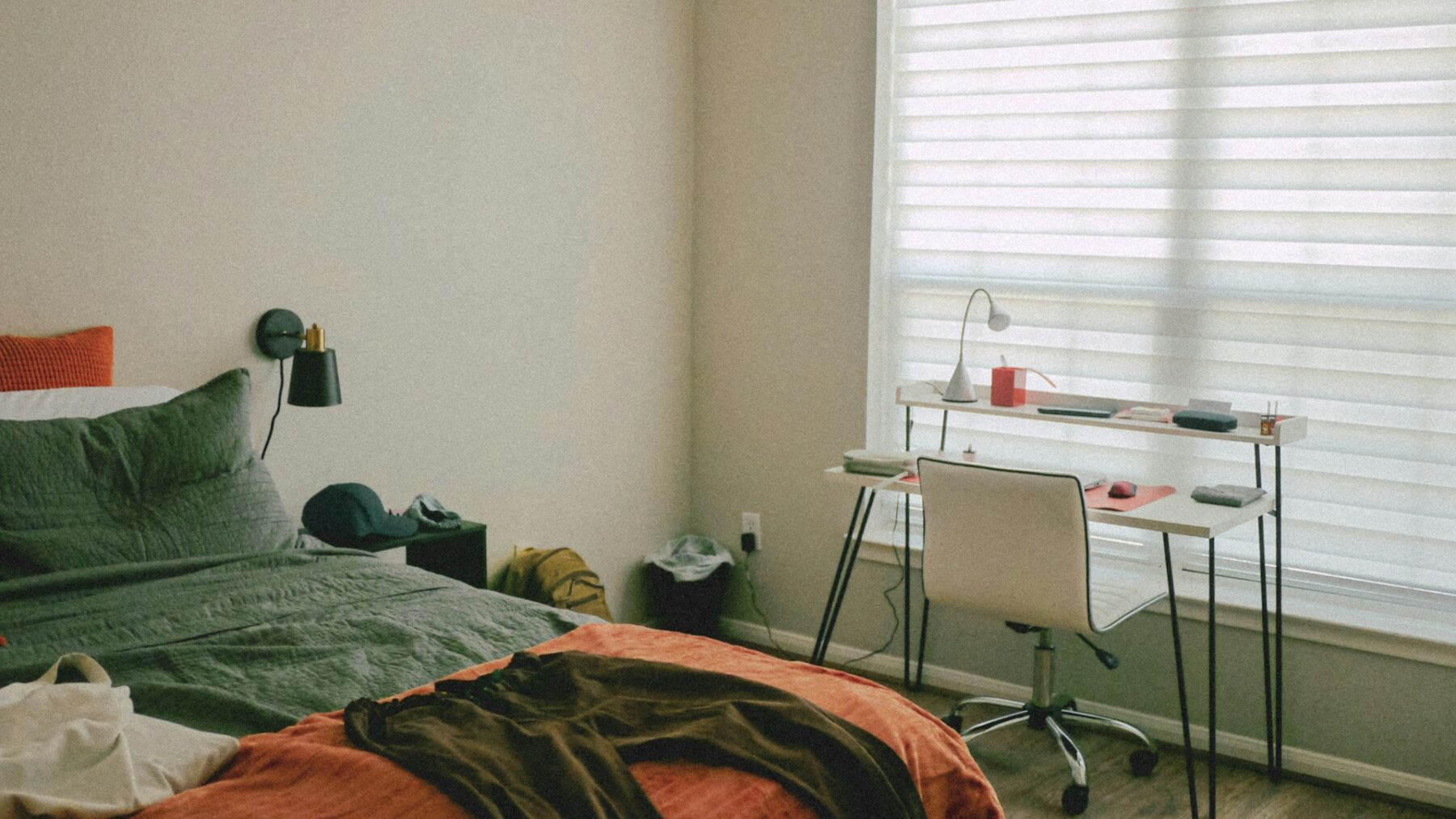
You might think you’ve tuned out the clutter. That you don’t even notice it anymore. But your brain tells a different story.
Studies in cognitive neuroscience show that visual clutter competes for mental processing and attention, a principle that helps explain why messy environments may make it harder to relax. Each item takes up processing power, and your brain has to work harder to filter it all out. Over time, that drains your ability to focus and relax. While the study looked at visual attention broadly rather than bedrooms specifically, the principle applies perfectly to the space you sleep in.
Think about it this way. During the day, your mind is busy and occupied, so the stack of books on the dresser barely registers. But at night, when the lights go off, and there’s nothing else to concentrate on, all that visual noise becomes much harder to ignore. Your brain keeps quietly cataloguing what it can see, even when you’d really rather it didn’t. It’s one of the reasons a quick tidy before bed can make more difference than you’d expect.
It goes beyond just feeling a bit stressed. Researchers at UCLA’s Center on Everyday Lives and Families studied 30 dual-income families and found that people who described their homes as cluttered showed a flatter cortisol slope throughout the day. In plain terms, their stress hormone didn’t drop in the evening the way it normally should.
That matters because cortisol is supposed to fall as the day goes on, allowing your body to release melatonin, the hormone that makes you feel sleepy. When your environment keeps your stress response ticking over, that natural dip doesn’t happen properly. The result is lying in bed feeling wired when you should be feeling drowsy, your body stuck in a state of low-level alert.
The study, published in Personality and Social Psychology Bulletin, also found that gender differences exist in how people perceive clutter and stress, which may influence emotional responses to messy environments. Researchers suggested this is likely linked to the mental load women often carry with household tasks. Seeing a mess doesn’t just register as a mess. It registers as a to-do list, and that mental weight follows you right into bed.
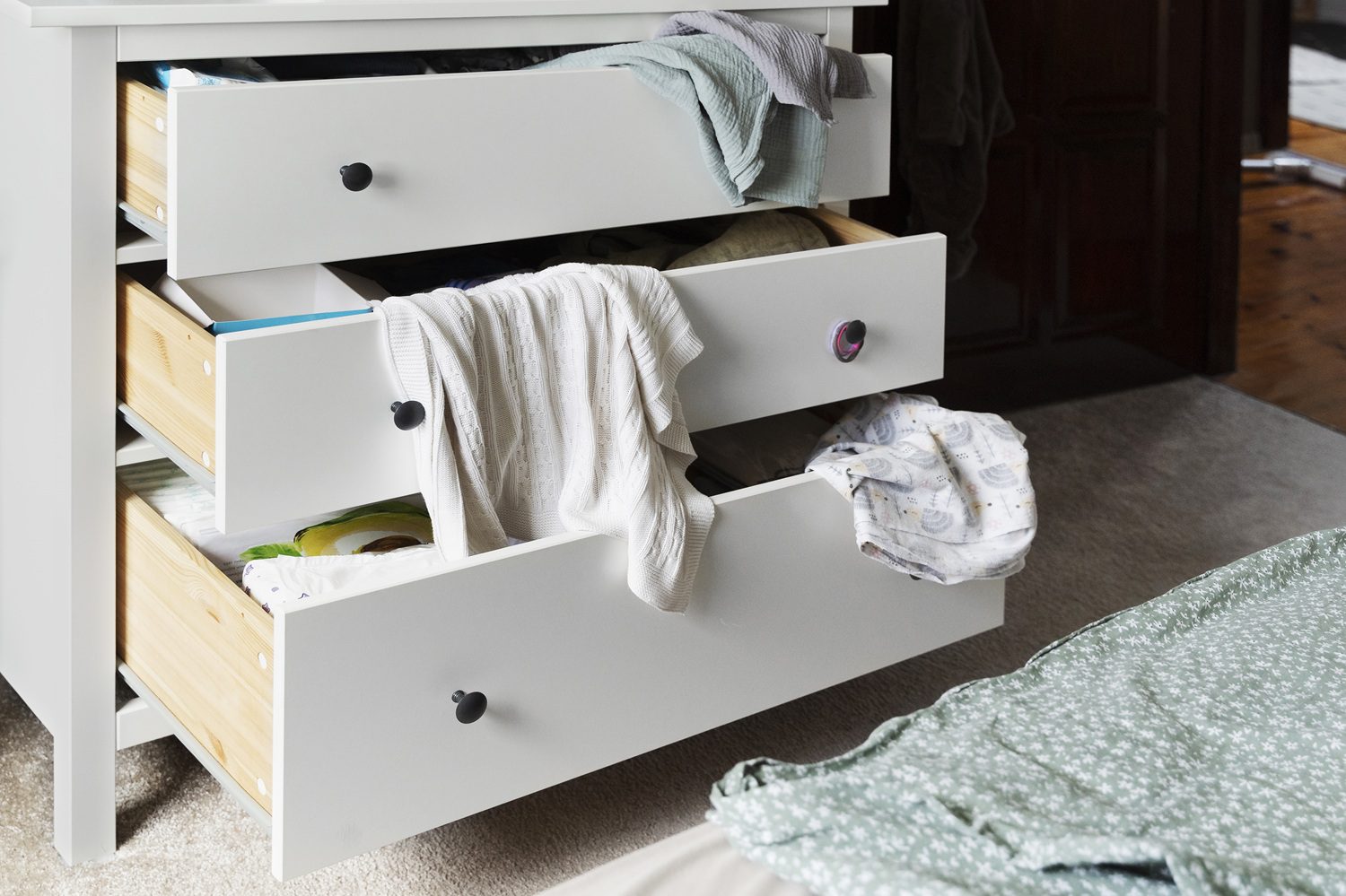
Dealing with clutter isn’t a fun task at the best of times, especially when you’re already exhausted. You don’t need to become a minimalist or start labelling every drawer. Small, manageable changes can make a difference:
Want to go a bit further? Our guide to decluttering your bedroom is full of practical ideas to help you get (and stay) on top of it.
Sometimes the problem isn’t that you’re messy, it’s that there’s genuinely nowhere to put things. If your bedroom is short on space, the right furniture can make a bigger difference than any amount of tidying.
Storage beds are a great option if you need somewhere to stash spare bedding, seasonal clothes or anything else that doesn’t have a home. Ottoman beds lift up to reveal a huge amount of hidden storage underneath the mattress, which is brilliant if you’re working with a smaller room. You can find out more about the different options in our storage beds guide.
For kids’ rooms, where toys, books and general chaos tend to take over, kids’ storage beds with built-in shelves and drawers can help keep things under control without sacrificing floor space. And if space is tight across the board, our guide to space saving beds is worth a read.
For more ideas on making the most of your room, take a look at our bedroom storage ideas.
When creating a calm sanctuary for sleep, tidiness is just one piece of the puzzle. Here are a few other ways to help make your bedroom more sleep-friendly:
For more tips, read our article on how to sleep better at night.

Once you’ve sorted the clutter and nailed the environment, there are other things that can help:
A tidy bedroom won’t magically solve every sleep problem, but it can make it much easier for your mind and body to switch off. By clearing visual clutter and creating a calm, comfortable space, you’re sending a clear signal that it’s time to rest. Start small, keep it manageable, and focus on how your room feels when you climb into bed. Better sleep often begins with a space that helps you relax.