Wall panelling bedroom ideas
8 min read
Last Modified 5 November 2026 First Added 2 August 2022
Wall panelling has been dressing up British bedrooms since the Georgian era (around 1714 to 1837), when it ran halfway up or right across the wall, usually painted in soft, light neutrals.
Today, panelling is one of the easiest ways to give a plain room some character, and a weekend and a few MDF strips can take a bedroom from a blank box to a boutique hotel. Here are our favourite looks, plus how to fit them yourself.
Match the look to your room and the mood you’re after.
Credit: @ourfirsthome_38
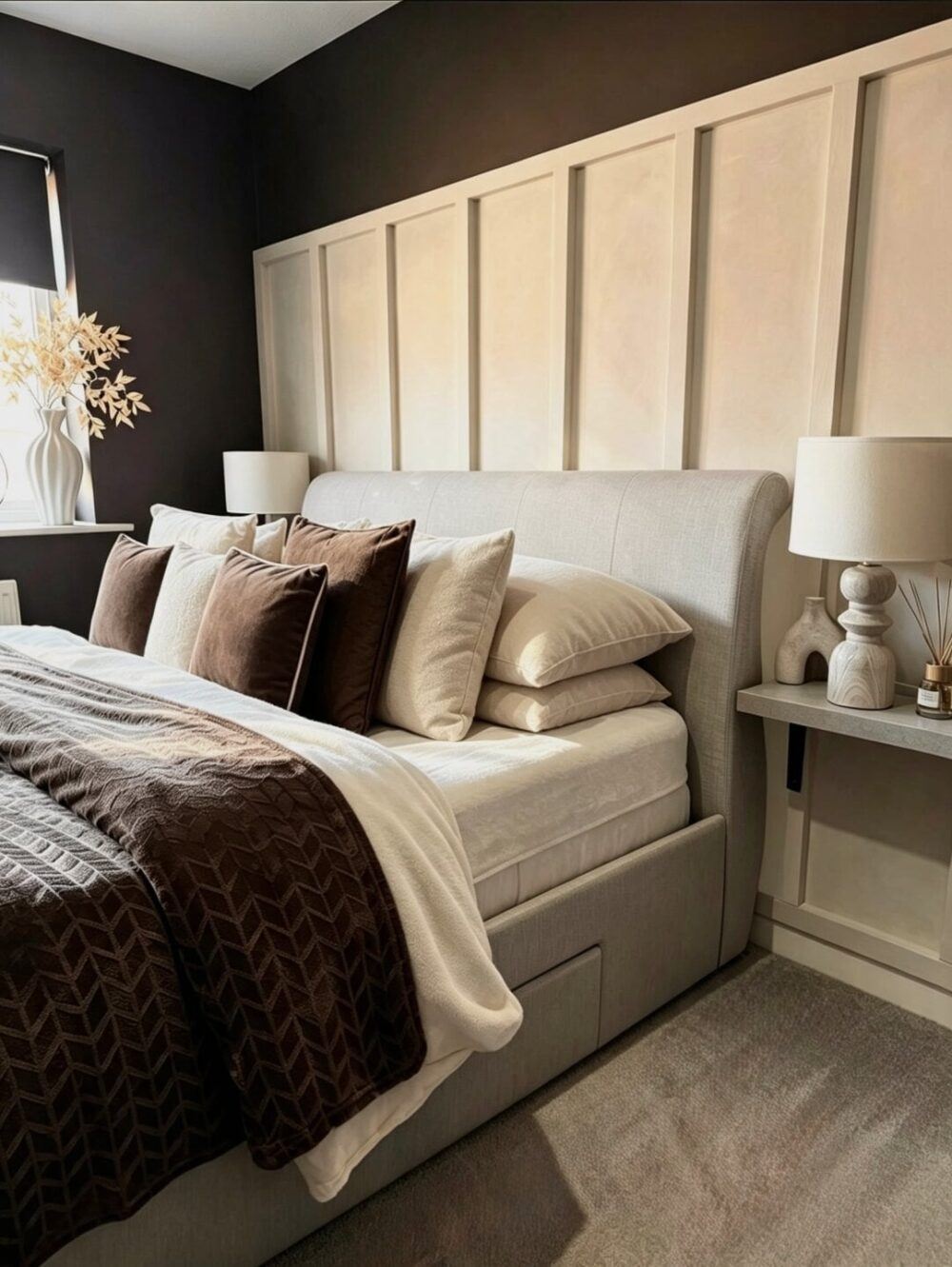
Get the look: Lucia Upholstered Bed Frame
The wall behind your bed is the most popular place for panelling, as it’s the wall the whole room is arranged around.
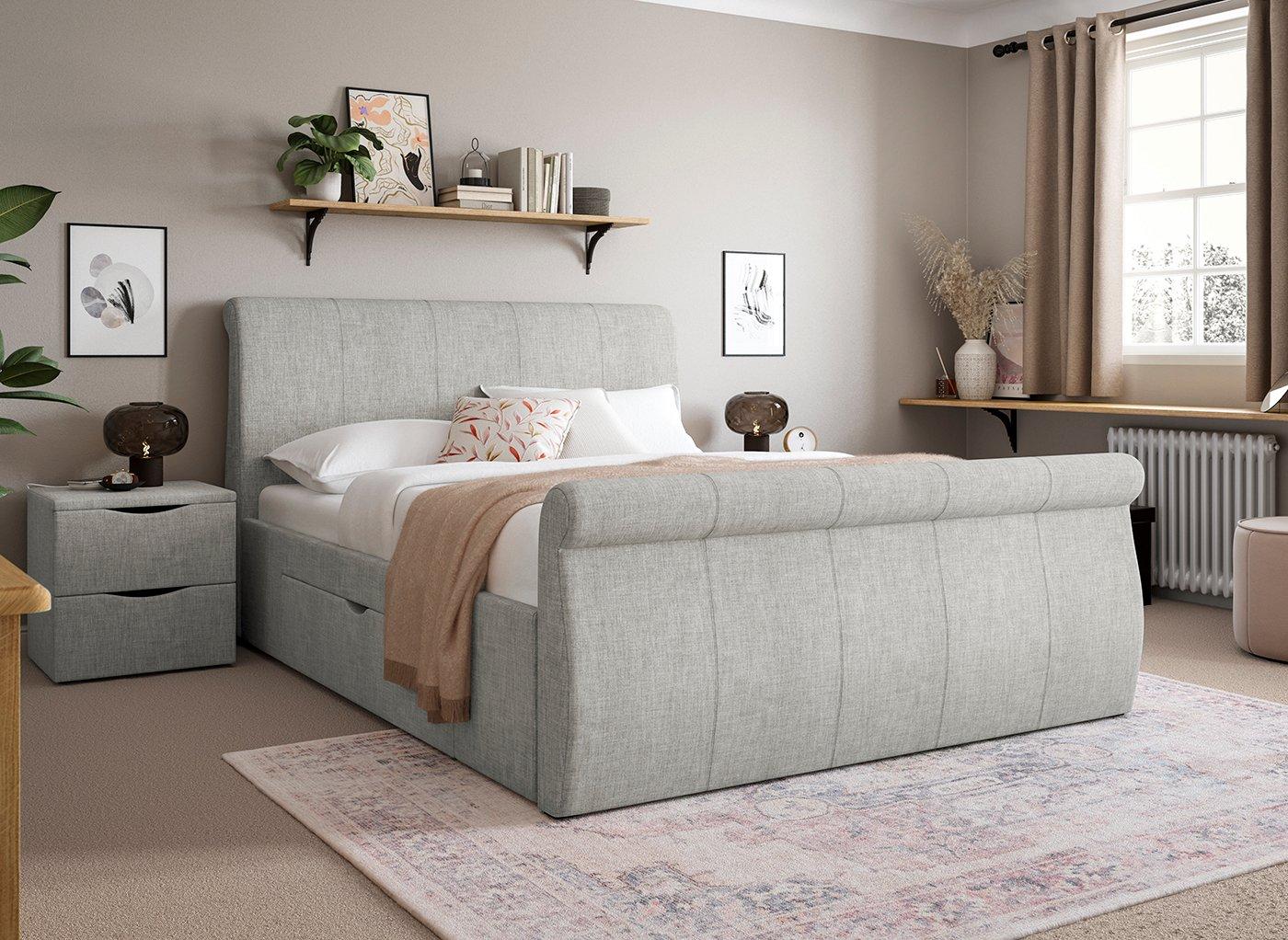
It’s a big change for a small project, without the commitment of panelling every wall. Run the panels just wider than the bed, or go wall-to-wall for more impact. Here, tall cream panelling stands out against chocolate brown walls behind our Lucia upholstered bed frame in silver, with its scrolled, sleigh-style headboard. Cream pillows and brown velvet cushions pick up the contrast. Prefer to keep the wall plain? A tall upholstered headboard can make just as much of a statement.
Get the look: Foley Upholstered LG TV Bed Frame
Vertical slats and fluted panels give a bedroom a crisp, modern look and can help a low ceiling feel taller.
They suit Scandi and Japandi styles, and you can buy ready-made panels or cut your own. Some slatted panels come with a felt backing that can help soften sound, which suits a calm bedroom. Here, white fluted panelling adds texture behind our Foley upholstered TV bed in navy, with its high, winged headboard and an LG Smart TV tucked away at the foot end. Browse more TV beds.
Get the look: Phoenix Upholstered Bed Frame
Shaker panelling uses evenly spaced strips to create neat squares or rectangles, and it’s one of the easiest styles to fit yourself.
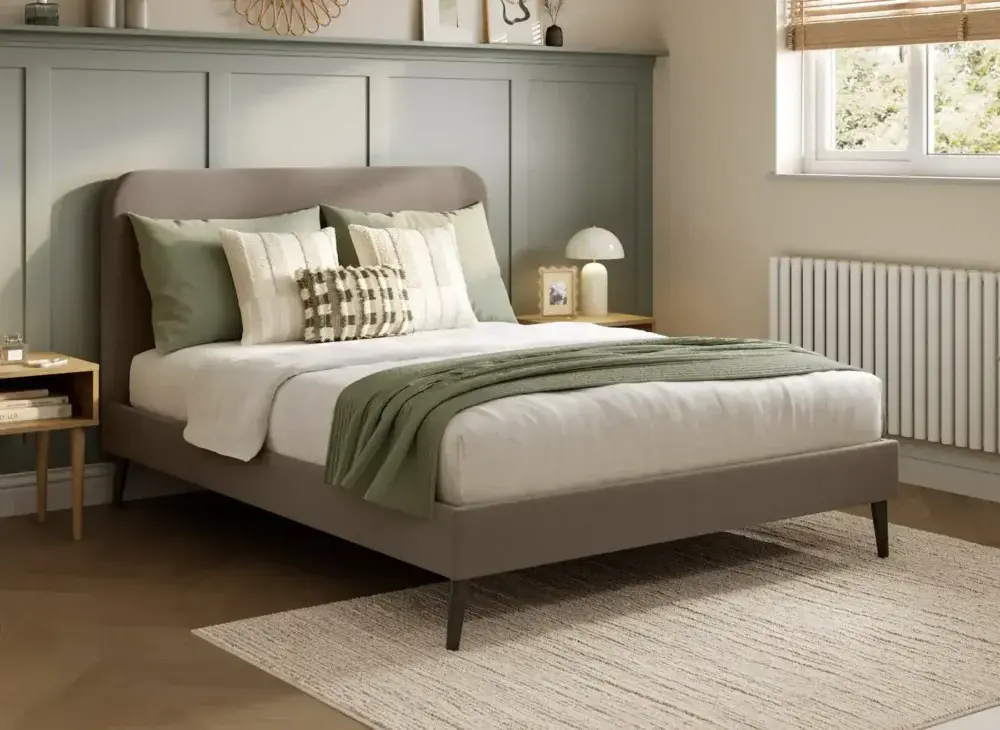
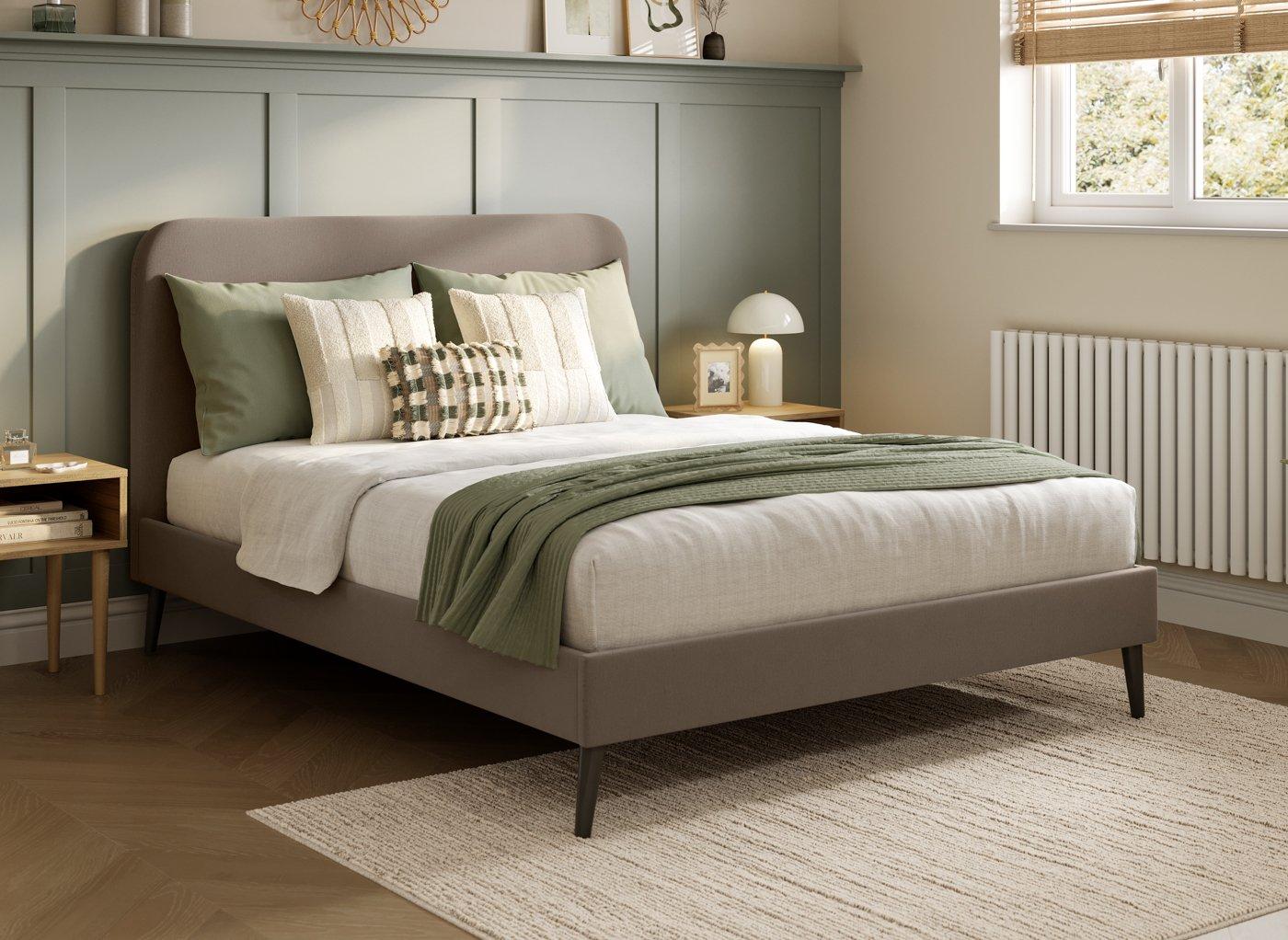
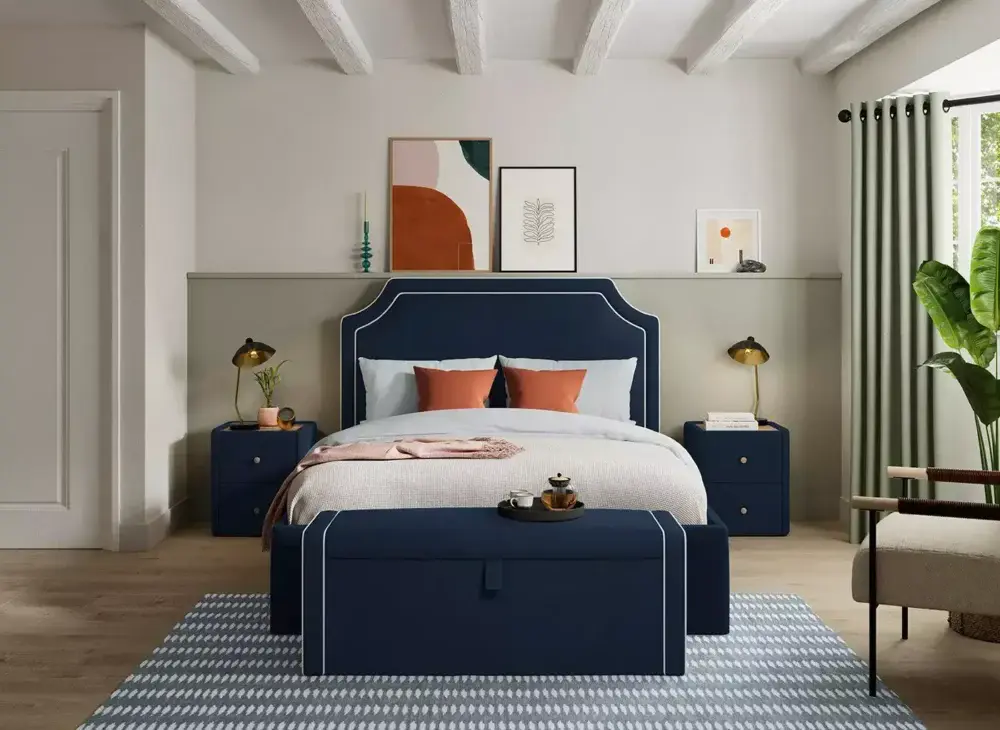
It looks just as good in soft neutrals as in deep, moody shades, and taking it two-thirds of the way up the wall works well in rooms with high ceilings. Here, sage green Shaker panelling topped with a picture ledge sits behind our Phoenix upholstered bed in latte, with its curved headboard and tapered legs.
Get the look: Silentnight Holden Upholstered Ottoman Bed Frame
Wainscoting covers the lower part of the wall, traditionally up to dado rail height.
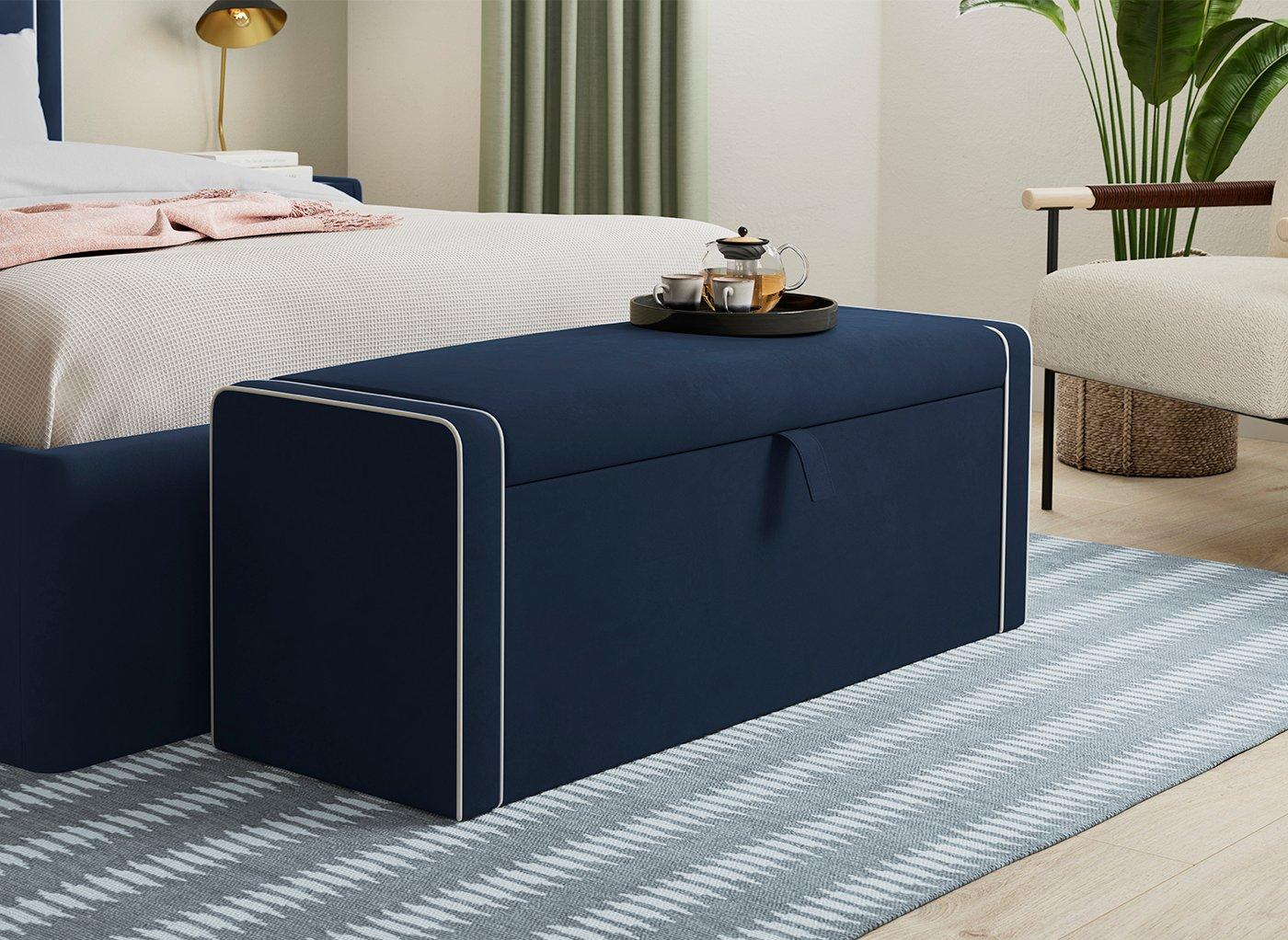
It once added insulation and protected walls from knocks, and it’s still handy for hiding scuffs. Half-height panelling like this is a smart choice for smaller bedrooms, as it adds detail without closing the room in. Here, panelling runs to around headboard height, with a picture ledge on top for prints, behind our Silentnight Holden upholstered ottoman bed in navy.
Get the look: Sophie Conran Draycot Upholstered Ottoman Bed Frame
Tongue-and-groove boards slot together for a snug, cottage-style finish, while shiplap runs in overlapping horizontal planks for a rustic farmhouse feel.
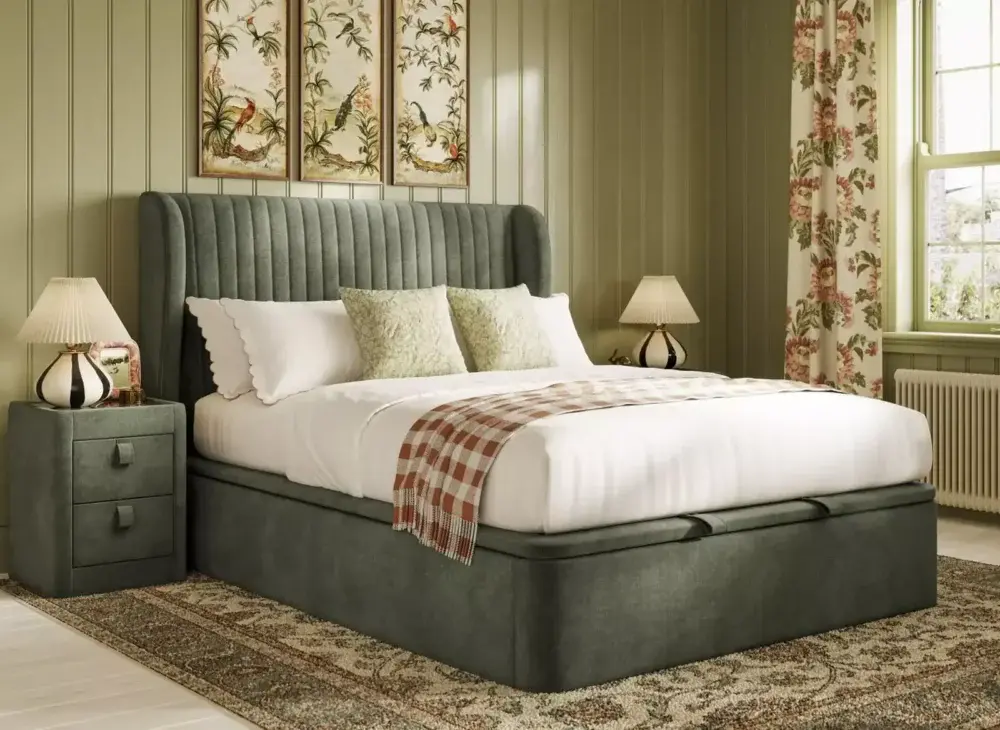
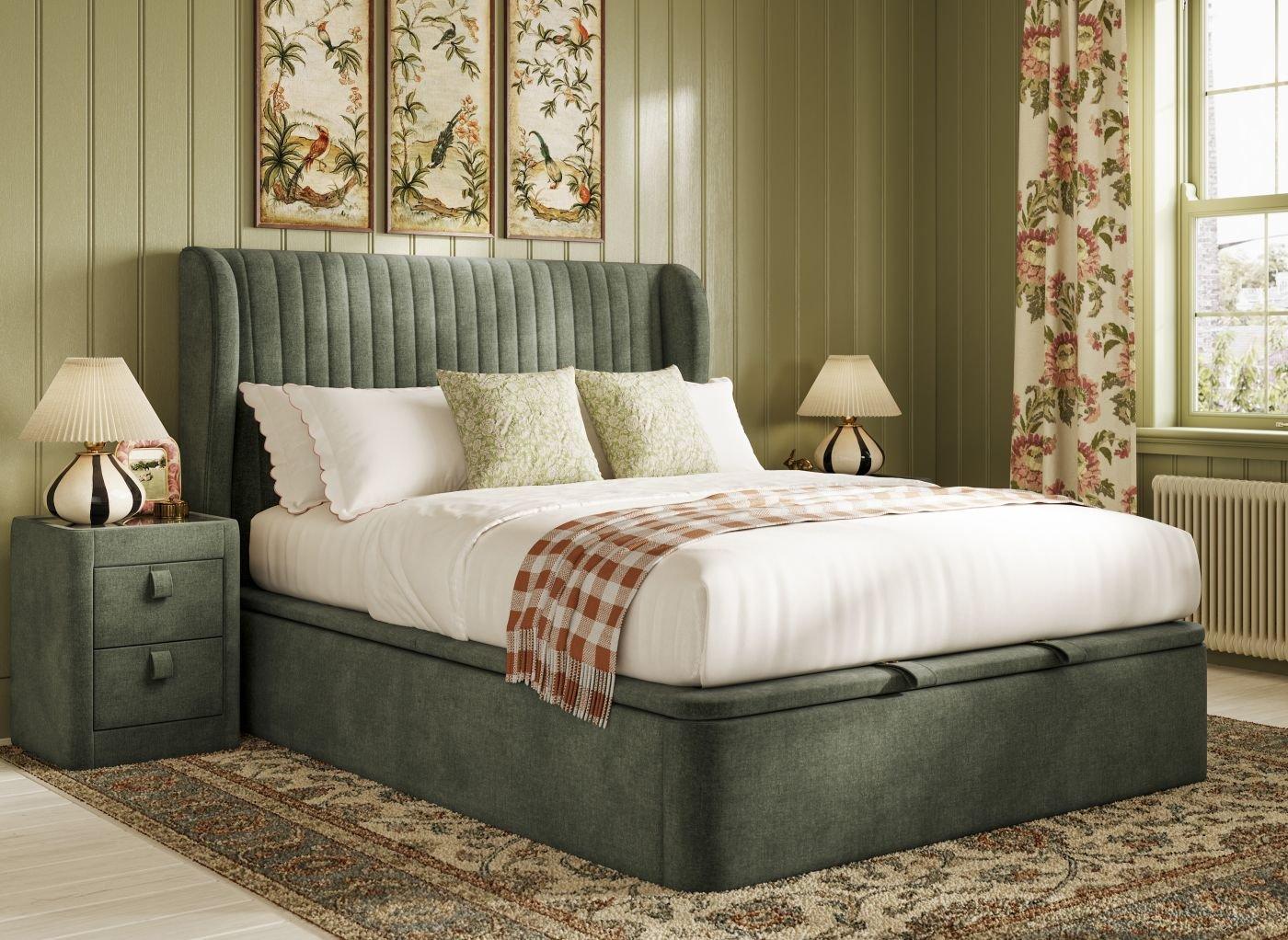
Both suit a cottagecore look and can be painted or left as natural wood. They can also help disguise uneven walls. Here, green tongue-and-groove panelling wraps the room, with a matching green Sophie Conran Draycot upholstered ottoman bed, floral curtains and botanical bird prints.
Get the look: Aries Upholstered Bed Frame
Panelling makes a ready-made frame for artwork, turning a plain wall into a gallery.
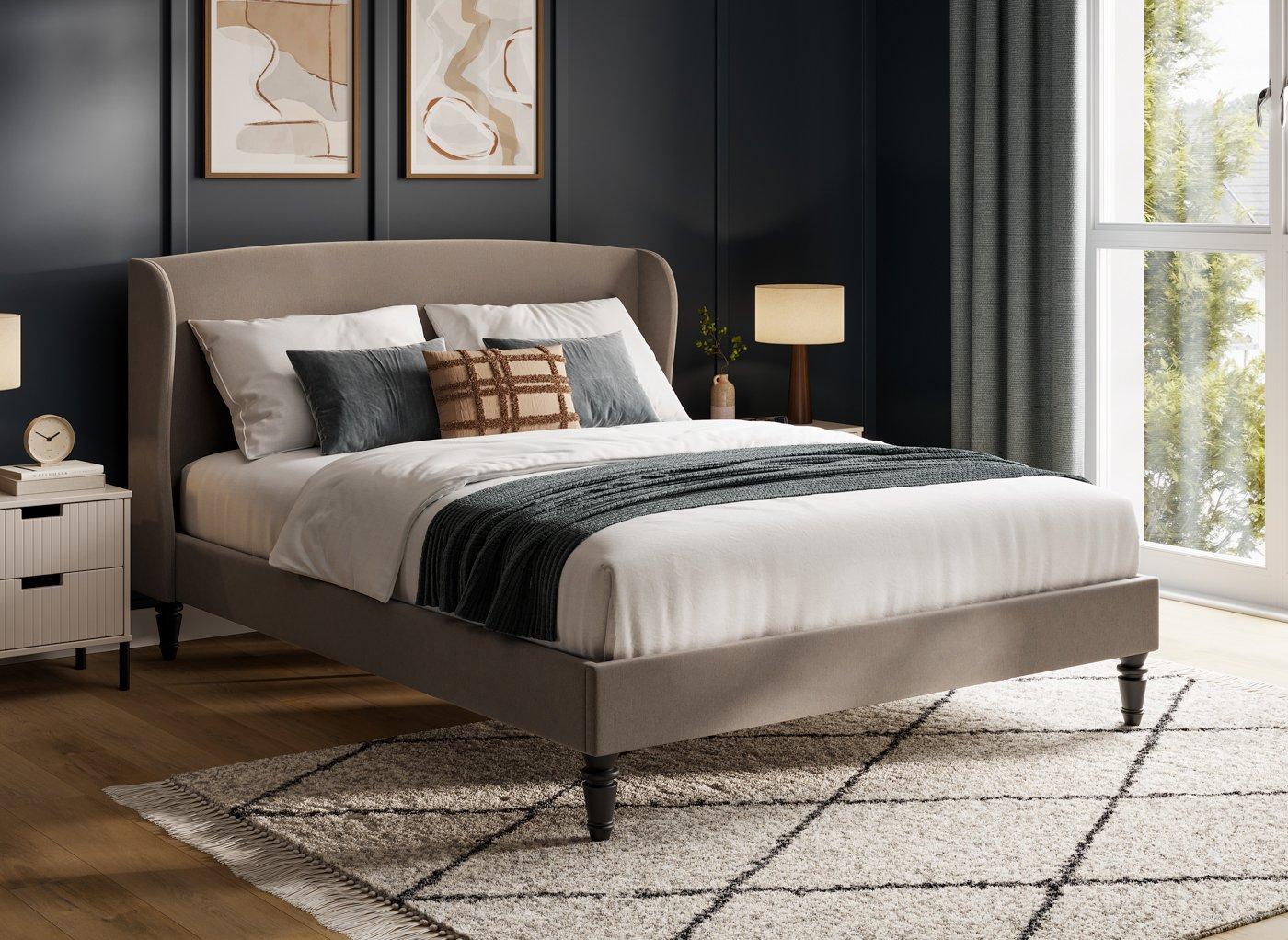
Wainscoting and picture frame moulding both work well. Hang prints so they sit neatly within the panels, or centre a pair above the bed. Here, two abstract prints hang between tall navy panels above our Aries upholstered bed in latte, with its winged headboard and carved legs.
Get the look: Orion Upholstered Ottoman Bed Frame
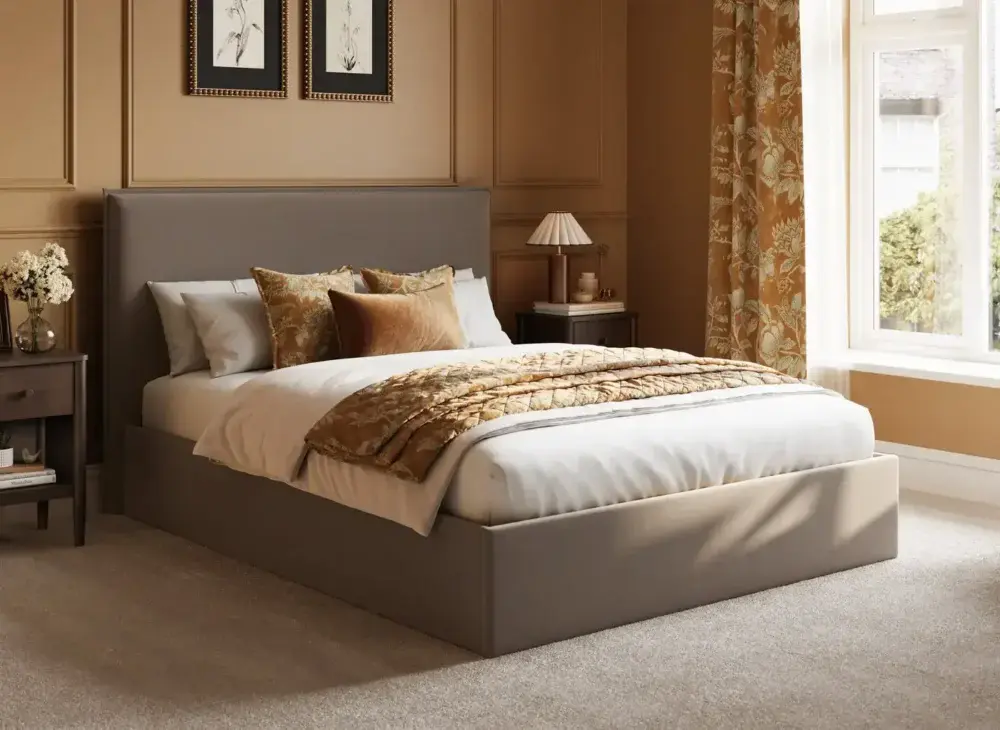
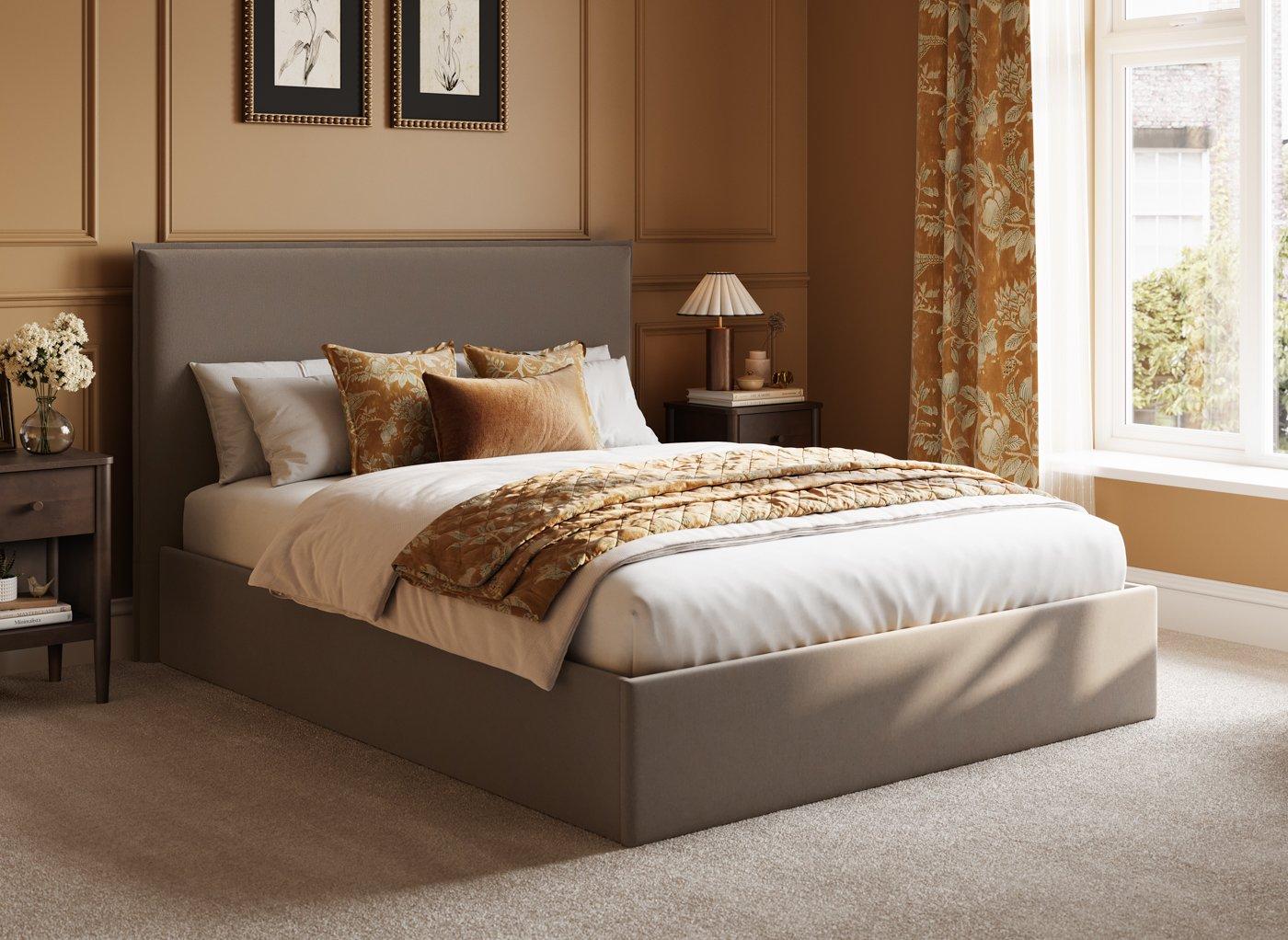
Parisian-style panelling uses picture frame mouldings to divide the walls into elegant rectangles.
Classic Parisian rooms keep the palette soft, with warm whites, pale greys and gentle pastels, plus textures like velvet, linen or brushed cotton. For a cosier take, try a richer shade. Here, caramel walls and mouldings frame a pair of botanical prints above our Orion upholstered ottoman bed, with its padded, pillow-back headboard and storage hidden underneath. Painting the walls and mouldings in one shade like this is a simple form of colour drenching. A plain upholstered bed keeps the attention on the panelling.
Credit: @renovating_192
Get the look: Francesca Upholstered Ottoman Bed Frame
Building a shelf into your panelling adds storage without taking up floor space, which is handy in a small bedroom.
Use MDF or timber, mark out your panels with a spirit level and add a support where the shelf will sit. Fix the panels, then attach the shelf board on top. Here, a shelf runs along the top of taupe panelling behind our Francesca upholstered ottoman bed, with room for a trailing plant and a framed photo. Need more storage? Francesca lifts from the end to reveal a 23-cm-deep ottoman. Find more ideas in our bedroom shelving ideas.
Most bedroom panelling is made from MDF strips fixed to the wall with grab adhesive and pins, then filled, primed and painted.
Panelling the wall behind your bed? Measure your headboard height first, so the panels line up neatly with it.
Picked your panelling style? Find a bed to match our upholstered beds and headboards.
If you’re in the process of renovating your period home and want to restore the original wooden wall panelling, there are several steps you can take.
Follow our mini guide to help you get stuck in:
If you have faded plain wooden panels, sometimes, a thorough clean is all that’s necessary to bring back the lustre. Use an oil soap to remove any built-up grime and apply with a large slightly damp sponge. Use a dry cloth to soak up excess moisture.
Once cleaned, apply some lemon oil – this works wonders on natural wood. Apply by pouring a small amount onto a sponge and carefully work it into the wood.
Minor nicks and scratches can mostly be covered with wood stain and a cotton bud. Simply apply a little stain, then wipe away any excess with a dry cloth.
If you have large chips or gouges in the wood, these can be fixed with some wood putty and wood stain. Simply apply the putty as instructed, let it dry, then sand it down and apply some stain to camouflage it.
If you’re having trouble finding a wood stain that matches, re-staining is your only option. Use a mild stripper to remove the old finish and then sand down. Once the old finish is removed, clean the planks with a mild detergent and let them dry. Apply your new stain of choice. Once the stain has dried, you can seal the planks with specialist oil to protect the restored wood.
MDF is the most popular choice, as it’s affordable, versatile and paints smoothly. Solid wood looks timeless but costs more. For style, wainscoting or beadboard suits vintage and rustic rooms, while slats suit modern ones.
MDF or good-quality plywood keeps costs down, and fitting it yourself avoids the highest cost: paying a tradesperson. Panelling-effect wallpaper is still a cheaper option.
Panelling can make a bedroom feel bigger or smaller, depending on the style. Vertical panels can make a ceiling feel higher, and horizontal panels can make a room feel wider, while dark or busy designs may make a small room feel more enclosed.
Soft neutrals and sage green keep a bedroom calm and light, while deep blues and greens feel cosy and dramatic. Painting the panels and walls in one shade gives a smart, colour-drenched finish. See our bedroom colour ideas for inspiration.
Master the art of colour drenching by using a single colour from floor to ceiling for an elevated bedroom look.
10 min read
Feel inspiredFrom gallery walls to wallpaper, functional shelving to fun and funky wall art, that empty bedroom wall is about to become much more exciting…
5 min read
Feel inspiredStrike the perfect balance between refined and cosy with our warm minimalism bedroom design ideas.
6 min read
Feel inspired