
How to Achieve the Perfect Lie-in
8 Min Read |
Last Modified 28 September 2026 First Added 14 November 2015
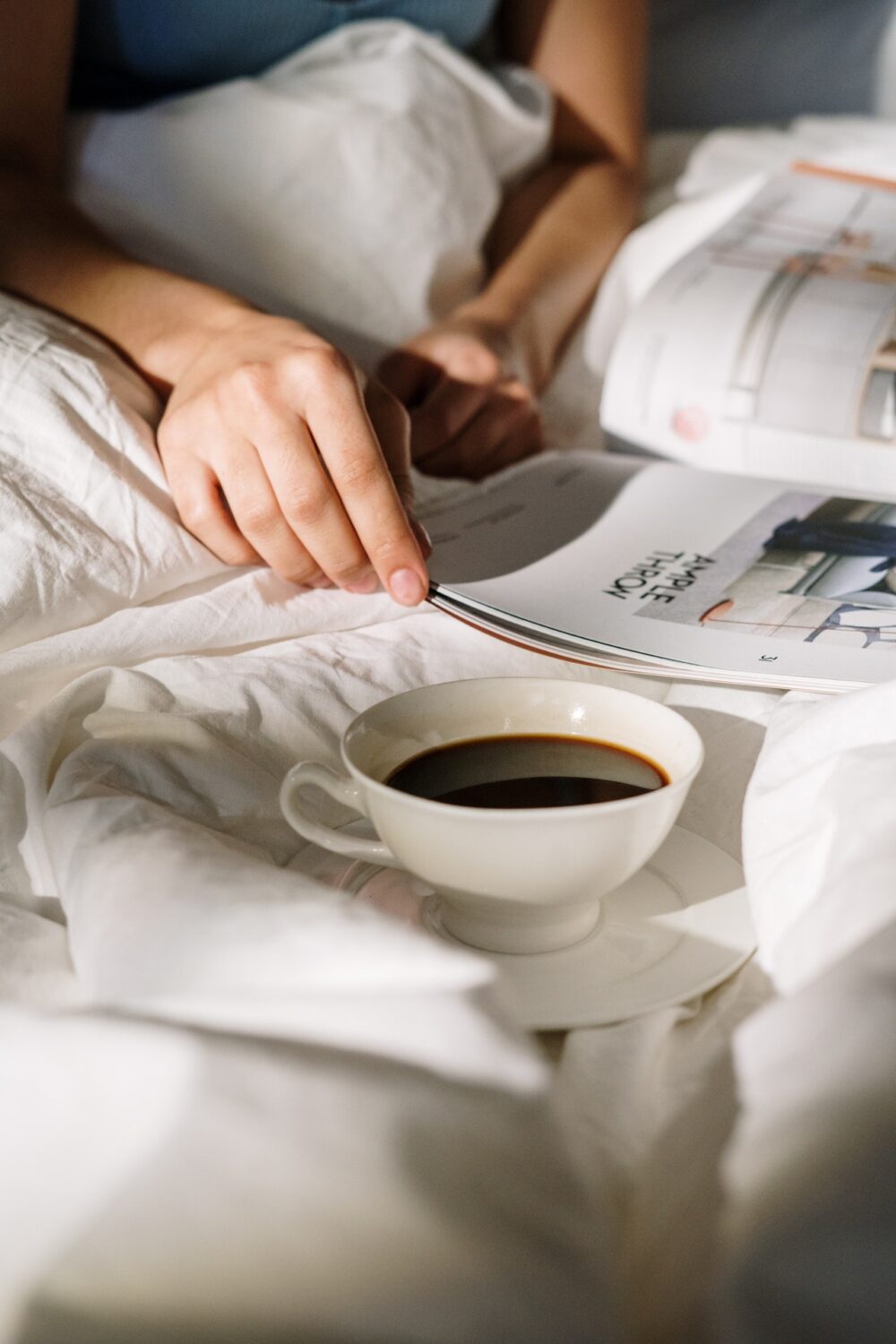
A lie-in means staying in bed later than usual in the morning, usually at the weekend and usually after a week that’s taken more out of you than you’d like. Most of us are up early. In our 2026 UK Sleep Survey, 56% of UK adults said they wake before 7 am, so the chance to stay put feels like a proper treat.
It’s also one of the few sleep habits where the advice is split. Some research says a weekend lie-in helps make up for a short week. Other research says it shifts your body clock and leaves you flagging by Tuesday. Here’s what the evidence actually shows, and how to plan a lie-in around it.
The lowdown: A lie-in means staying in bed later than usual in the morning. The research is split. A long weekend sleep may offset a short working week, though catching up at weekends doesn’t fully clear a sleep debt, and a later wake-up shifts your body clock later. We’d keep it to about an hour past your usual wake-up time, which gives you the rest with less of the Monday hangover.
A lie-in is a deliberate late start. Collins Dictionary defines it as resting by staying in bed later than usual in the morning. If you’re normally up at 6.30 am, an 8 am start counts. There’s no fixed length and no rule about sleeping the whole time.
Plenty of people spend that extra time awake rather than asleep. Our survey found that UK adults spend an average of 7 hours 11 minutes in bed each night, but only 6 hours 22 minutes of it asleep, leaving roughly 49 minutes lying awake in bed. On a weekend morning, that’s the tea, the podcast and the slow scroll. During the week, it’s more likely to be lying there wishing you were asleep. Four in ten people told us their bed is their favourite place in the house to relax, so the appeal of staying in it is fairly clear.
On the spelling, it’s a lie-in. You lay something down, and you lie down yourself. “Lay-in” turns up in speech and in some regional dialects, though it isn’t correct in writing.
The honest answer is that it depends on what you’re using the lie-in for. If you’re short of sleep in the week, a longer weekend sleep may count for something. A study of 43,880 adults followed for 13 years found that people under 65 who slept 5 hours or less every night, weekends included, had a higher mortality rate than those sleeping around 7 hours. People who slept short in the week but long at the weekend had a mortality rate no different from the 7-hour group.
Catching up only goes so far, though. In a survey of 12,637 French adults, just over a third slept less than 6 hours, and more than a quarter carried a sleep debt of an hour or more. Of those with the largest debts, 18% used weekend sleep to try to make up for it, and 7% napped. Three-quarters didn’t manage to balance the books at all. The researchers concluded that weekend catch-up sleep and naps don’t fully compensate for a week of short nights.
There’s a cost to the timing as well. When 16 people delayed only their wake-up time across two weekend mornings, their body clocks shifted later, and they were sleepier through the following week. Light is the strongest signal your body clock has, according to a review of how light affects circadian rhythms, sleep and mood. A later start means a later dose of morning light, so your body books the change in. Our guide to circadian rhythms explains how that works.
So a lie-in after a heavy week is reasonable. A lie-in every weekend, on top of nights that are always too short, is treating the symptom. If you’re regularly running on empty, our guide to how many hours of sleep you need is the better starting point.
No study sets an official limit, and the research isn’t precise enough to name a magic number. What it does show is that the size of the shift matters, because a later wake-up is what moves your body clock. An extra hour is a small change to absorb. Three or four hours past your usual time is a much bigger one, and it’s the version most likely to follow you into the week.
A useful way to think about it is the gap between your weekday and weekend wake-up times. If you’re up at 6.30 am on a Tuesday and 11 am on a Sunday, that gap is doing more to your week than the extra sleep is doing for you. Pulling that Sunday start back to around 8 am still gives you an extra hour and a half in bed. It’s a much smaller shift for your body clock to absorb.
Staying in bed after you’ve woken up is a different matter, and it’s fine now and then. Just be aware of what it does to your sleep the next night. If long stretches awake in bed become the norm, the thing worth looking at is your nights rather than your mornings. There’s more on where the line sits in our piece on bed rotting.
Are you wondering how to have a lie-in and a peaceful start to your day? Below are some tips to help you have a comfortable lie-in and improve your mood for the day…

A lie-in works better when the sleep leading into it is decent. Wind down properly, dim the lights, park the phone and skip late caffeine. You could even enjoy a warm bubble bath. Our guide to creating the perfect bedtime routine has the full run-through. Going to bed at roughly your usual time also means the lie-in adds sleep rather than just moving it later.

Light gets in, and the lie-in ends, since light is the strongest cue your body clock responds to. Decent curtains and a cooler room buy you the extra hour, so it’s worth checking our guide to the best temperature for sleep. If you’re being woken by traffic or an early riser next door, a steady background sound can mask it, and our guide to the sounds that help you sleep has plenty of options.
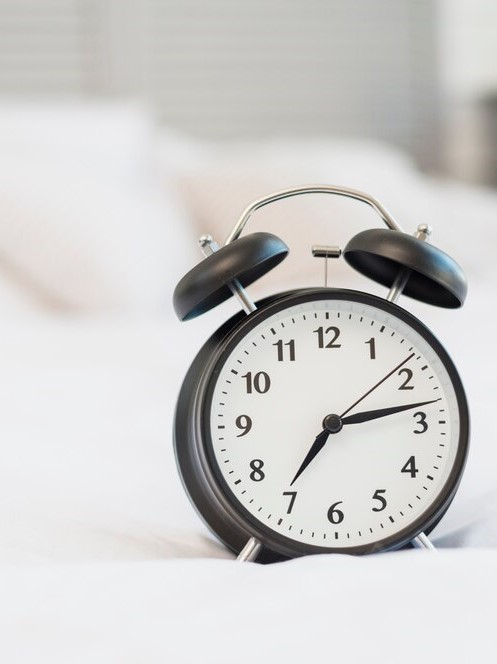
Grogginess on waking has a name: sleep inertia, and a review of the research describes it fading as you spend time awake. Nine alarms 10 minutes apart keep restarting that clock. Set one later alarm instead. Our piece on morning grogginess and sleep inertia explains what’s happening.
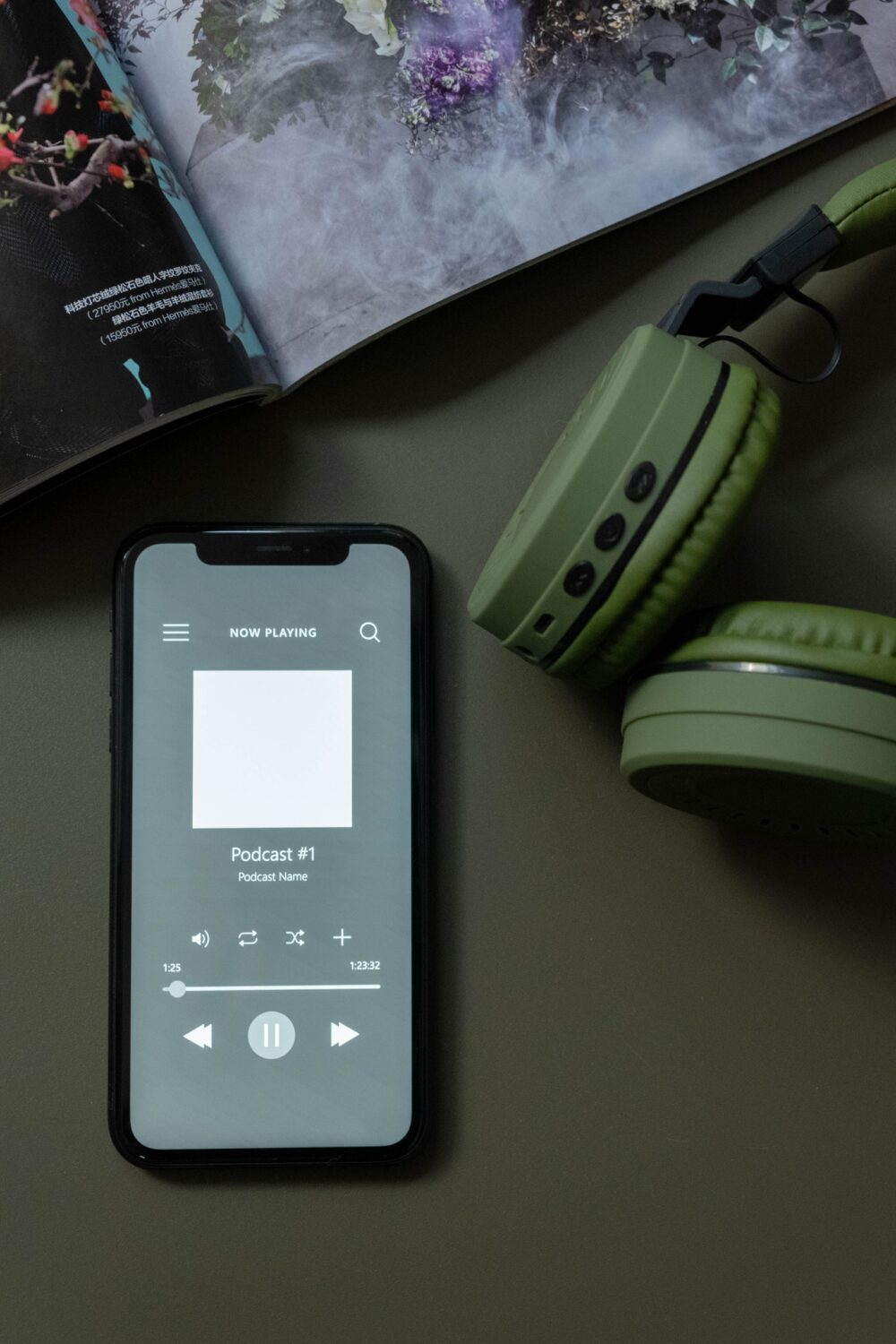
Emails and news first thing pull you straight into the day you were trying to avoid. A book, a slow podcast or a film you’ve seen before keeps the mood of the morning intact.

Coffee, toast, something on a tray. It’s the one morning nobody’s rushing, and our breakfast in bed ideas cover everything from a full spread to a decent brew.
The groggy start to the week usually comes from the shift in timing rather than the extra sleep itself. A few things help, such as:
Get some daylight soon after you get up, even on the lie-in day. Light is the strongest signal your body clock has, so a dose of it in the morning nudges your clock back towards its weekday timing. Keep Sunday night’s bedtime close to your weekday one too. If a late weekend start has already nudged your clock later, as it did for the people in the sleep-in study, an unusually early night is likely to mean lying there awake. And if the weekend has already knocked things sideways, our guide to resetting your body clock walks you through getting back on track.
If you’re sleeping far later than you meant to most weekends and still waking up tired, that’s worth looking at properly. Our guide to stopping oversleeping covers what tends to cause it.
It’s lie-in. You lay an object down, and you lie down yourself, so the noun for staying in bed follows “lie”. “Lay-in” is common in speech, particularly in some regional dialects, and it isn’t the standard written form.
Partly. Weekend sleep seems to count for something over the long run, as the 43,880-person study suggests. It doesn’t clear the slate, though. In a survey of 12,637 adults, three-quarters of those carrying the biggest sleep debts didn’t make them up through weekend sleep or naps.
Two things are usually going on. The grogginess itself is sleep inertia, and the research review notes that it’s worse after a stretch of poor sleep and varies with the time of day you wake up. On top of that, a much later wake-up shifts your body clock, and the sleep-in study found that it left people sleepier across the following week.
They do different jobs. A nap leaves your wake-up time where it is, and it was the later wake-up that shifted the body clock in the sleep-in study. A lie-in gives you a longer stretch of sleep in one go. In the French survey, neither fully covered a serious sleep debt. Our guide to daytime napping has more on how to time a nap well.
Planning your weekend wake-up? Work out the best time to get up with our Sleep Cycle Calculator.