The biophilic decluttering method for a calmer bedroom
4 min read
Last Modified 23 March 2026 First Added 23 March 2026
Most decluttering methods stop once the mess is gone. The biophilic approach keeps going. It asks you to think about what replaces the clutter, and the answer is almost always something natural.
The word biophilic comes from biophilia: the idea that humans have an instinctive connection to nature. In a bedroom, that means real textures, organic materials, a bit of greenery and good light. Biophilic decluttering takes that principle and turns it into a method: clear out the things that aren’t earning their place, then bring in natural alternatives that make the room feel calmer.
Like any decluttering method, the first step is editing. Go through your bedroom and remove anything that’s purely clutter: the stuff you don’t use, the things that ended up there by accident, the bits you’ve been meaning to deal with for weeks.
But biophilic decluttering adds an extra filter. Once the obvious clutter is gone, look at what’s left and ask: Does this feel good in here? Most of us have more synthetic stuff in our bedrooms than we realise, and it’s worth thinking about what it’s actually adding to the space.
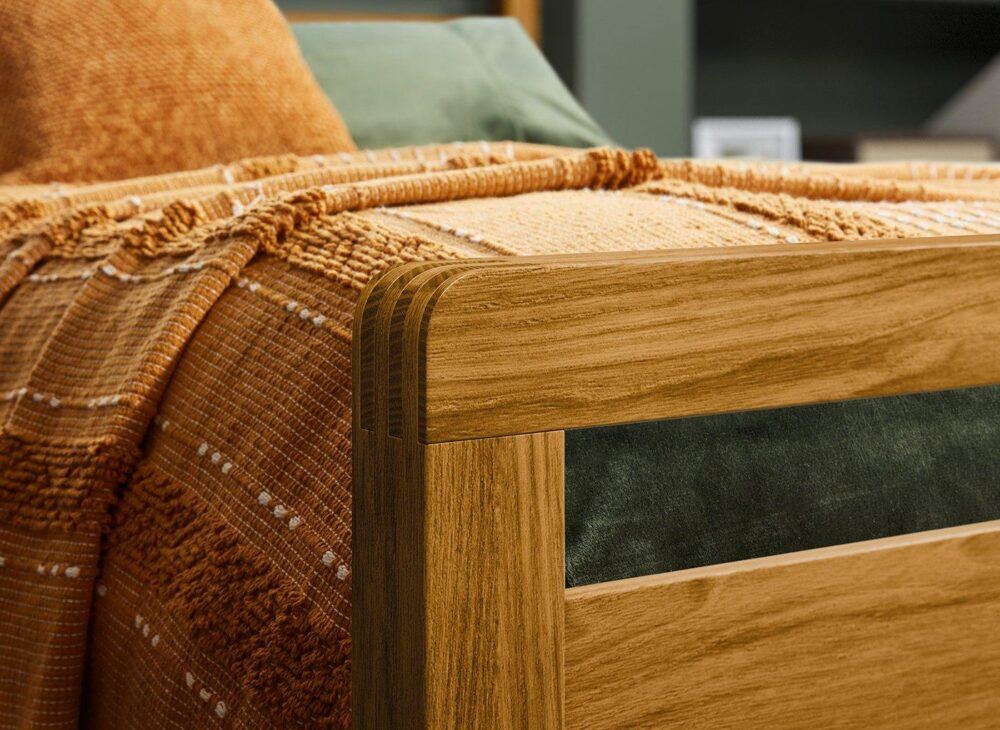
This is where the method gets interesting. Instead of just removing things, you’re upgrading what stays. Swap plastic storage boxes for wicker baskets or linen cube boxes. Replace synthetic bedding with natural bedding made from cotton, bamboo or linen. Trade a plastic lamp for one with a wooden or ceramic base.
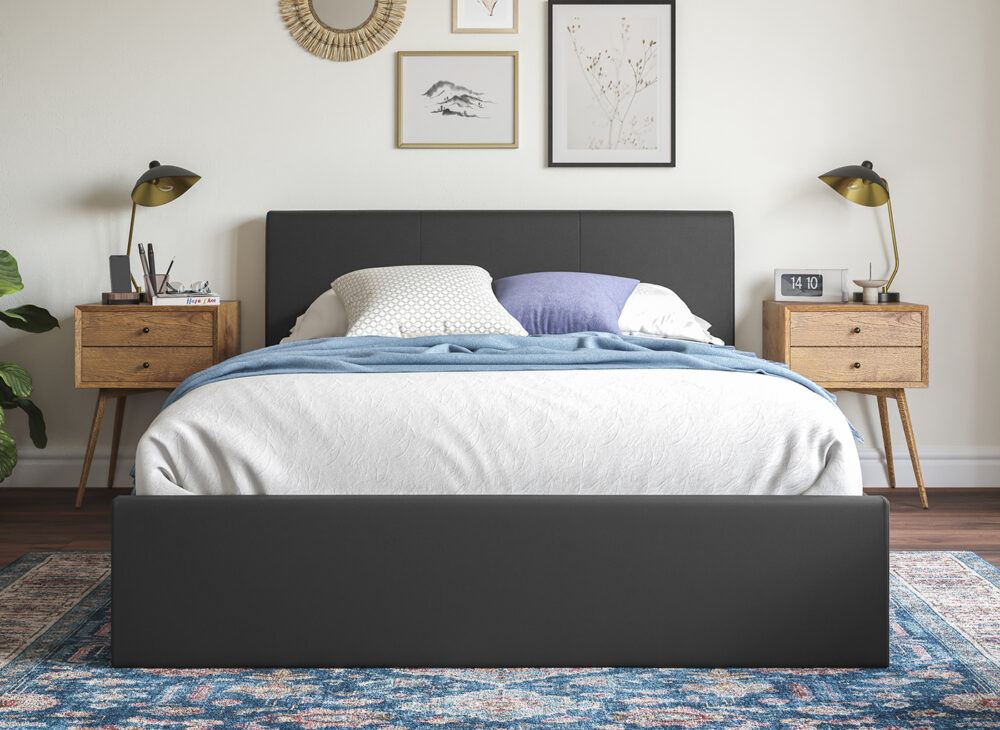
Or skip visible storage altogether. A storage bed keeps everything tucked away, so the only things on show are the ones you’ve chosen. No boxes, no baskets, just a clean room. Our storage beds guide covers the different types if you’re not sure where to start.
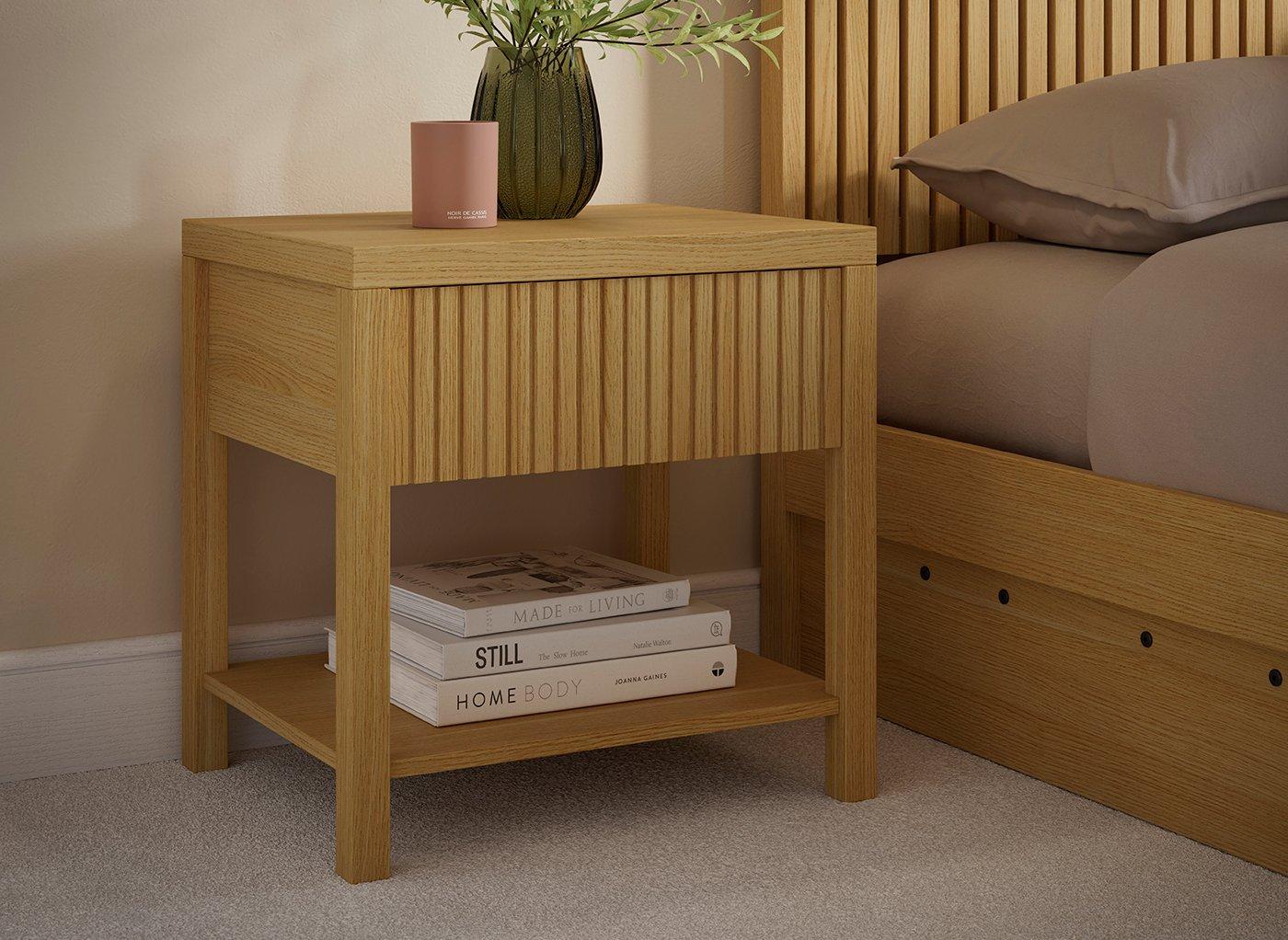
You don’t need to do it all at once. Even one or two swaps can shift the feel of a room. A wooden tray on the bedside table instead of a plastic pot. A jute rug under the bed instead of a synthetic one. Small changes, but your eye notices.
A trailing pothos on a shelf or a snake plant in the corner adds colour and softness without taking up much space. Biophilic design isn’t just about houseplants, though. It’s also about light, air and texture.
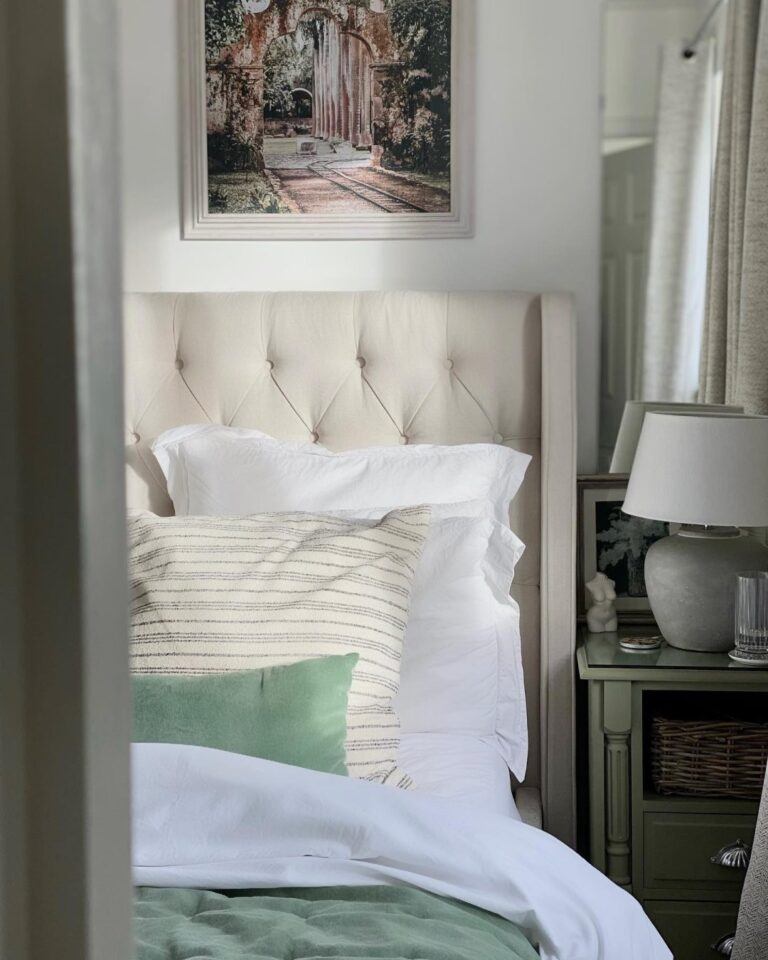
Open the curtains wider. Choose fabrics you can feel, such as linen pillowcases, a cotton waffle throw, and a wool blanket at the foot of the bed. The goal is a room that appeals to your senses rather than just looking tidy in a photo.
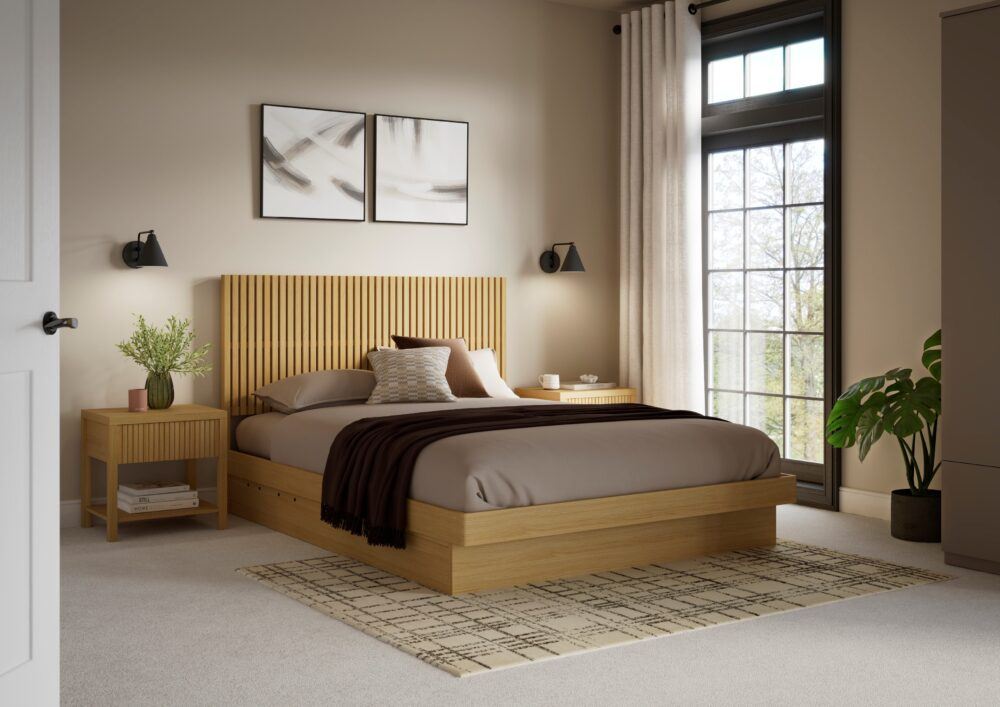
Top tip: Biophilic bedrooms tend to look brilliant when the bed does the heavy lifting. A solid wooden bed frame paired with natural bedding gives you a warm, earthy base without filling the room with accessories. Match it with wooden furniture, and the whole room starts to come together.
There’s a reason this method keeps coming up in conversations about sleep. A bedroom full of natural textures and softer tones is easier to wind down in. Research into biophilic design has consistently shown that natural materials and greenery can reduce stress and improve mood, which is exactly what you want from the room where you’re trying to switch off.
If you already love the idea of bringing nature into your bedroom, our botanical bedroom ideas are worth a look. And if sustainability matters to you, our guide to eco-friendly bedrooms goes deeper into making your space greener in every sense.
The biophilic decluttering method is one of eight approaches in our full guide to decluttering methods for busy bedrooms. If you want a method that doesn’t just tidy your room but changes how it feels, this is a great place to start.
Marie Kondo's famous tidying technique isn't just for wardrobes and kitchen drawers. Here's how to use it where it matters most: the room you sleep in.
3 min read
Feel inspiredAn organised bedroom can help you drift off into a more peaceful sleep, so we’d like to introduce you to our top tips for decluttering your space and keeping it clean - for good!
5 min read
Feel inspiredInstead of deciding what to throw away, you choose what deserves to stay. This simple shift in thinking can completely change how your bedroom looks and feels.
4 min read
Feel inspired