The bed and mattress size guide
Last updated: August 2026
Bed and Mattress sizes
| Bed/Mattress Size | cm (W x L) | ft & in (W x L) | in (W x L) |
|---|---|---|---|
| Emperor | 200 x 200 | 6'6" x 6'6" | 79" x 79" |
| Super king | 180 x 200 | 6'0" x 6'6" | 71" x 79" |
| Euro super king | 180 x 200 | 6'0" x 6'6" | 71" x 79" |
| King | 150 x 200 | 5'0" x 6'6" | 59" x 79" |
| Euro king | 160 x 200 | 5'3" x 6'6" | 63" x 79" |
| Double | 135 x 190 | 4'6" x 6'3" | 53" x 75" |
| Euro double | 140 x 200 | 4'7" x 6'6" | 55" x 79" |
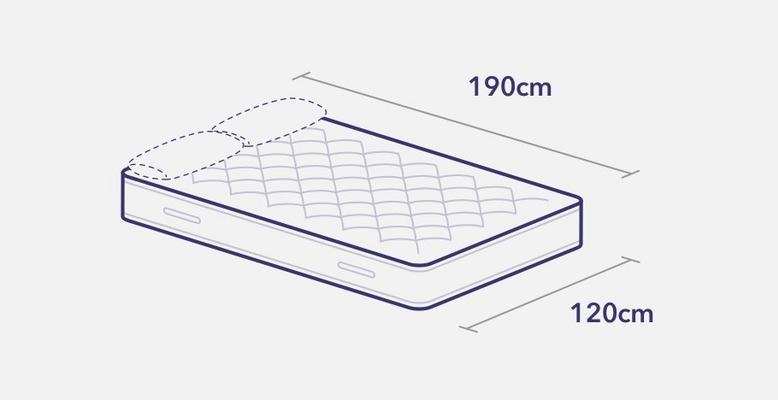
| Small double (Queen) | 120 x 190 | 4'0" x 6'3" | 47" x 75" |
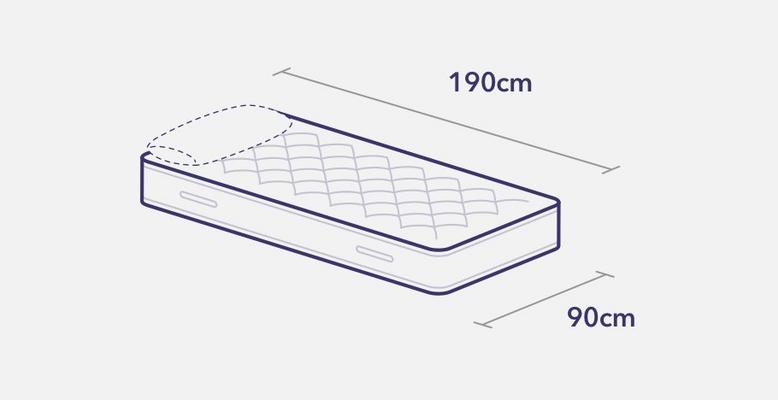
| Single | 90 x 190 | 3'0" x 6'3" | 35" x 75" |
| Euro single | 90 x 200 | 3'0" x 6'6" | 35" x 79" |
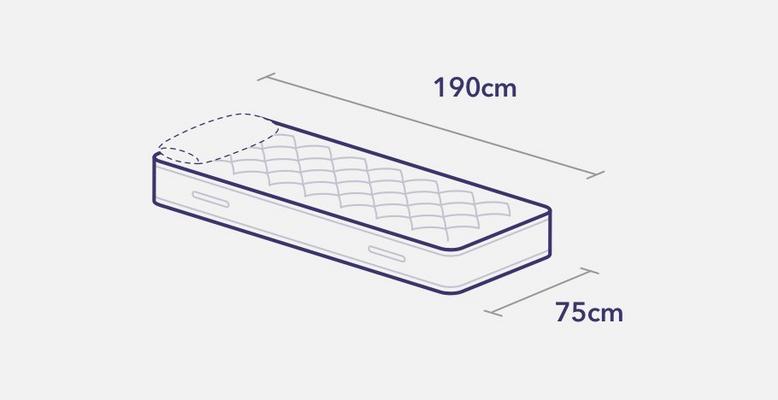
| Small single | 75 x 190 | 2'6" x 6'3" | 29.5" x 75" |
| Euro small single | 75 x 200 | 2'6" x 6'6" | 29.5" x 79" |
| Toddler | 70 x 140 | 2'3" x 4'6" | 27.5" x 55" |
| Cot | 60 x 120 | - | 23.5" x 47" |
UK vs European bed sizes
European bed and mattress sizes differ slightly to UK bed and mattress sizes, often being a little longer in size. It’s important to understand whether you have a UK or European bed frame before choosing a mattress to ensure it fits properly. We have put the EU bed size measurements in the bed size chart above to help.
How bed frame styles affect total dimensions
Here's what many people miss: your bed's actual footprint depends on its style:
- Divan beds match mattress dimensions exactly - brilliant for tight spaces
- Wooden and metal frames extend beyond the mattress with their construction
- Upholstered beds with sleigh designs or plush headboards need extra room
- Ottoman beds lift up at the base to reveal storage space under the mattress so need extra space at the foot. Though they require a little extra room, they are a great space-saving option
- Adjustable beds can extend when raised, so leave extra room for movement and expansion
- Dual-function beds like foldable beds, sofa beds and day beds extend when used for sleeping, so always check the full dimensions for the space required. Read our guide to space saving beds for more information on how these frames work
- TV beds require room for the TV to raise from the foot end of the frame. If you don’t have space for this at the end of your bed, discover more ways to incorpoarate a TV in the bedroom

What size is an emperor bed and mattress?
Emperor beds measure 200cm wide and 200cm long (6ft 6in wide by 6ft 6in long). This is the largest bed we have available, which is perfect for families who like to squeeze in for breakfast in bed, or those who just value a lot of space!
How big is an emperor bed?
It's 20cm wider than a super king, with no change in length.
Best for: two people or more and those who like extra room.
What size is a super king bed and mattress?
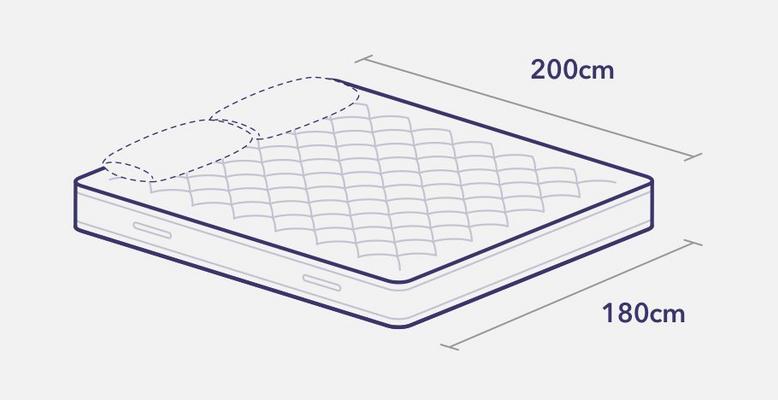
Super king beds and mattresses dimensions are 180cm wide and 200cm long (6ft wide by 6ft 6in in length.)
How wide is a super king bed?
180cm, or 6ft.
How long is a super king bed?
200cm, or 6ft 6in.
Best for: two people with some extra space.
What size is a Euro super king bed and mattress?
A Euro super king (sometimes called a Grand King bed) measures 180cm wide and 200cm long. That’s the same size as a UK standard super king.
p>We don't stock this Euro size, but shop our super king beds for the equivalent.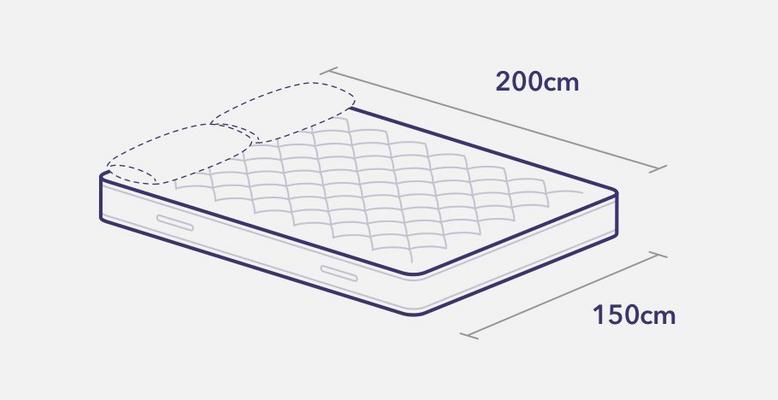
What size is a king size bed and mattress?
A standard king size bed and mattress is 150cm wide and 200cm long (5ft wide by 6ft 6in long). King size beds are longer than double beds, making them perfect if you’re a taller person who needs the extra leg room, or for couples looking for a spacious upgrade.
How wide is a king size bed?
150cm, or 5ft. That's 30cm narrower than a super king, so if you're torn between the two, it usually comes down to how much room your bedroom has on either side of the bed.
Best for: two people and those taller than 190cm/6ft 2in.
What size is a Euro king bed and mattress?
A Euro king is 160cm wide and 200cm long (5ft 3in wide and 6ft 6in long), 10cm wider than a UK king. We don't stock this exact width, so if you have a European-sized frame, check its measurements carefully; a UK king will be 10cm narrower.
p>Shop king size beds for the closest UK equivalent.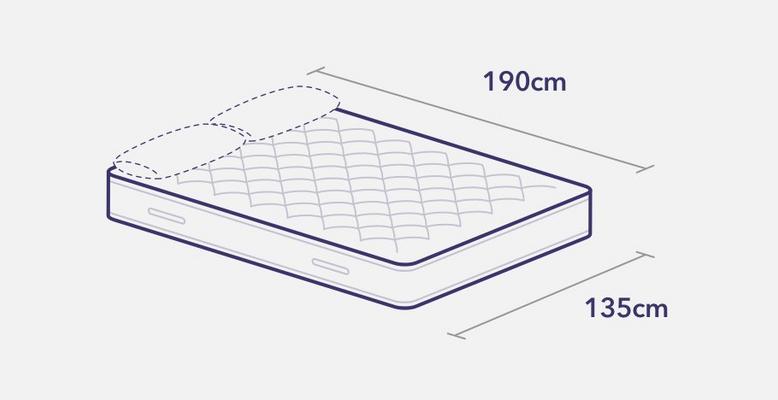
What is the size of a double bed?
A UK double bed is 135cm wide by 190cm long (4ft 6in by 6ft 3in). As the most common size for a bed and mattress, doubles are ideal for two people and fit in most bedrooms.
How wide is a double bed?
135cm, or 4ft 6in.
How long is a double bed?
190cm, or 6ft 3in. That's the same length as a single and a small double, so it's the width that changes as you go up in size, not the length.
Best for: two people and small to average-sized bedrooms.
What size is a Euro double bed and mattress?
A Euro double is 140cm wide and 200cm long (4ft 7in wide and 6ft 6in long), 5cm wider and 10cm longer than a UK double. We don't stock this exact width, so if you have a European-sized frame, check its measurements carefully before buying.
Shop double beds for the closest UK equivalent.
What size is a small double bed and mattress?
A small double bed and mattress is 120cm wide and 190cm long (4ft wide and 6ft 3in long). Also known as a queen size bed, they are best suited for one person but can accommodate two adults if necessary.
How wide is a small double bed?
120cm, or 4ft. This is the size most retailers mean by “queen size”, even though queen isn't an official UK measurement.
Best for: one person or couples with small bedrooms
What size is a single bed and mattress?
Single beds and mattresses measure 90cm wide and 190cm long (3ft wide and 6ft 3in long). As the name suggests, they’re ideal for one person, small bedrooms, and children.
How wide is a single bed?
90cm, or 3ft.
Best for: one person
Shop single beds | Shop single mattresses
What is the width of a single bed in inches?
35 inches.
Best for: one person
What size is a Euro single bed and mattress?
A Euro single bed and mattress is 90cm wide and 200cm long (3ft wide and 6ft 6in long). It's the same width as a standard single but 10cm longer, giving taller teenagers and adults more room at the foot of the bed without having to move up to a small double.
How long is a Euro single bed?
200cm, or 6ft 6in, 10cm longer than a standard single.
Best for: Taller teens or adults
Shop Euro single mattresses.
What size is a small single bed and mattress?
Small single bed and mattresses dimensions are 75cm wide and 190cm long (2ft 6ins wide and 6ft 3ins long). Small singles are designed to fit narrower kids' bed frames and guest beds. They’re ideal for saving space and for spare rooms or stylish box rooms.
How wide is a small single bed?
75cm, or 2ft 6in. It's the narrowest adult bed size we sell.
Best for: Children from roughly 4 years old, small rooms and guest beds
What size is a Euro small single bed and mattress?
A Euro small single bed and mattress is 75cm wide and 200cm long (2ft 6in wide and 6ft 6in long), 10cm longer than a standard small single. It suits guest rooms and narrower bedrooms where a taller sleeper still needs the extra length.
Best for: Small spaces and taller sleepers
What size is a toddler mattress?
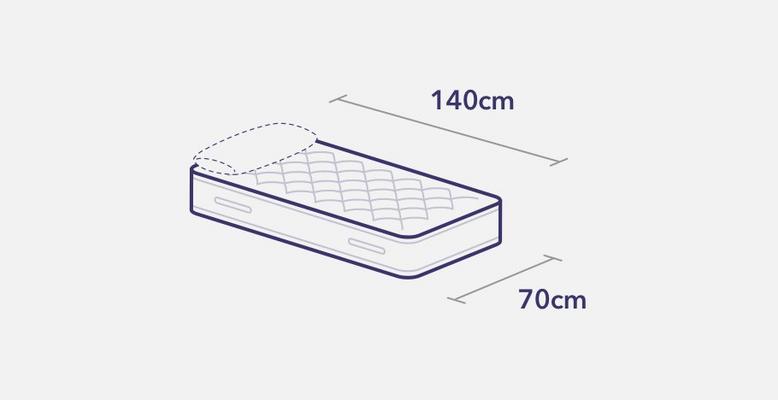
Toddler beds and mattresses are 70cm wide and 140cm long. (2ft 3ins wide and 4 feet 6 inches long). They're ideal for kids aged roughly between 1 and 4 years, especially those who need a little help changing from a cot to a single bed, as explained in our guide on how to choose your child’s first bed.
Best for: Toddlers and kids' character beds
What size is a cot bed and mattress?
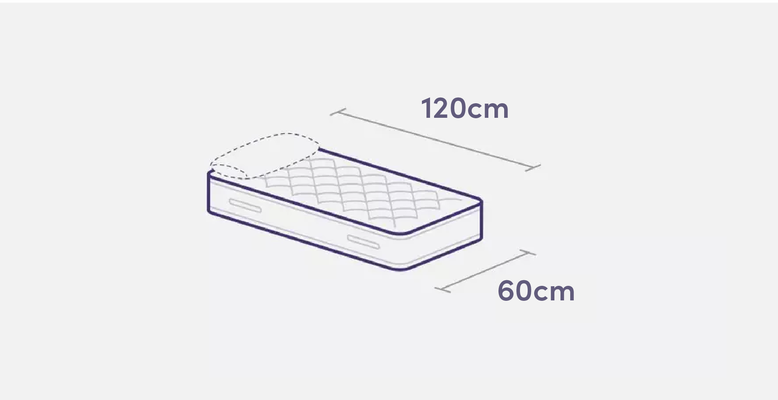
Cot mattresses are 60cm wide and 120 cm long (23ins wide by 47ins long). These mattresses are designed for babies who sleep in a cot and best for the sleep needs of babies from birth to 3 years old. They’re usually 10cm deep and are firmer than adult mattresses. This helps your baby’s development by helping to support their spine during sleep.
Best for: Babies and toddlers who haven’t yet moved into a bed
What sizes do kids’ beds come in?
Our kids’ beds come in three main sizes: Euro single (W 90cm x L 200cm) are ideal for taller children or those who need extra length to grow. Standard single beds (W 90cm x L 190cm) suit most children and fit neatly into smaller bedrooms. Small double beds (W 120cm x L 190cm) give older children or teens extra space to stretch out and sleep comfortably. Consider your child’s height and room size when picking a bed size.
Standard mattress depth
Mattresses vary in depth depending on the manufacturer. The standard depth of a mattress is between 20-36 centimetres, which will accurately fit a standard fitted sheet for that bed size. Mattresses outside the standard depth range will require either shallower or deeper bedding to fit the mattress securely.
When choosing the right mattress depth for you, it’s important to consider the level of support you prefer, accessibility and appearance.
- Slim profile: 20cm or less, best for kid’s beds, bunk beds and day beds
- Standard profile: 20-30cm, suitable for most adults and older children/teens
- Thick profile: 30-50cm, perfect for those looking for extra comfort & support
Bed heights
Bed height matters for style and accessibility. Different frame types sit at different levels to suit your needs. Standard beds, including most divans and traditional frames, usually measure 45–55 cm from floor to mattress top, making them easy to get in and out of for most adults. Beds that vary from this include:
- Platform beds and low‑profile frames sit a bit lower, often around 30–40 cm, giving a sleek, modern look that’s ideal if you prefer a lower bed or have a minimalist space.
- Raised children’s beds such as bunk beds and high sleepers typically stand around 150–180 cm tall, creating plenty of under‑bed play or storage space and suiting older kids and teens who are confident climbing ladders.
- Mid sleepers sit a little lower, usually around 120–140 cm, perfect for younger children who want a cosy den‑like space underneath. For help choosing between the two, check out our guide on how to choose between a high sleeper and mid sleeper.
Will it fit in your room?
Measuring the bed is only half the job. A few checks on the room and the frame itself save a headache on delivery day.
Check the bed's full footprint, not just the mattress
A bed frame is often bigger than the mattress that goes in it. Sleigh beds and frames with a high, curved footboard can add real length beyond the numbers in the table above. If you're tall, it's worth noting that doubles and below are only 190cm, while king and above are 200cm. A low or open foot end gives a taller sleeper those extra centimetres back.
Mark out the space before you buy
Skirting boards, door swing, and existing furniture all eat into the room faster than expected. A simple trick: lay sheets of newspaper on the floor in the bed's exact footprint, then live with it for a day. It shows you the real, workable space in a way a tape measure alone doesn't.
Think about the headboard
A tall or upholstered headboard needs wall height as well as floor space. Under a sloped ceiling or in a box room, check this before the bed does.
Check your socket placement
A super king can push a bedside table further from the wall than a single or double would. Worth confirming your lamp or charger will still reach from the bed. For doorways, staircases, and getting the bed into the house on delivery day, see our full home-measuring guide, which covers them in detail.
Common bed size questions
Which bed size is the biggest?
The emperor. At 200cm wide by 200cm long, it's the largest bed and mattress.
Is there such a thing as a super king bed?
Yes. A UK super king measures 180cm wide by 200cm long, one size up from a king and one down from an emperor.
What's the difference between a king and a super king bed?
30cm in width. Both are 200cm long, but a super king is 180cm wide against a king's 150cm, giving couples extra shoulder room without a longer bed frame.
Do two single beds make a super king?
Close, but not quite. Two 90cm singles side by side give 180cm in width, matching a super king, but only 190cm in length against a super king's 200cm. A zip and link mattress solves the width, though the join between the two mattresses is still noticeable underfoot.
Which is bigger, king or queen size?
A king is 30cm wider and 10cm longer than a queen (small double). UK king size is 150cm wide by 200cm long; queen size usually means a small double, at 120cm wide by 190cm long. If you've seen queen size listed at 160cm, that's a different measurement that some retailers call a European queen, not the UK small double.
What's bigger, a queen or a double?
A double is bigger, a queen size bed is the same size as a small double. A double is 135cm wide by 190cm long. A small double or queen, is 120cm wide by 190cm long, so it's 15cm narrower with the same length. A few retailers use “queen” for a wider size closer to 160cm, sometimes labelled a European queen.
Is 54x75 a double bed?
Not quite. 54in by 75in (137cm by 190cm) is the US “double” or “full” size. The UK double is close but not identical, at 135cm wide by 190cm long (53in by 75in).
What do they call a small double bed?
A small double is also called a queen size bed in the UK. It's 120cm wide by 190cm long, one size up from a single and one down from a double.
What is a good single bed?
A single suits one sleeper and fits in a small room. UK singles are 90cm wide by 190cm long; the Euro single (90cm x 200cm) gives a taller sleeper extra legroom in the same width.
What's the smallest single bed you can buy?
Our smallest adult bed size is the small single, at 75cm wide and 190cm long. It's designed for narrow rooms, guest beds and children's bed frames.
Things to remember when choosing a bed and mattress size
Let's recap, because bed and mattress sizes can make a big difference in the quality of your slumber and the practicalities of your bedroom:
- Always think about your comfort. Do you like to spread out when you sleep? Do you sleep with a partner or pets who like to share the bed? 35% of UK bed-sharers say their partner takes up too much space, and 31% of us allow pets in bed too. Make sure you choose a size with plenty of room for everyone to stretch their legs.
- Always measure your room size and existing furniture. A luxurious king size might fit, but you may leave yourself with little space to move around. For tips on making the most of a smaller room, see our guide on how to maximise space in smaller bedrooms.
- Don't forget about style. Finding the perfect size is key to creating a cosy retreat, one where you can relax and have enough room to manoeuvre around your bed. Whether that's through finding the best colour matches to work with, or bringing the latest style trends into your bedroom, the choice is yours.
- And, finally, if you're shopping for a kid's bed, keep in mind how fast they grow. 36% of UK parents have let their child sleep in their own bed at some point, so investing in a larger size that will last them through their teenage years can be worth it.